Volunteers of Creative Society Denmark Took Part in Almedalen Week 2026
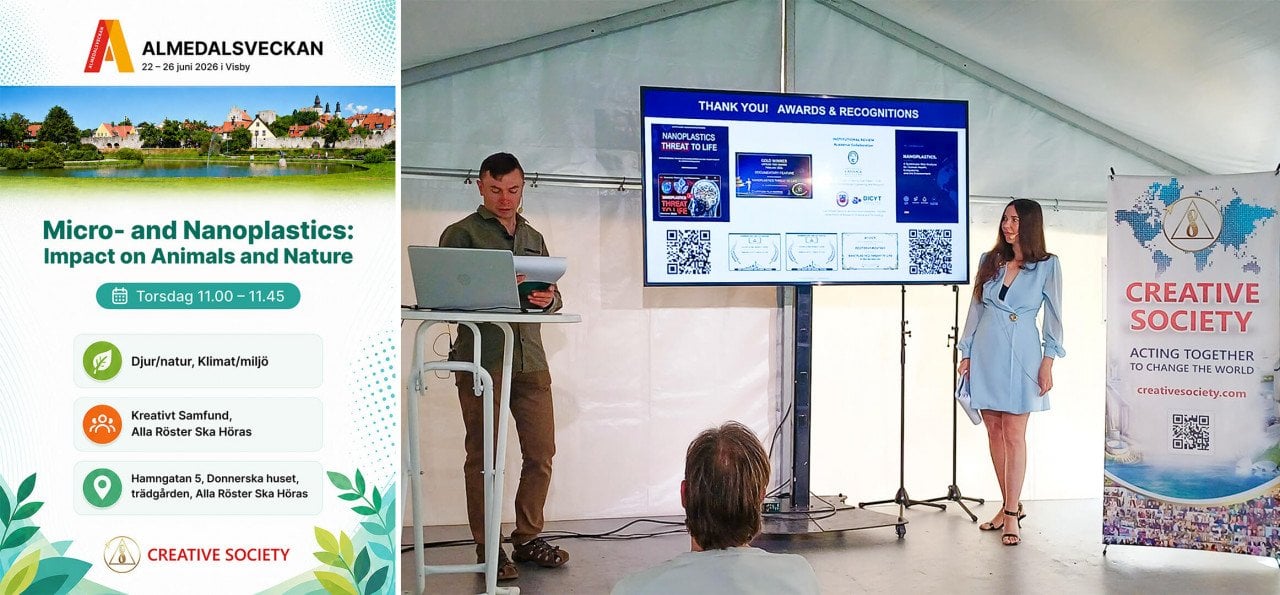
Volunteers of Creative Society Denmark took part in one of Sweden’s largest democratic forums, Almedalen Week 2026. Held annually in the city of Visby on the island of Gotland, the forum brings together representatives of governments, civil society, expert community, and businesses to discuss public policies, civic dialogue, and citizen participation.
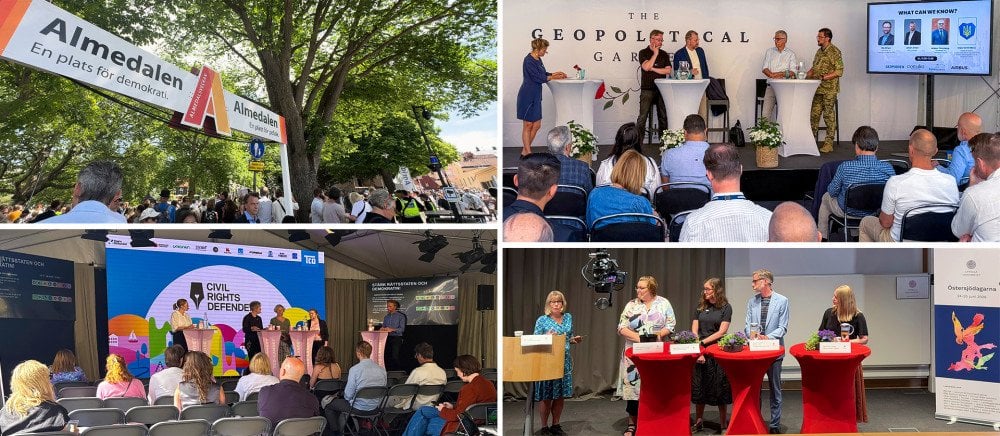
Almedalen Week 2026 set a new record in terms of scale. According to official records, about 120,000 people attended its events throughout the week. The program featured 3,170 events arranged by 1,804 organizations, with 6,627 registered speakers and participants.
Volunteers of Creative Society Denmark were also part of the official Almedalen Week 2026 program, delivering a presentation “Micro- and Nanoplastics: Impact on Animals and Nature” within the framework of the Alla Röster Ska Höras (“Every Voice Must Be Heard”) initiative.
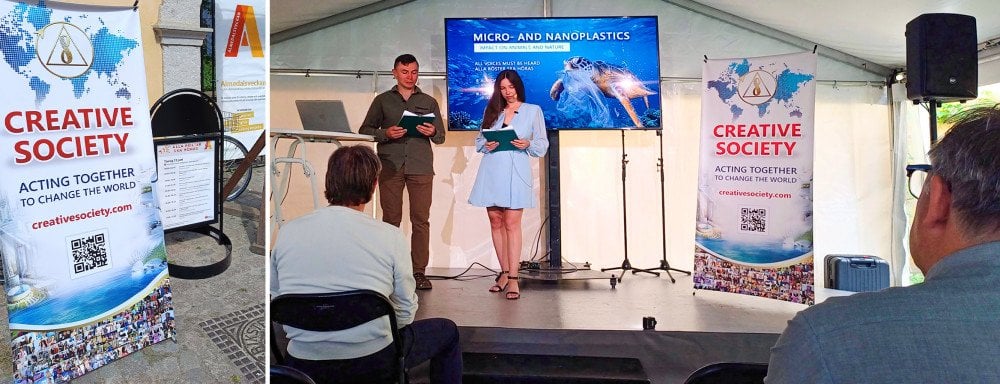
During the presentation, the latest scientific findings on micro- and nanoplastics were discussed, including their widespread presence in ecosystems and potential impact on wildlife and the environment.
It has been emphasized that micro- and nanoplastics are already found virtually everywhere: in water, air, soil, forests, and oceans, as well as in animal feed and seafood. Particular attention was given to the ways in which plastic particles can affect domestic animals, livestock, bees, marine life, birds, coral reefs, and zooplankton.
The presentation examined mechanisms that are already supported by current experimental and clinical data, including formation of a protein corona, oxidative stress, mitochondrial dysfunction, disruption of barrier functions, inflammatory responses, and changes in how plastic particles interact with cells.
Potential risks discussed included disruption of the immune and endocrine systems, impaired reproductive function, as well as possible consequences for biodiversity and ecosystem resilience.
The presentation also highlighted limitations of existing approaches to addressing plastic pollution. The traditional approach — collecting, sorting, and recycling plastics, along with mechanical cleanup of the environment — is insufficient to address micro- and nanoscale plastic particles that have already formed. Once plastics break down into particles of that size, it is virtually impossible to remove them from the biosphere completely. Therefore, alongside reducing emissions and improving monitoring, there is a need for international cooperation and new research programs aimed at developing strategies to reduce the environmental and biological risks associated with micro- and nanoplastics.
The discussion also highlighted the importance of cooperation among the scientific, civic, and political communities in addressing emerging environmental risks.
Official information about the event in the Almedalen Week 2026 program can be found here: https://almedalsveckan.info/rg/almedalsveckan/det-har-ar-almedalsveckan/almedalsveckan-in-english
Almedalen Week 2026 marked another step towards strengthening international scientific and public dialogue, fostering cross-sector collaboration, sharing knowledge, and jointly seeking solutions to pressing environmental and societal challenges.
Creative Society Denmark highly values the opportunity to contribute to raising awareness of current environmental challenges, including the growing problem of micro- and nanoplastics, and to sharing scientific knowledge that can favor deeper understanding of their impact on the environment.
About Creative Society
The Creative Society Project works to bring global attention to natural disasters, study their causes, and identify solutions. The organization seeks to foster international cooperation among scientists to protect human life, uphold human rights, and help prevent future natural disasters.
For press inquiries, please contact us at [email protected]