Summary of Climate Disasters on the Planet, January 24–February 1, 2026
A national wind speed record in Portugal.
People freezing to death in their own homes in the United States.
Lightning striking a crowd in Brazil.
Homes collapsing off a cliff in Italy.
And these are not the top disasters of an entire year — this is just a few days on our planet, from January 24 to February 1, 2026.
United States
In late January, the fierce winter storm Fern swept across the United States. According to NOAA satellites, Fern formed over the Pacific Ocean on January 21 and within a week engulfed most of the country. The giant system, stretching more than 3,200 km (1,990 miles), affected 34 states, from New Mexico to Maine. Approximately 230 million people were impacted by the severe weather.
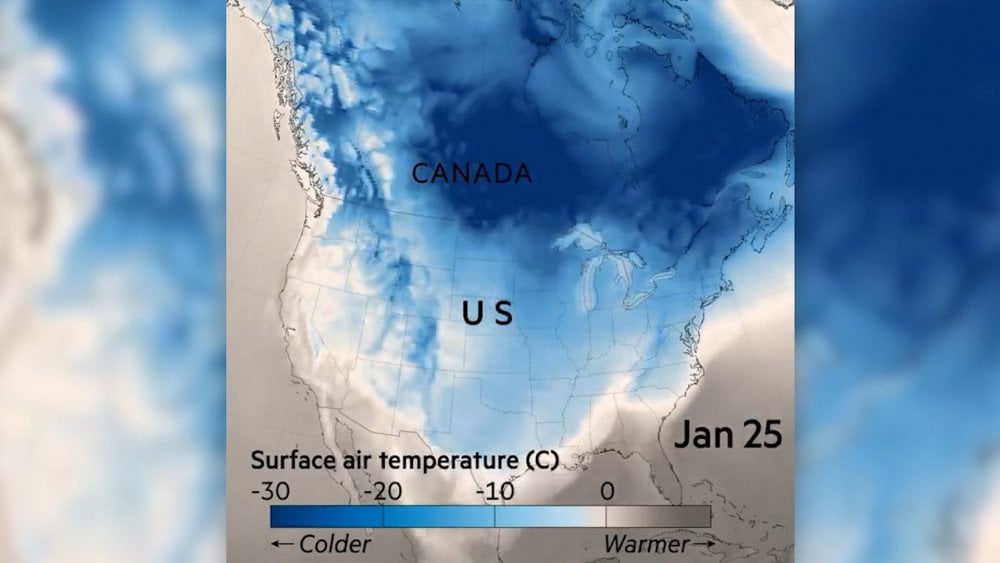
Winter storm Fern covered 34 U.S. states, from New Mexico to Maine
Heavy snowfall blanketed parts of the Northeast and the Ohio River Valley. In at least 17 states, snow accumulation reached 30 cm (12 inches) or more. Record values were recorded in New Mexico, where in the area of Bonito Lake more than 78 cm (30.7 inches) of wet snow fell, as well as in western Pennsylvania, where the snowpack exceeded 50 cm (19.7 inches).
Extremely dangerous conditions also developed in the southern states, where residents are more accustomed to hurricanes than to winter storms. These regions were completely unprepared for such a blow of nature: there is no snow removal equipment, and people lack sufficient warm clothing. Wet snow and freezing rain coated roads, trees, and power lines with a layer of ice up to 2.5 cm (1 inch) thick. Under its weight, power lines snapped. Branches and utility poles fell directly onto roadways.
In Mississippi, authorities used a record amount of deicing agents for the first time to combat black ice. This ice storm became the most severe for the state since 1994.
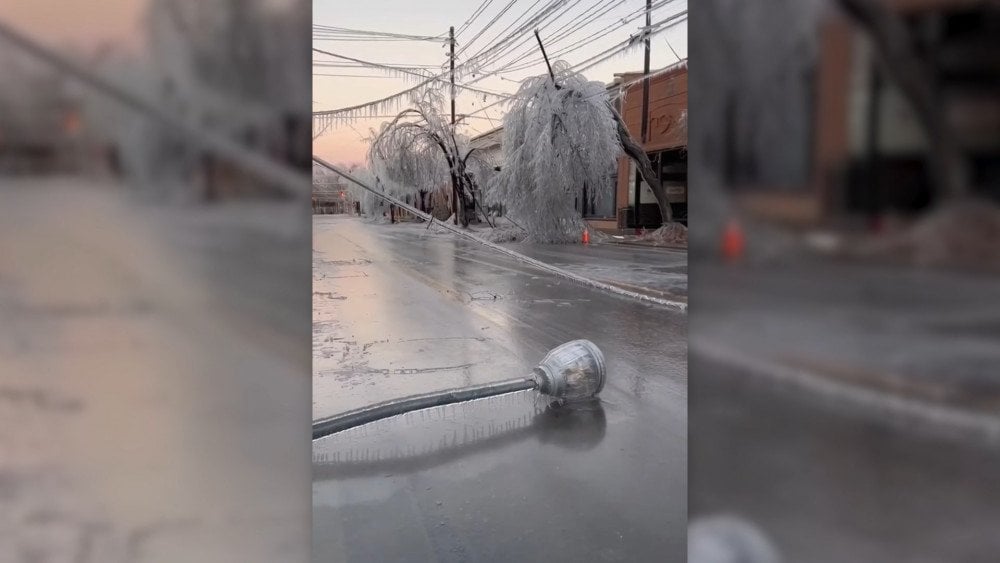
Ice storm in the city of Oxford, Mississippi, United States: icing of trees, power lines, black ice
In New Jersey, restrictions were imposed on commercial vehicle traffic. Exceptions applied only to carriers transporting food, fuel, and medical supplies, as well as to emergency services and critical infrastructure personnel.
The storm also dealt a heavy blow to air travel: more than 11,600 flights were canceled nationwide and over 16,000 were delayed. At Bangor International Airport in Maine, a private plane carrying eight passengers crashed during takeoff.
At least 21 states declared a state of emergency.
The aftermath of the disaster proved catastrophic. At the peak of the storm, more than one million people experienced power outages. Widespread outages were reported in Tennessee, Mississippi, Louisiana, Texas, Kentucky, Georgia, West Virginia, and Alabama.
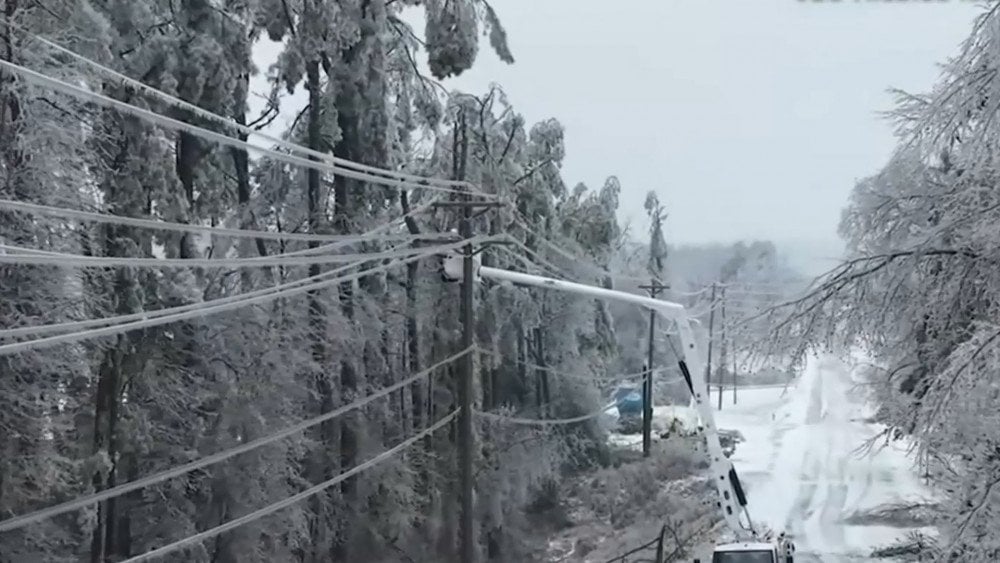
State of emergency declared in 21 U.S. states as a result of the disaster: loss of electricity, heating, and water
In some cities, people simultaneously lost electricity, drinking water, and heating.
At the same time, extreme cold swept across much of the United States, reaching as far as Texas and the lower Mississippi River Valley. The wind chill dropped to −34 °C (−29 °F), and actual temperatures in some areas were 22 °C (39.6 °F) below the climatic norm.
Eyewitnesses recalled those days as a test of endurance. Residents of Memphis and Nashville said they slept in one room wearing hats and jackets, conserved phone battery power, and started their cars only for a few minutes to warm up. In Mississippi, hundreds of people spent the night in stranded vehicles on an icy highway, waiting for roads to be cleared.
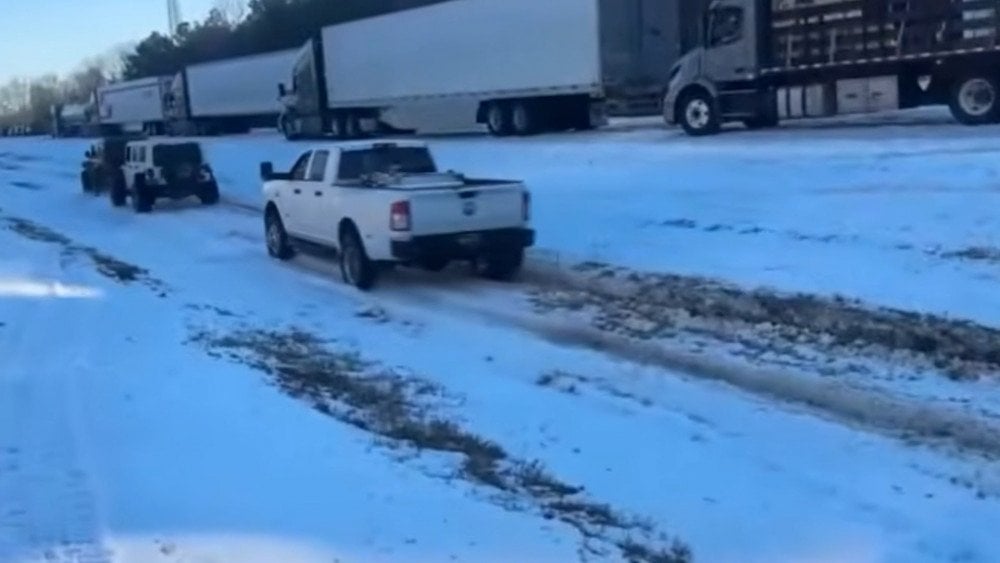
Icy highway in Mississippi, United States: people waited in cars overnight for road clearing
More than 100 people died in the country as a result of the storm. Many died from hypothermia — including inside their own homes, where indoor temperatures dropped nearly to outdoor levels. One of the most tragic incidents occurred in Texas, where three young brothers fell through the ice of a frozen pond.
Dozens of children and adults were hospitalized with carbon monoxide poisoning — people attempted to warm themselves by using generators and heaters without safety precautions.
The storm caused colossal economic damage estimated at up to $115 billion, which, according to AccuWeather specialists, makes it the costliest weather event since the wildfires in the Los Angeles area in January 2025.
Canada
In Canada, this winter storm brought anomalous snowfall and extremely low temperatures, triggering a transport collapse, power outages, and forcing the closure of schools and universities.
On January 25, Toronto Pearson International Airport saw 46 cm (18.1 inches) of snow, setting a new daily record. As a result, more than 600 flights were canceled or delayed.
In January 2026, 88.2 cm (34.7 inches) of snow fell in the city of Toronto, which, according to Environment and Climate Change Canada, became the highest total ever recorded since record-keeping began in 1937.
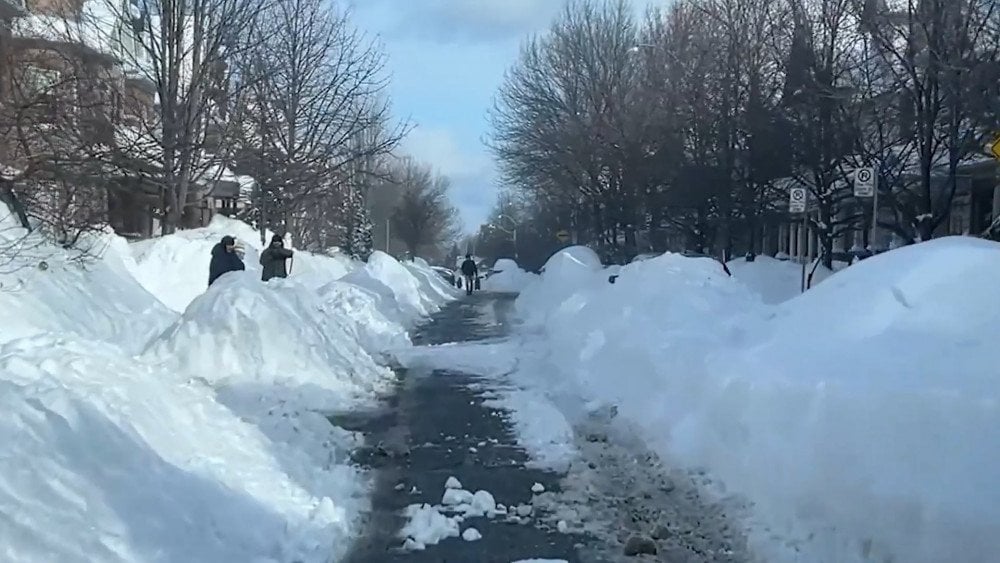
Anomalous snowfall in Toronto, Canada — the heaviest since records began in 1937
Usually, a thaw follows heavy snowfall, but this time temperatures remained extremely low, exacerbating the aftermath.
The Canadian Red Cross opened a temporary shelter in the Montreal suburb of Côte Saint-Luc after thousands of residents were left without electricity during the severe cold.
In Saskatchewan Province, wind chill values dropped to −49 °C (−56.2 °F).
On the island of Newfoundland, frazil ice — a mixture of ice crystals and water — blocked the water intake at the region’s largest hydroelectric power station, Bay d’Espoir, located in Newfoundland and Labrador, leading to its complete shutdown for the first time since 1967. Divers were deployed for clearance; despite the icy water, they used air compressors to remove the ice buildup.
Turkey
On January 30, powerful torrential rains struck Mersin and Adana Provinces, triggering catastrophic flooding.
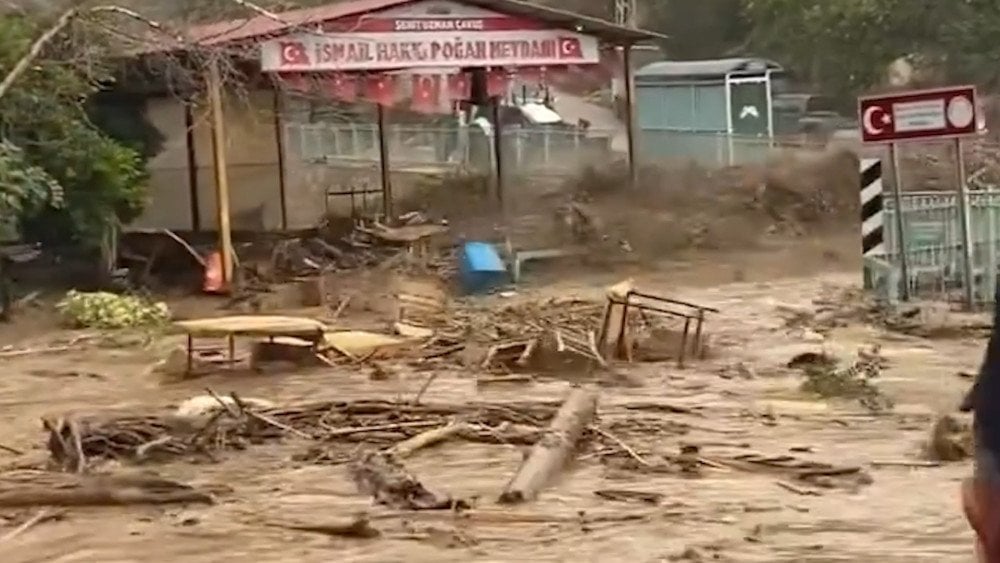
Aftermath of catastrophic flooding in Mersin Province, Turkey: raging torrents sweeping away everything in their path
In Mersin, rivers and streams overflowed their banks. Streets and boulevards turned into raging currents, submerging dozens of vehicles. A bridge in the Dağlı district failed under the pressure and collapsed. Floodwaters surged into homes and agricultural land, including the building of the Alata Horticultural Research Institute.
In Adana, torrential rains caused canals to overflow. In the Sarıçam district, the Buruk Cemetery was completely submerged. Roads turned into impassable lakes where vehicles stalled and became stranded. The downpours also triggered two rockfalls in the province. One blocked the highway near the Obrukbeli Pass, the other obstructed the road in the Tapan area.
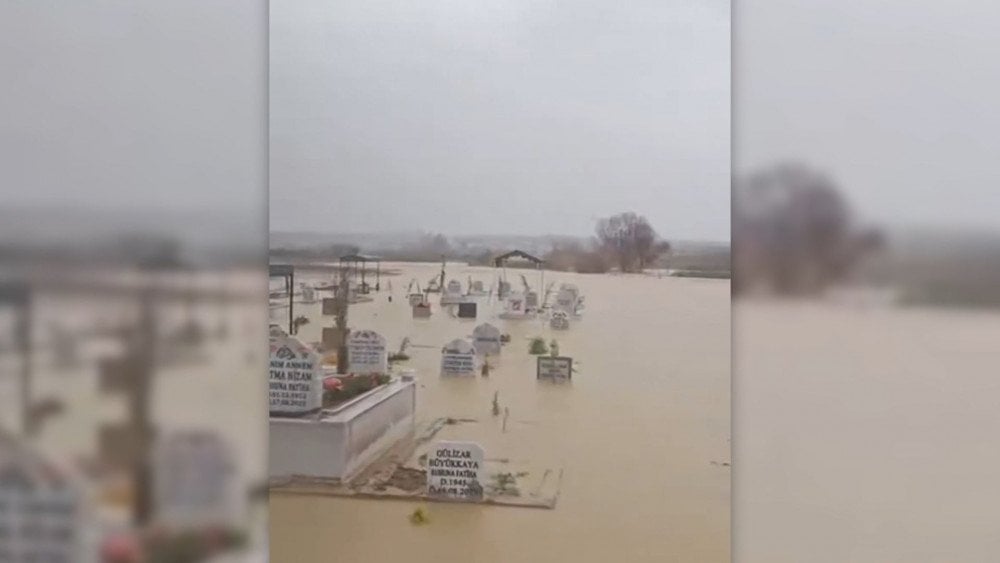
In Adana Province, Turkey, heavy rains caused a canal near a cemetery to overflow, resulting in dozens of graves being submerged
Human casualties were avoided. However, the material damage is enormous: hundreds of flooded homes and businesses, washed-out roads, and destroyed infrastructure.
Storm Christine
On the night of January 28, the powerful Atlantic storm Christine struck the Iberian Peninsula.
Rapidly intensifying over the ocean, the storm system reached the coast of Portugal, becoming a true climate shock for the country. In some areas, wind gusts exceeded 180 km/h (112 mph). In the municipality of Soure, a value of nearly 209 km/h (130 mph) was recorded, surpassing the record set on October 13, 2018, when during Storm Leslie wind speeds reached 176.4 km/h (109.6 mph).
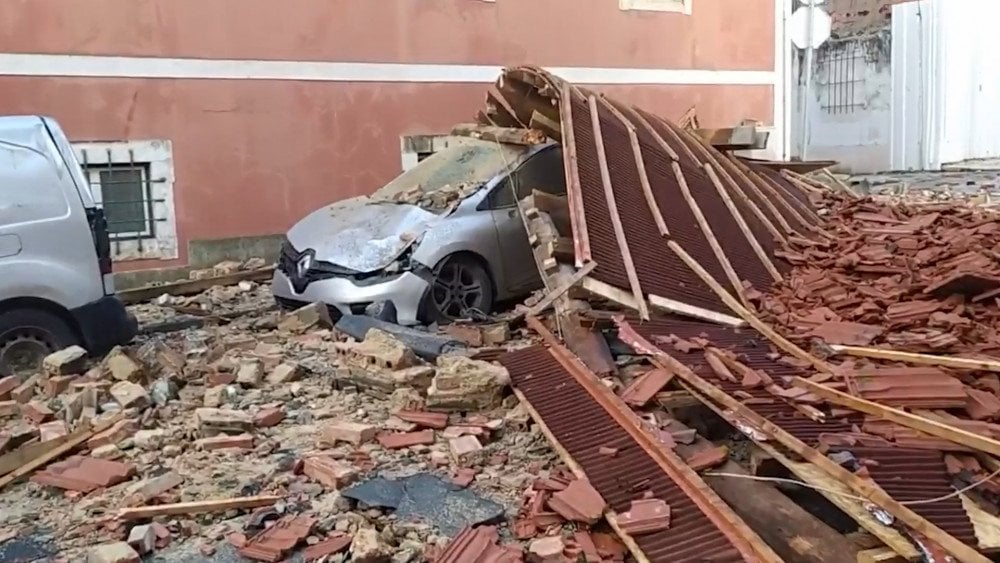
Aftermath of Hurricane Christine in Portugal: six dead, roofs torn off buildings, roads blocked, power supply disrupted
Across the entire country, trees were uprooted and roofs were torn off homes.
In the city of Figueira da Foz, strong winds toppled a Ferris wheel. In Leiria, the stadium sustained serious damage. In Coimbra, destruction affected several aircraft and hangars at the municipal airfield. At the Monte Real Air Base, wind gusts damaged F-16 fighter jets.
More than 800,000 people in central and northern Portugal experienced power outages. In several municipalities, communications, heating, and water supply were disrupted, and public transport operations were suspended.
Along the coast, the storm generated waves up to 14 m (46 ft) high, creating an additional threat to coastal areas and ports.
As of January 29, the storm had claimed five lives in Portugal. Moving eastward, the storm struck southern and central regions of Spain. Strong winds and heavy rain were reported in Andalusia and the Malaga area, bringing traffic to a standstill. In the city of Torremolinos, a tree fell on a house, causing the death of a woman.
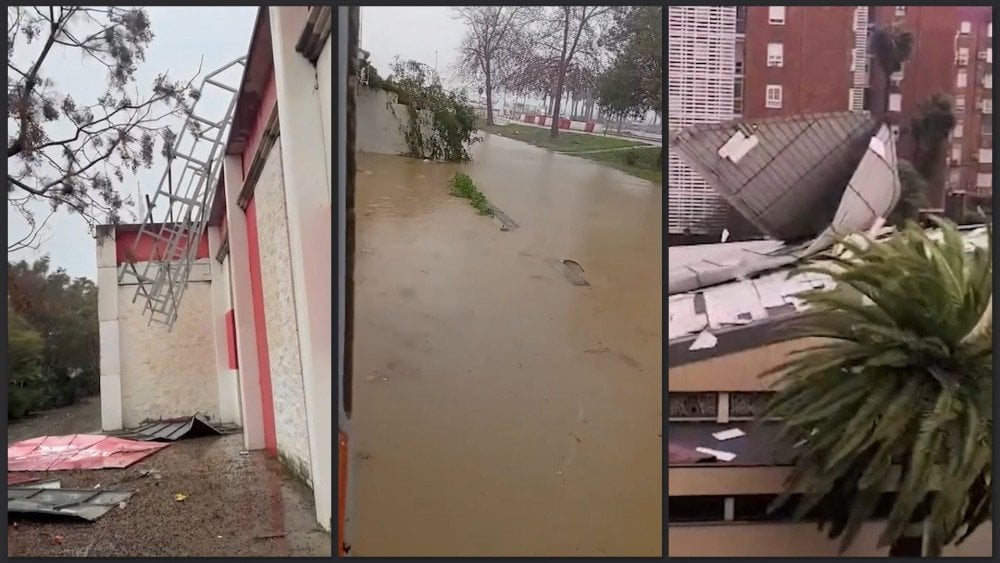
Aftermath of Storm Christine in Spain
In the outskirts of Madrid, the storm brought a sharp drop in temperatures and snowfall rare for the region. As a result, schools were closed and traffic congestion formed on roads.
Christine was not just another extratropical storm. It underwent explosive intensification, with atmospheric pressure dropping sharply within hours and wind speeds reaching levels comparable to a Category 2–3 tropical hurricane.
This made Christine one of the most powerful and destructive winter storms in recent years on the Iberian Peninsula.
Brazil
On January 25, in the country’s capital, Brasília, during a thunderstorm, lightning struck directly into a crowd of people gathered for a political rally.
A total of 89 people were affected. Eleven people suffered direct lightning strikes, and another 36 sustained injuries related to falls, sprains, and hypothermia — all of them were taken to regional hospitals, while the others received medical assistance at the scene.

Lightning strike on rally participants in the city of Brasília, Brazil
Eyewitnesses reported that immediately after the discharge, several people lost consciousness. Even those who did not suffer physical injuries required medical attention due to severe shock and nervous stress.
This number of people affected by a lightning strike became the highest in the country’s history, despite the fact that, according to the National Institute for Space Research (INPE), Brazil records the highest number of lightning strikes in the world — almost 77.8 million strikes per year.
Another tragic incident occurred on January 29 in the municipality of Tramandaí, on the northern coast of Rio Grande do Sul State. Lightning struck a young man vacationing on the seashore. Despite all efforts by medical personnel, he could not be saved and died in hospital.
Algeria
In late January, a significant part of Algeria, including the capital, came under the grip of a destructive storm. In the city of Maghnia, Tlemcen Province, wind speeds reached 120 km/h (75 mph), corresponding to hurricane-force intensity.
Such values are considered extremely rare for Algeria, where wind speeds rarely exceed 90 km/h (56 mph).
A red alert level was declared in most provinces. Classes in educational institutions were suspended, and public parks were closed. Across the country, the storm uprooted numerous trees and power line poles, caused collapses of walls, roofs, balconies, and damaged road infrastructure.
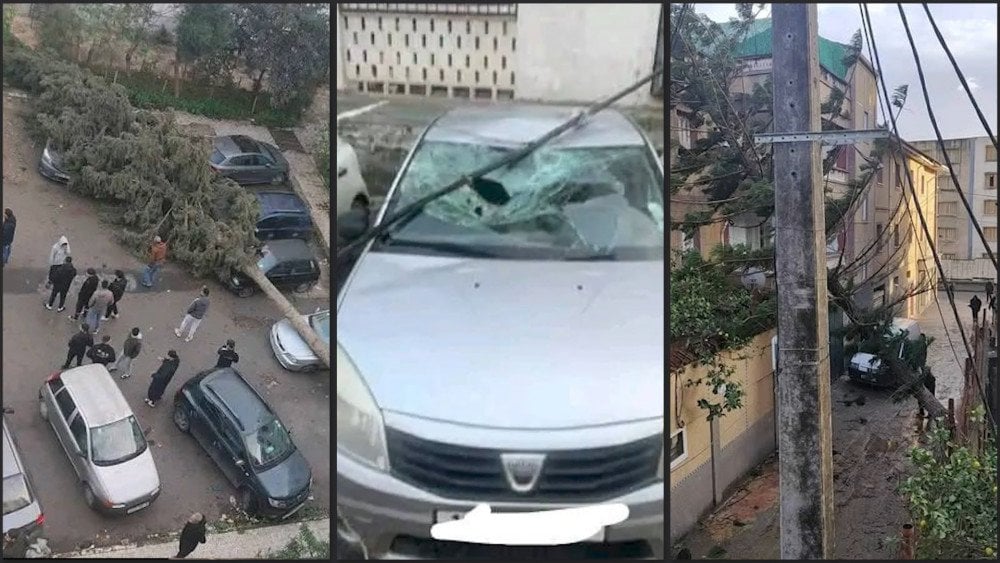
Storm in Algeria with wind speeds up to 120 km/h (75 mph): numerous fallen trees and power line poles, collapsed walls, roofs, and balconies of buildings, as well as damaged road infrastructure
Due to torrential rains, wadis — dry riverbeds typical of desert and semi-desert regions of North Africa and the Middle East — rapidly filled with water in several provinces, leading to sudden flash floods.
In Relizane Province, livestock perished, and in several communes, people and vehicles became trapped in floodwaters. Fortunately, human casualties were avoided.
Morocco
Torrential rains triggered large-scale flooding in northwestern Morocco. The city of Ksar el-Kebir, in the Tangier-Tétouan-Al Hoceima region, was the hardest hit.
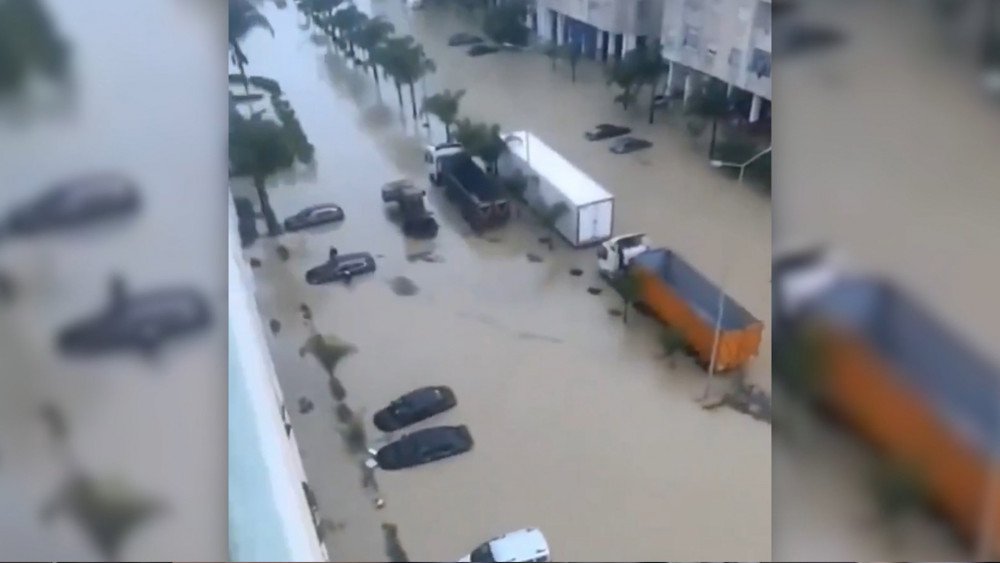
Aftermath of large-scale flooding caused by torrential rains: residential areas inundated in the city of Ksar el-Kebir, Larache Province, Tangier-Tétouan-Al Hoceima region, Morocco
The release of water from an overflowed dam and a sharp rise in river levels led to powerful torrents surging into the city, flooding several residential districts.
To assist those affected, authorities deployed rapid-response army units. More than 50,000 residents — nearly half of Ksar el-Kebir’s population — were evacuated, and the city’s main entrance was temporarily closed.
Italy
On January 25, a major landslide occurred in Sicily, triggered by the anomalously heavy rainfall brought by Storm Harry. A massive section of land broke away from the town of Niscemi — a popular resort with a population of about 25,000 people.
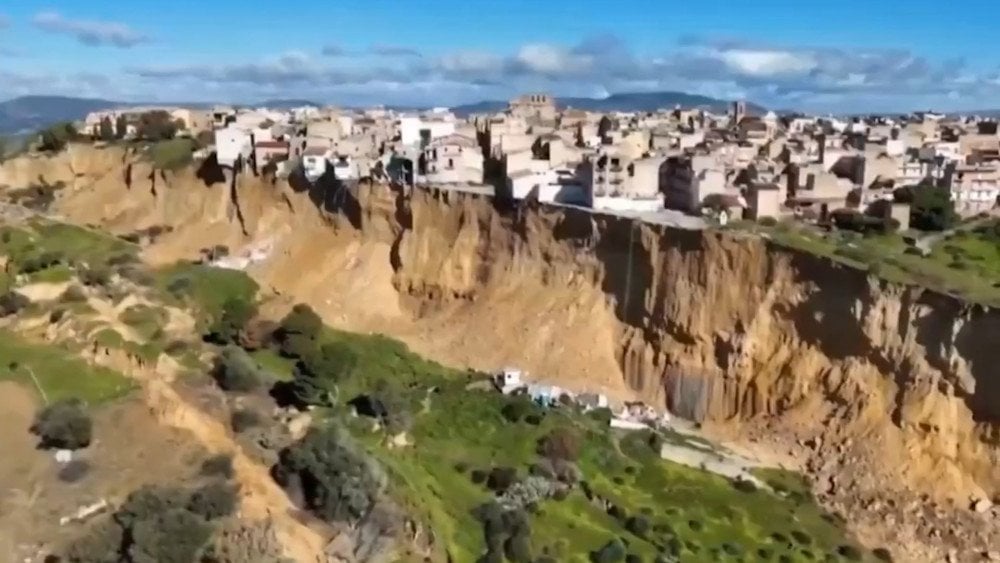
Major landslide in Sicily, Italy: a huge section of land broke away from the town of Niscemi
Several buildings fell from a height of 20 m (66 ft), and hundreds more were left on the brink of collapse. Residents, seeing cracks in the walls, hurriedly fled their homes, taking nothing with them.
More than 1,500 people were evacuated. Many found shelter with relatives, while for hundreds of others, authorities organized temporary accommodation in a local sports hall. It remains unknown how long people will have to stay there and whether they will be able to return home. The landslide disrupted traffic across much of the local road network. Schools were closed, and the town was declared a red zone.
The landslide now stretches 4 km (2.5 miles) along the hillside and remains active: ground deformation continues, and new cracks and collapses are appearing.
According to the head of the National Civil Protection Department, concern is heightened by the fact that, based on assessments conducted, not only the visible section is moving — the entire hill is collapsing onto the plain of Gela.
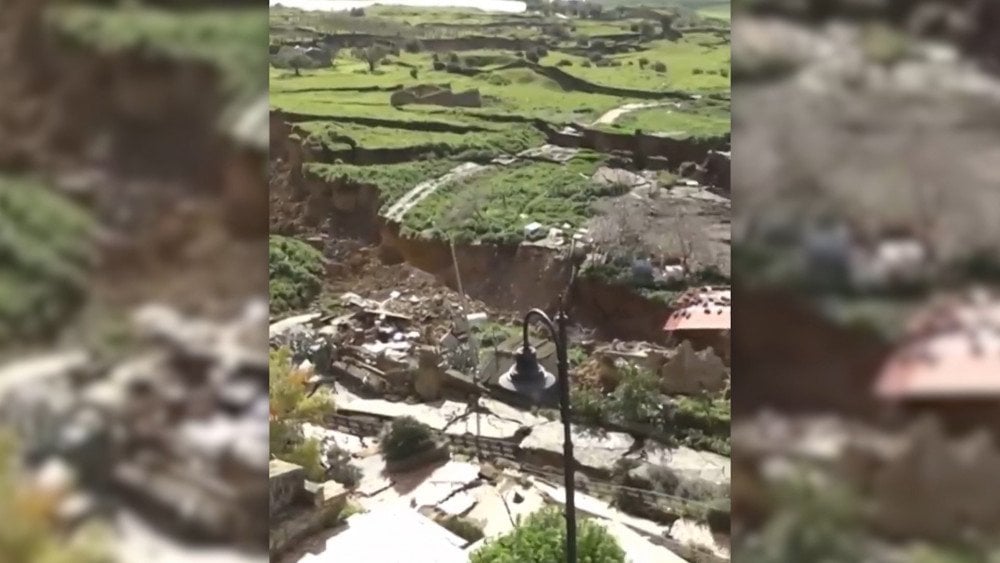
Large-scale landslide in the town of Niscemi, Sicily, Italy, left homes hanging over a cliff, forcing evacuation
Micro- and nanoplastics play a key role in these anomalous phenomena. This is not simply a matter of environmental pollution, but rather the electret-like properties of plastic particles, which not only exacerbate climate disasters but also damage the human body.
You can learn more about this in previous editions and in the report “Nanoplastics in the Biosphere. From Molecular Impact to Planetary Crisis.” The fundamental solution to the problem is to make micro- and nanoplastics safe — transforming them from an active and hazardous agent into inert dust, that is, to deprive plastic particles of the ability to accumulate and retain electrostatic charge. And this process must begin not years from now, but immediately.
In this regard, it is important to emphasize that the ALLATRA scientific community has already accomplished one of the key tasks of any research—the root cause has been identified.
A final solution has not yet been found, but identifying the cause itself saves the global scientific community decades of work and enormous resources.
If micro- and nanoplastics can be deprived of their electrostatic charge, natural self-restoration mechanisms will be triggered. We will not only reduce their destructive impact on human health but also remove the excess energy that is currently accumulating and amplifying the geodynamic crisis and natural disasters. Heat exchange in the ocean and atmosphere will begin returning to equilibrium, and excess heat from the Earth’s interior will once again be able to dissipate into space.
The scale of the task is immense. It requires complex research, expensive equipment, and thousands of experiments around the planet. But everything necessary already exists — laboratories, specialists, and infrastructure. What is lacking are the conditions for joint, coordinated work. Moreover, humanity already has a positive experience of international scientific cooperation focused on a single goal, for example, in the Human Genome Project.
The Human Genome Project was an open public initiative that united thousands of researchers worldwide in decoding human DNA. More than 20 universities and research centers from six countries participated, forming an international consortium for human genome sequencing. This means we can apply that experience to the nanoplastics problem as well. The only driving force behind the search for a solution is people themselves. It is time to stop waiting for someone else to come and solve everything.
It's like treating a patient: the diagnosis has already been made, the cause of the illness is known. But treatment begins only when the patient acknowledges the problem and demands help.
Today, that patient is all of humanity. And while we are still capable of thinking, understanding, and acting — we still have a chance to change the situation and secure a future not only for ourselves but also for future generations.
Watch the video version of this article here:
Leave a comment