Summary of Climate Disasters on the Planet, February 23–March 1, 2026
Sometimes disasters expose not only the vulnerability of infrastructure — they reveal the truth about ourselves.
By exploring this summary of climate events from the past week, from February 23 to March 1, 2026, you’ll be able to determine what choice you would make in a critical situation.
United States
Since February 22, a massive snowstorm has paralyzed the Northeastern United States. More than 40 million people, from the state of Maryland to the state of Maine, were under weather warnings for blizzards and a winter storm.
According to the National Weather Service, pressure dropped by 39 millibars in just 12 hours. This is almost twice the threshold for classifying a system as a “bomb cyclone,” which speaks to the incredible power of the storm.
A “bomb cyclone” is an extratropical mid-latitude cyclone that rapidly intensifies when the pressure at its center drops by at least 24 millibars within 24 hours.
The combination of extremely cold continental air and abundant ocean moisture led to extreme snowfall.
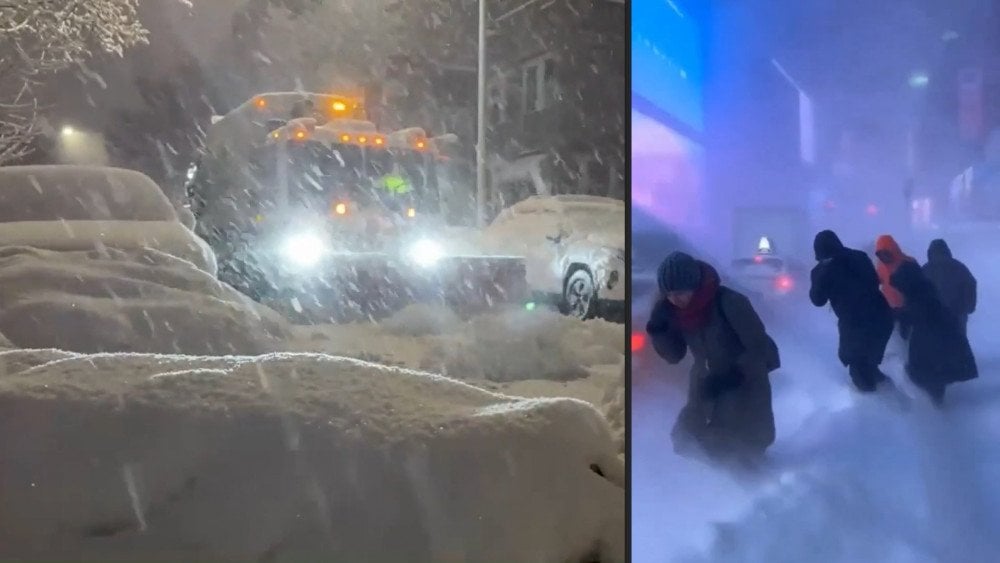
A powerful snowstorm in the United States: streets and cars buried in snow, people struggling to move through massive snowdrifts
In the city of Providence, Rhode Island, snow cover exceeded 85 cm (33.5 inches), setting an absolute record since the beginning of instrumental observations in the early 20th century. In the city of Warwick, snowdrifts reaching 97 cm (38.2 inches) surpassed the levels of the historic blizzard of 1978.
On Long Island, more than 75 cm (29.5 inches) of snow fell in some areas, while strong winds for many hours reduced visibility to near zero.
In Boston and southeastern Massachusetts, wind gusts reached 133 km/h (83 mph), and in coastal areas, including Nantucket Island, exceeded 150 km/h (93 mph). Strong winds knocked down hundreds of trees and power line poles.
In New York, by the morning of February 23, at least 30 cm (11.8 inches) of snow had fallen. The city was almost completely paralyzed: schools were closed, and streets were deserted. Around 4,000 workers were involved in clearing snow from roads, sidewalks, and public transport stops.
At the height of the blizzard, an unusual phenomenon was observed — thundersnow. At night, lightning split the sky over New York, and one strike hit the One World Trade Center tower.
The storm severely disrupted transportation. Across the country, more than 10,000 flights were canceled: the largest numbers were at airports in New York, Boston, Newark, and Philadelphia.
Commuter train and bus service was suspended or reduced, and in Philadelphia, bus service was completely suspended during the storm. In several states, including New Jersey and Connecticut, authorities imposed restrictions on all non-essential transportation to ensure the operation of emergency services.
People spoke of growing fatigue from the endless winter storms. A resident of New Jersey, clearing snow near his home, said: “I’m fed up with this. I don’t want to see any more snow.”
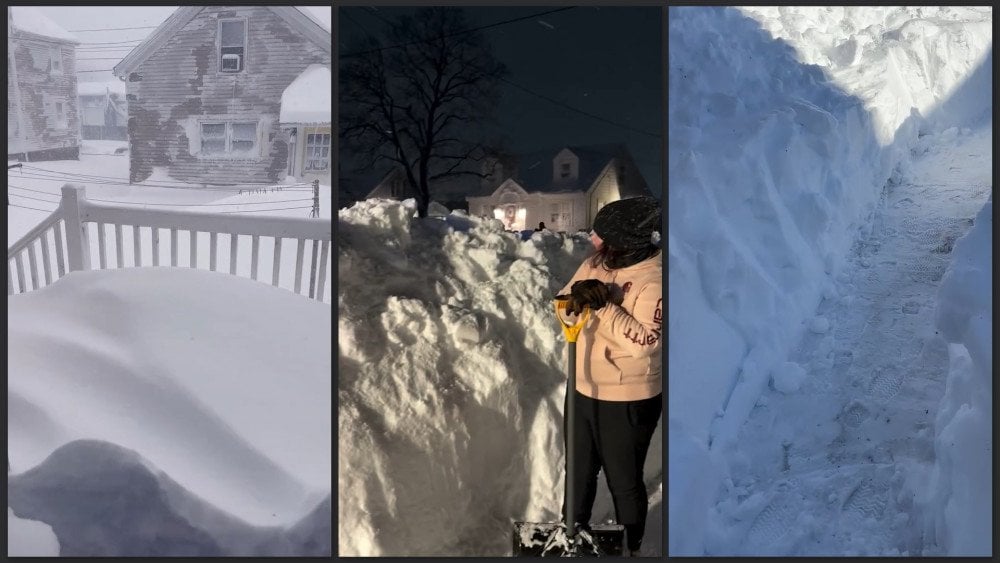
After a severe blizzard in the United States, streets were buried under human-height snowdrifts
Widespread power outages became another consequence of the storm. At the peak, about 650,000 customers along the U.S. East Coast were without electricity, nearly half a million of them in Massachusetts, New Jersey, and Delaware.
In-person classes were canceled for approximately 900,000 students, and millions of residents were forced to stay at home.
In major cities, warming centers were opened for those caught outside in extreme cold conditions.
This bomb cyclone claimed 12 lives, adding to a tragic statistic: the current winter season in the United States has turned into a series of deadly storms, which have killed at least 150 people in just 32 days.
Colombia
A sudden eruption of a mud volcano occurred on February 25 in the Colombian municipality of San Juan de Urabá, Antioquia Department.
A bright fireball shot into the night sky, frightening residents of the densely populated area. It was followed by plumes of smoke and persistent flames. Mud was ejected several meters (yards) into the air, and cracks appeared in the ground.
A state of emergency was declared in the municipality.
Since the volcano is located near a water treatment plant, the water storage system was affected. The explosion scorched vegetation, killed livestock, and damaged the main road leading into the municipality.
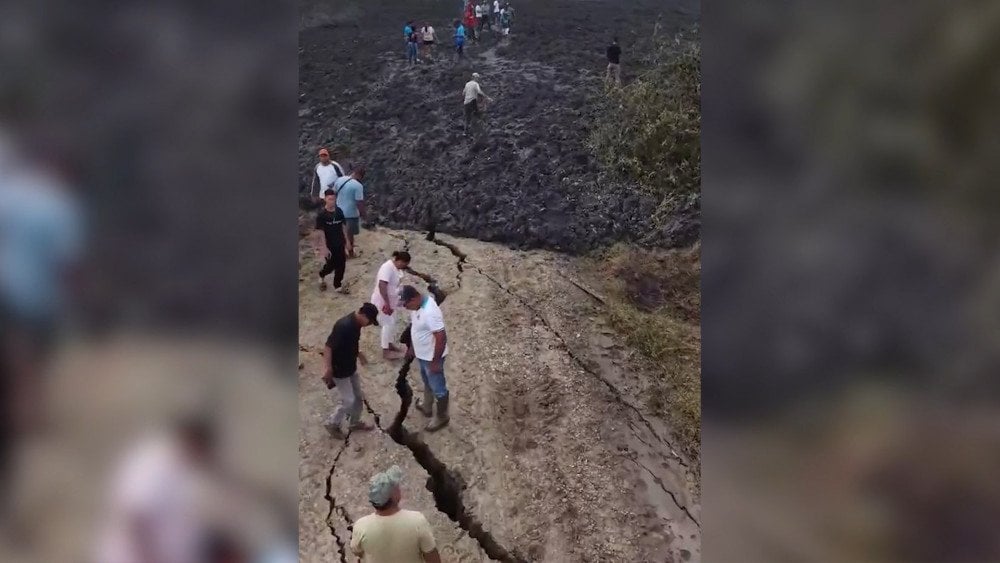
Cracks in the ground after the mud volcano eruption in Colombia
According to experts, the eruption of this previously dormant volcano was triggered by underground shifts, likely caused by tectonic activity in the region.
According to preliminary data, there were no casualties, but as a precaution, residents of three houses were evacuated.
Australia
An extremely unusual weather system, caused by a deep and slow-moving low-pressure area, led to widespread flooding in Australia. On February 22, a cyclone stalled over the Simpson Desert. Drawing in moist tropical air masses from the north, it unleashed heavy downpours across much of the country: the states of South Australia, New South Wales, Victoria, Queensland, and the Northern Territory were affected.
In many regions, nearly a year’s worth of rainfall fell within one to two days. On February 25, 169 mm of rain fell over a 24-hour period at the Nappa Merri station in Queensland; on February 27, 128 mm fell over a 48-hour period in the town of Birdsville, Queensland; on March 1, 126 mm fell over a 48-hour period in the town of Horsham, Victoria; On March 1, in Mildura, Victoria, nearly 150 mm fell over 36 hours.
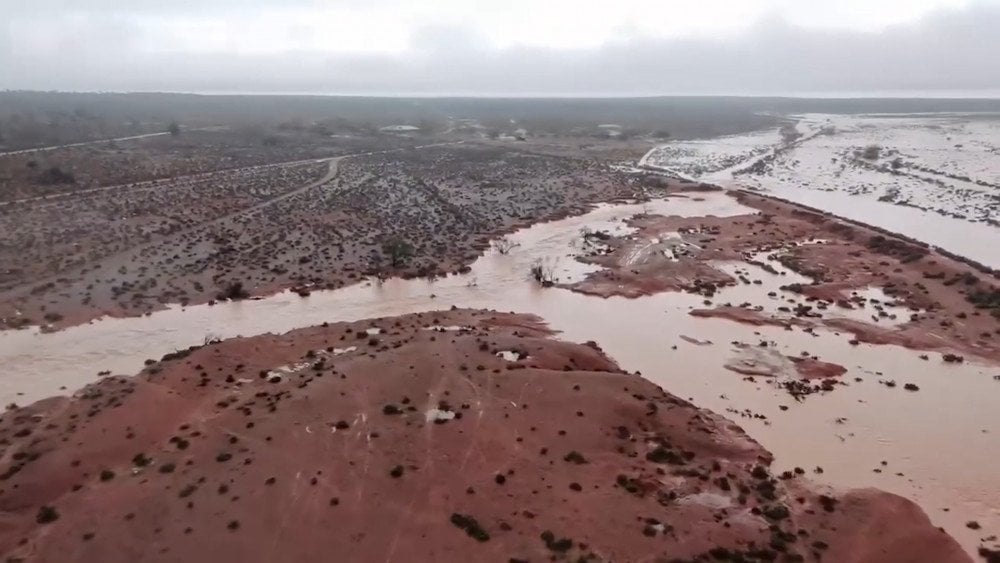
Extreme downpours caused widespread flooding in Australia
On February 25, more than 200 mm (7.9 inches) of rain fell in some areas of South Australia. In Victoria, rainfall was so intense that on the Barrier Highway, between Broken Hill and Peterborough, a heavy truck became stranded in flooded terrain.
The streets of Mildura were inundated, with pastures, parking lots, schools, and a major highway underwater. It is worth noting that for this state, such heavy rainfall is an extremely rare phenomenon.
In northwestern Queensland, in Mount Isa, the wettest February in the city’s history was recorded: 319 mm (12.6 inches) of rainfall turned dry land into lakes.
On February 27, a powerful downpour also struck Sydney, the largest city of New South Wales. In the suburbs of Abbotsford and Lidcombe, 134 mm (5.3 inches) and 122 mm (4.8 inches) of rain fell in 24 hours, respectively.
More than 3,000 people lost power, and in the western part of the city, residents of about a dozen homes were evacuated.
After the heavy rains, experts warned of a new danger: murky water in rivers and along Sydney’s coastline increased the risk of encounters with bull sharks.
By March 1, the severe weather reached its peak in the southeast of the country. In the town of Everlia, South Australia, a motorcyclist attempting to cross the flooded Fudgens Creek was swept away by a powerful current. The man died.
As a result of the flooding, the Trans-Australian Railway near the port city of Port Augusta was partially destroyed, with sections of track up to 100 m (328 ft) washed away, and rail traffic on the East–West route was closed.
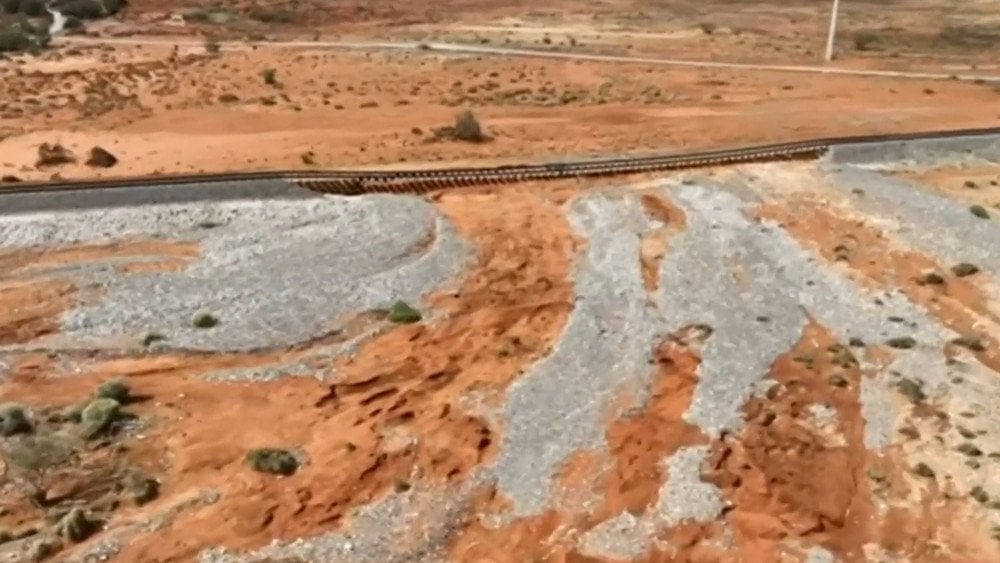
Flooding destroyed a section of railway in Australia
In Western Australia, more than 10,000 lightning strikes were recorded. In Perth, the state capital, an elderly man was injured by a lightning strike, and his dog was killed. Later, lightning struck near a school in the eastern part of the city, injuring two teenage girls.
Indonesia
Three days of torrential rains on the Indonesian island of Bali led to severe flooding. Rivers overflowed their banks, inundating many areas, including major tourist centers — Kuta, Legian, and Seminyak in Badung Regency.
According to local residents, this was the most severe flood they had ever experienced.
Some businesses temporarily suspended operations, and rice fields were damaged by floodwaters.
In the tourist area of Kuta, Badung Regency, people moved through flooded streets using surfboards and rubber boats. In some places, water levels reached 1.5 m (4.9 ft). Panic spread among residents and tourists when a giant python was spotted in the raging waters.
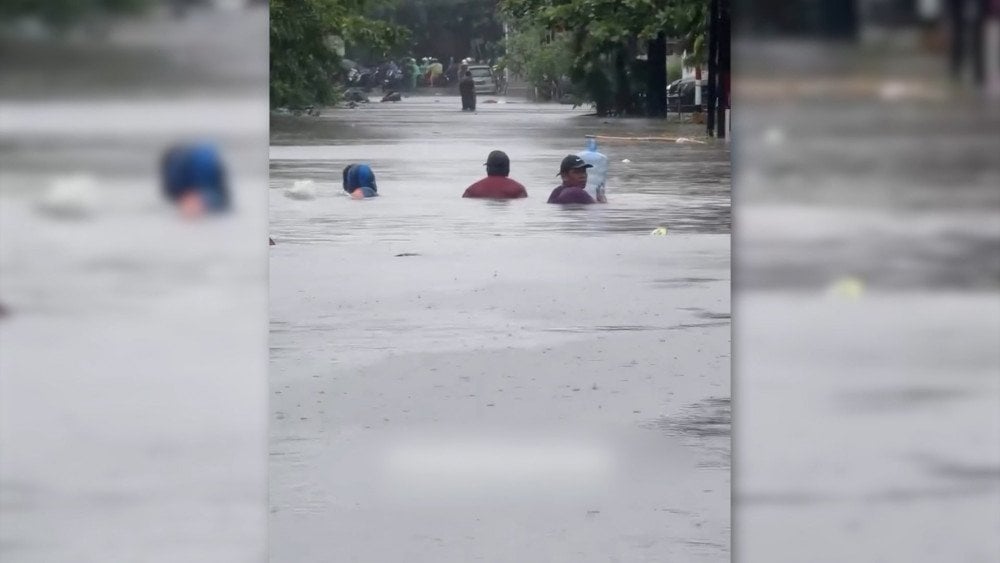
Severe flooding on Bali Island, Indonesia
Evacuations from flooded villas and hotels were carried out by boats and canoes. Police helped tourists leave buildings and moved them to safe locations. Sixty people had to be evacuated from one hotel.
Brazil
On February 23, extreme rainfall struck the Zona da Mata mesoregion in the state of Minas Gerais.
In the municipality of Ubá, 124.2 mm (4.9 inches) of rain fell in 6 hours, comparable to the average monthly norm for February, and 162 mm (6.4 inches) in 24 hours.
The huge volume of water caused the Ubá River to overflow its banks. Streets, homes, and commercial establishments were flooded. Three bridges were severely damaged. Three buildings and one residential house also collapsed.
As of March 1, the disaster claimed the lives of seven people, and one person is missing.

A woman clings to a column to avoid being swept away by the current during flooding, Minas Gerais state, Brazil
One of the most alarming situations occurred at a nursing home. Water rapidly flooded the building, cutting off the residents’ escape route. They were urgently evacuated to the top floor, while some of the elderly residents with limited mobility waited for help to arrive, standing right in the water.
Major car dealerships were also affected: Hyundai, Nissan, and Fiat centers were flooded.
The downpour flooded a funeral home. Eyewitness videos show coffins being carried through the streets by the stream of water.
The most tragic consequences of the disaster occurred in Juiz de Fora. The terrain amplified the scale of flooding, as the municipality is located in a hilly area with valleys, and during heavy rains, water rapidly flows from slopes into lowlands, sweeping everything in its path.
This time, the amount of rainfall was enormous: in one district, a weather station recorded 191 mm (7.5 inches) in 24 hours.
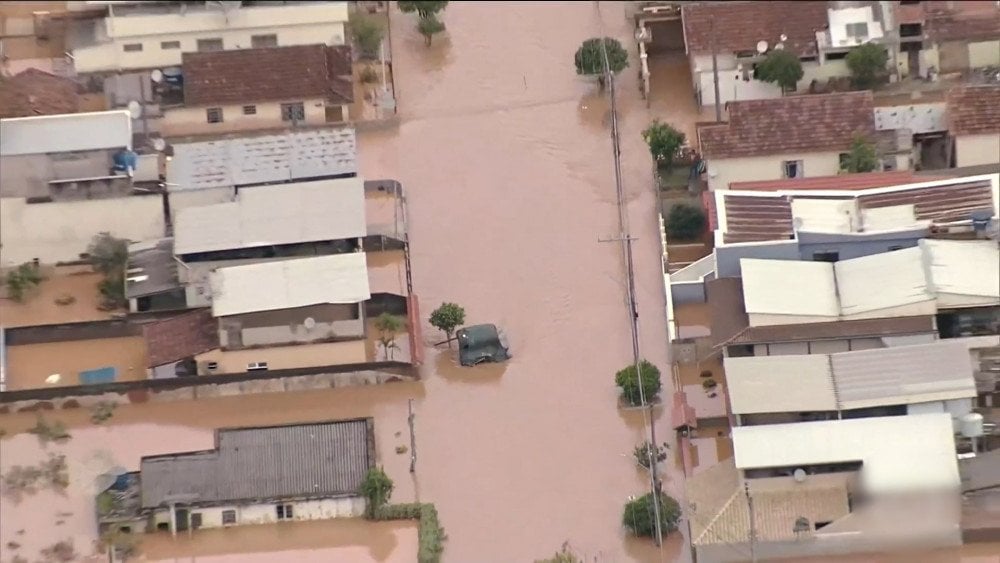
Flooded residential areas after heavy rains, Minas Gerais state, Brazil
The average February rainfall (1991–2020) in Juiz de Fora is 170.3 mm (6.7 inches).
In some places, up to 80 mm (3.1 inches) of rain fell in just one hour, which led to the sudden overflow of the Paraibuna River and streams.
Muddy water currents carried cars and debris through the streets. Bridges and access roads to the city center were closed.
At least 20 landslides occurred. Some neighborhoods were completely isolated. Search teams with dogs operated in the affected areas. Authorities described the situation as “extreme.”
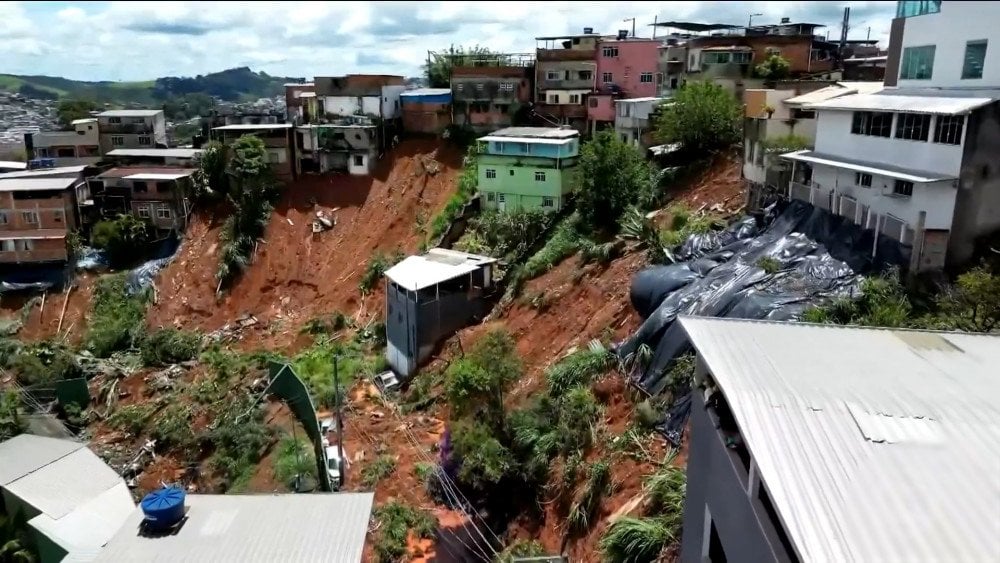
A landslide destroyed homes in Minas Gerais state, Brazil
One major landslide occurred at night and destroyed 12 houses.
As of March 1, flooding and landslides in Juiz de Fora had killed 65 people.
Authorities declared a state of emergency. Classes in all educational institutions were suspended for several days. Civil defense units at both the state and national levels were mobilized to strengthen the response.
Just three days after one of the heaviest downpours in the municipality’s history, another powerful storm struck Juiz de Fora. Rain continued for several hours.
According to the National Center for Monitoring and Early Warning of Natural Disasters (Cemaden), on the evening of February 25, weather stations recorded within a few hours: in Graminha — 114 mm (4.5 inches) of rainfall; in Cidade Universitária — 113 mm (4.4 inches).
Business owners had to urgently save their shops — they scooped out water with buckets and pushed it away with squeegees.

Aftermath of destructive flooding in Minas Gerais state, Brazil
Due to the downpour, river levels rose sharply: the municipal hospital was flooded, a motorcycle courier was swept away by the current on the road, and near an emergency care center, the Santa Luzia stream overflowed its banks.
This February became the rainiest on record in Juiz de Fora: total monthly rainfall reached 589 mm (23.2 inches), three times the meteorological norm (average monthly — 170 mm / 6.7 inches).
Local residents are shocked that extreme weather events are occurring far too frequently.
Bolivia
On February 27 at 18:20 local time, one of the largest air disasters in the country’s history occurred in Bolivia.
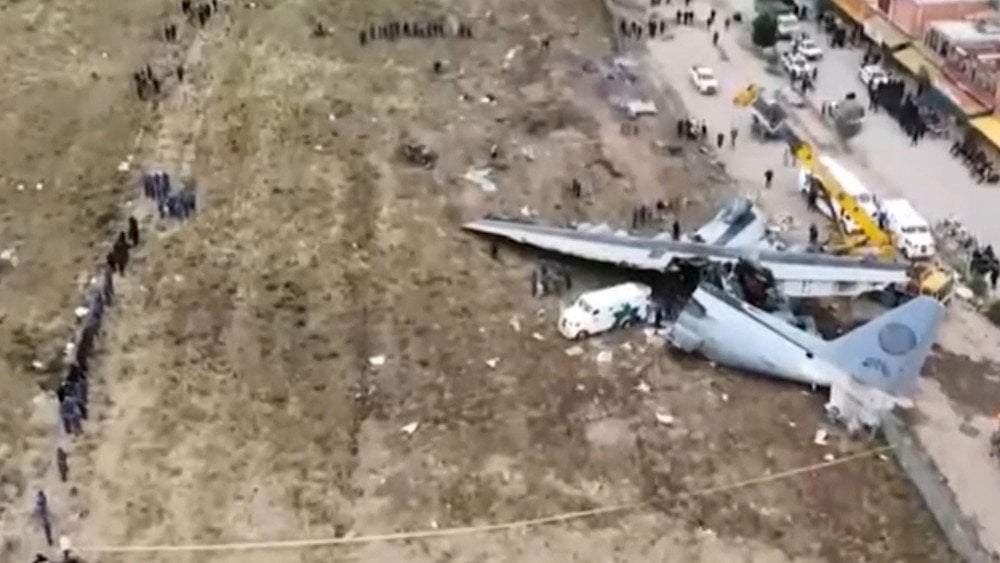
Destructive aftermath of severe weather — a plane crash at an international airport in Bolivia
A Lockheed C-130 Hercules military transport aircraft, flying from the city of Santa Cruz, crashed during landing at El Alto International Airport, near the country’s administrative capital, La Paz.
Preliminary reports cite extreme weather conditions as the cause of the disaster.
During the landing approach and touchdown, the aircraft lost control and was unable to brake, presumably due to runway icing after heavy hail.
The aircraft slid by inertia for about one kilometer (0.62 miles), broke through the airport fence, and entered a busy road, where it crashed into about 15 vehicles.
Among the damaged vehicles were route minibuses, passenger cars, and a truck with a trailer. Some of them were reduced to twisted metal wreckage.

Vehicles damaged as a result of the collision with the aircraft, Bolivia
As a result of the incident, one of the eight crew members died.
As of February 28, the disaster on the ground claimed at least 21 lives. Dozens of people were injured, including severely. One child lost both legs.
Rescue operations were severely complicated by large crowds. The aircraft was transporting 18 tons of new banknotes to La Paz; after the crash, the bills were scattered across the road, and people rushed to collect them. Firefighters initially had to disperse the crowd with water cannons, and later, after police arrived, they even used tear gas. About 600 military personnel were also deployed to maintain order.
According to the President of the Central Bank of Bolivia, David Espinoza, the banknotes were intended to replace worn ones but had not yet been put into circulation and had no legal tender status.
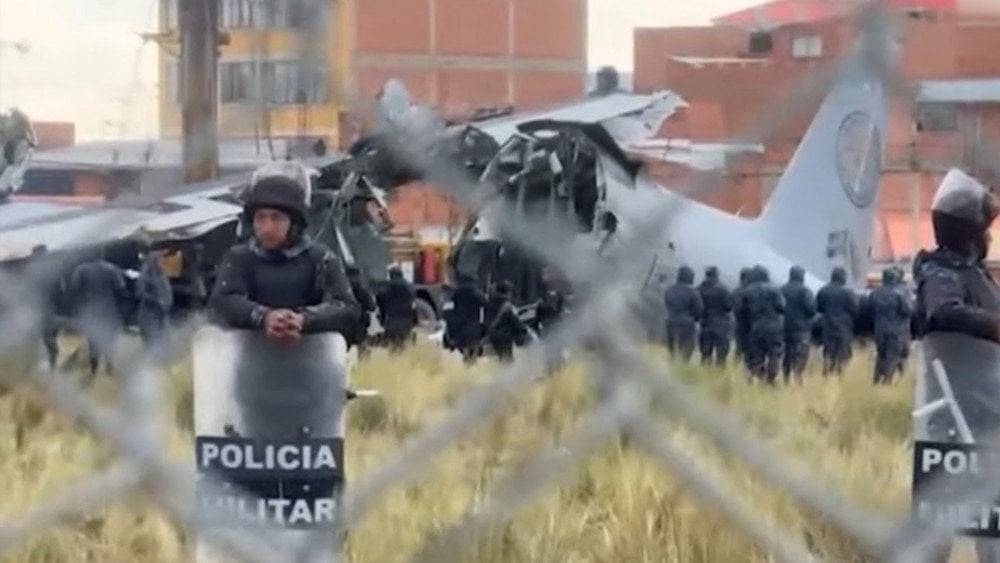
The crash site is cordoned off by police, rescue operations are underway, Bolivia
By order of the bank, part of the banknotes was burned on site.
This situation is highly revealing. The values of our society are exposed here as if under a magnifying glass. People saw money — and in that moment, vigilance, rational thinking, and simple humanity disappeared: through their actions, they hindered the rescue of those who were between life and death.
Pieces of paper that did not even have financial value turned out to be more important than human life.
And this is happening now — at a time when the planet has enough resources for everyone. We do not live in a world of total scarcity. We live in a world of distorted values — where there is enough food, yet people go hungry; where there is sufficient technology, yet safety remains an illusion.
As disasters intensify, it becomes clear: what is happening today is only the beginning of large-scale climate chaos. Many countries are already living in a continuous series of natural disasters. However, real actions to address this problem are still not being taken. The planet is undergoing serious climate and geodynamic changes, and micro- and nanoplastics only amplify these processes, making them even more destructive.
Yet for most people, it still does not matter.
They do not care that somewhere people are buried under snow, elsewhere catastrophic floods are occurring, and in other places people are left without drinking water due to a volcanic eruption — all of this is perceived as distant news that does not concern them.
But when these events reach us — everything changes. At that point, neither money nor savings will help. All electronic assets can disappear instantly — it only takes one major solar flare.
Money will not warm you in the cold, gold cannot be eaten, and diamonds cannot quench thirst.
Only a person who happens to be nearby and chooses to act can help.
It may be a stranger with whom you share nothing except an extreme situation, yet that person can pull you out from under debris, share water, or protect you from the cold — and in that moment, your life will be more important to them than any material wealth.
The only truly sustainable resource is not oil, gold, or bank accounts. It is the ability of people to remain human.
Disasters are a harsh test — one that examines not only economies and financial systems, but our humanity.
Watch the video version of this article here:
Leave a comment