Summary of Climate Disasters on the Planet, February 16–22, 2026
Climate disasters are no longer spread over months — they are condensing into days.
Record-breaking winds in New Zealand, a tornado in Italy, anomalous heat in Paraguay, deadly avalanches in the United States and Europe — and people who are not prepared for it.
Coming up — details of the climate events of the past week, from February 16 to 22, 2026, and one important question for those who seek adrenaline and extreme thrills.
New Zealand
On February 16, a powerful storm with torrential rains struck the North Island of New Zealand.
In Wellington, on Mount Kaukau, record-breaking winds of 193 km/h (120 mph) were recorded, and at the airport — 128 km/h (80 mph). These are the highest figures in the city in more than 10 years, since 2013.
And on the coast of the southern part of the island, at Cape Turnagain, wind gusts reached an incredible 240 km/h (149 mph).
The disaster caused major disruptions to the transport system. Most flights were canceled or delayed: Air New Zealand suspended operations at the airports of Wellington, Napier, and Palmerston North.
Rail services and ferry crossings across the Cook Strait were suspended.
Strong wind gusts knocked down trees, damaged house roofs, and tore down power lines. Tens of thousands of residents were left without electricity.
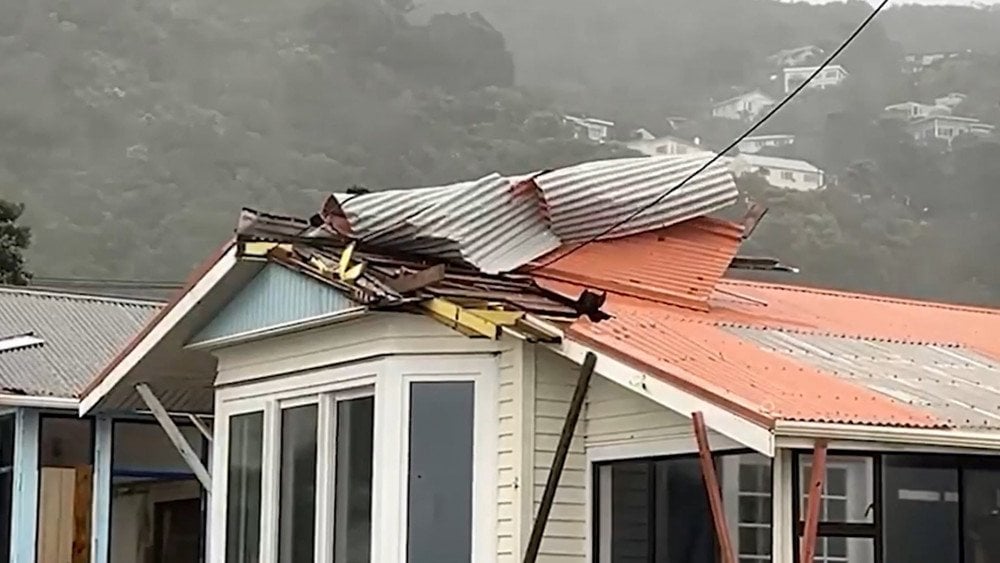
Record winds tore the roof off a building in New Zealand
On February 16, in the Wellington region, Wairarapa district, up to 200 mm (7.9 inches) of precipitation fell overnight.
Several highways were closed due to flooding, and in one district, a landslide blocked about 20 vehicles on the road.
The settlement of Lake Ferry was cut off after the only road leading to it was washed away. Residents formed a human chain, passing food across a bridge that was no longer passable.
Ukraine
Last week, Ukraine was also affected by severe weather conditions.
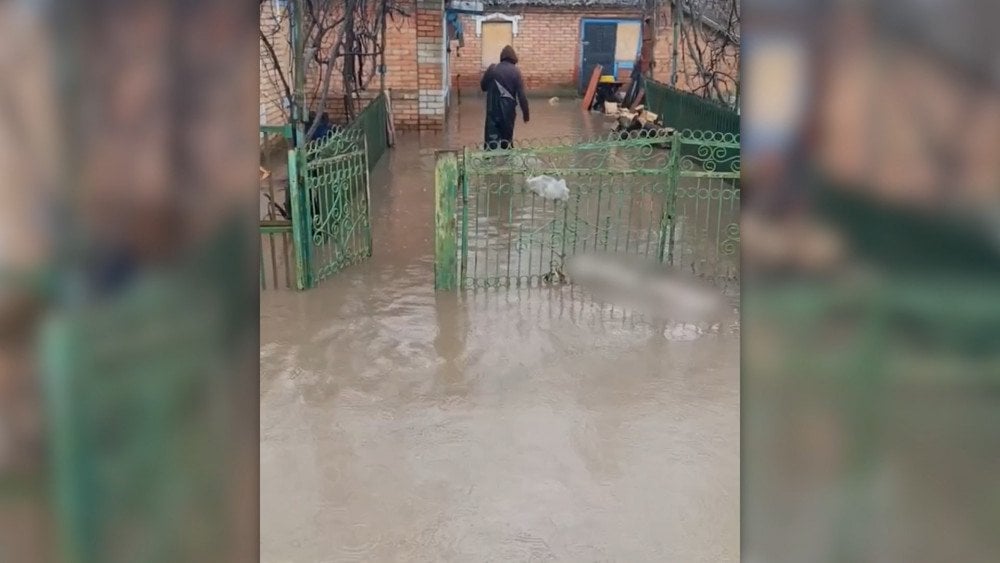
Flooded yards after heavy downpours in Nikopol district, Dnipropetrovsk region, Ukraine
In the northern and western regions — Lviv, Chernihiv, Rivne, and Kyiv — heavy snowfall occurred.
In Kyiv, traffic jams formed on the roads: the most difficult situation was observed on the main highways of the capital, especially on downhill and uphill sections. Numerous road accidents occurred. Long queues formed at public transport stops.
February 16 winds with gusts up to 20 m/s (45 mph) raged in the Dnipropetrovsk region. In the city of Kryvyi Rih, they damaged a bridge fence, and in Dnipro, several traffic lights were knocked down.
After anomalous frosts, a short-term warming set in, causing rapid snowmelt. Heavy rains in several regions only worsened the situation. The frozen ground could not absorb water, which led to flooding — high water levels were recorded in the Poltava, Cherkasy, Mykolaiv, Odesa, Kirovohrad, Kharkiv, Sumy, and Donetsk regions.
In the city of Kropyvnytskyi, the Suhoklia River overflowed its banks — as a result, 20 houses and the “Bim” animal shelter were flooded. The animals were trapped in a water trap, as the water level rose so high that it flooded kennels and enclosures. Hundreds of cats and dogs were evacuated by boat throughout the night and handed over to people who agreed to take them in temporarily.
In the Sumy community, due to flooding of residential areas and critical infrastructure facilities, a natural disaster emergency was declared.
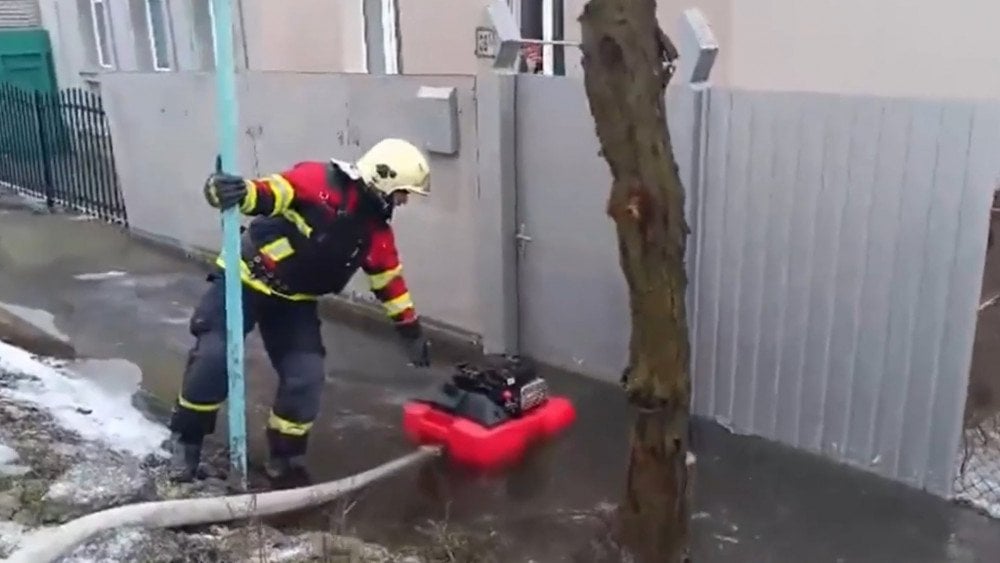
Rescuers eliminate the aftermath of heavy rains in Sumy region, Ukraine
In the Cherkasy region, the Velyka Vys River overflowed and flooded a bridge, disrupting transport movement.
Near the city of Lokhvytsia in the Poltava region, a field turned into a sea.
In several districts of the Kharkiv region, hundreds of houses were flooded, including in places where this had never been observed before.
On February 18, frosts returned to the country, accompanied by freezing rain and snowfall. In the Dnipropetrovsk region, wires were covered with ice, and strong winds caused numerous power line breaks. More than 31,000 families in 190 settlements were left without electricity.
On February 19, severe ice conditions, wet snow accumulation on wires, and wind gusts left 458 settlements completely or partially without electricity in the Dnipropetrovsk, Mykolaiv, Odesa, Kirovohrad, Poltava, and Kharkiv regions.
In Kryvyi Rih, tram and trolleybus traffic was suspended due to ice-covered wires.
In the Mykolaiv region, after freezing rain, fields in some areas resembled frozen lakes, and seedlings were covered with a dense ice crust which, according to farmers, may lead to oxygen starvation of plants.
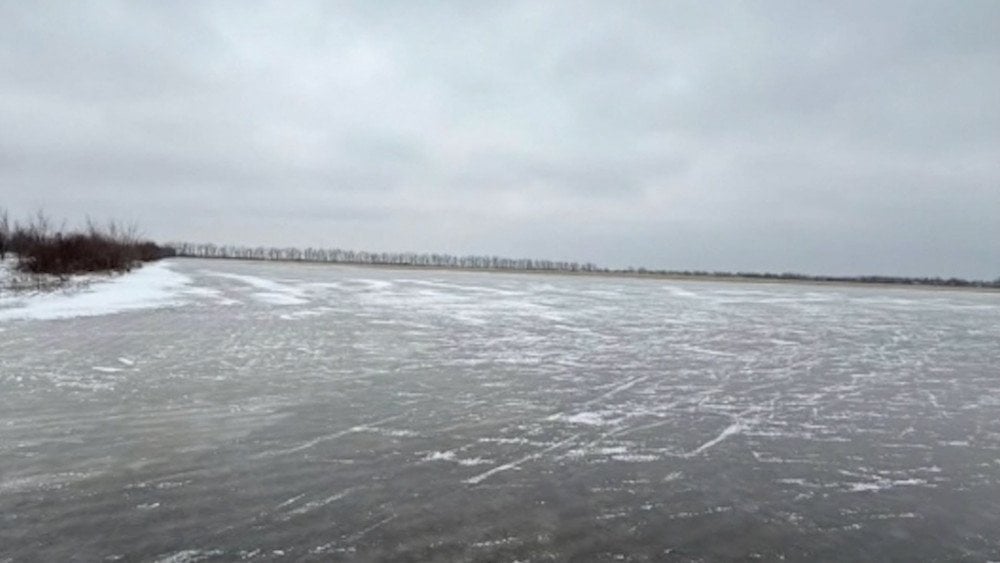
As a result of freezing rain, vast areas of winter crops were covered with a layer of ice, Mykolaiv region, Ukraine
Combined with sharp temperature fluctuations, this poses a threat to the future harvest.
Italy
On February 17, in less than a day, two tornadoes formed in different regions of Italy.
The first powerful vortex, rated IF1.5 (on the International Fujita Scale), struck the province of Brindisi in the Apulia region, passing between the municipalities of Oria and Torre Santa Susanna. It left a path of destruction nearly 10 km (6.2 miles) long and about 360 m (1,181 ft) wide.
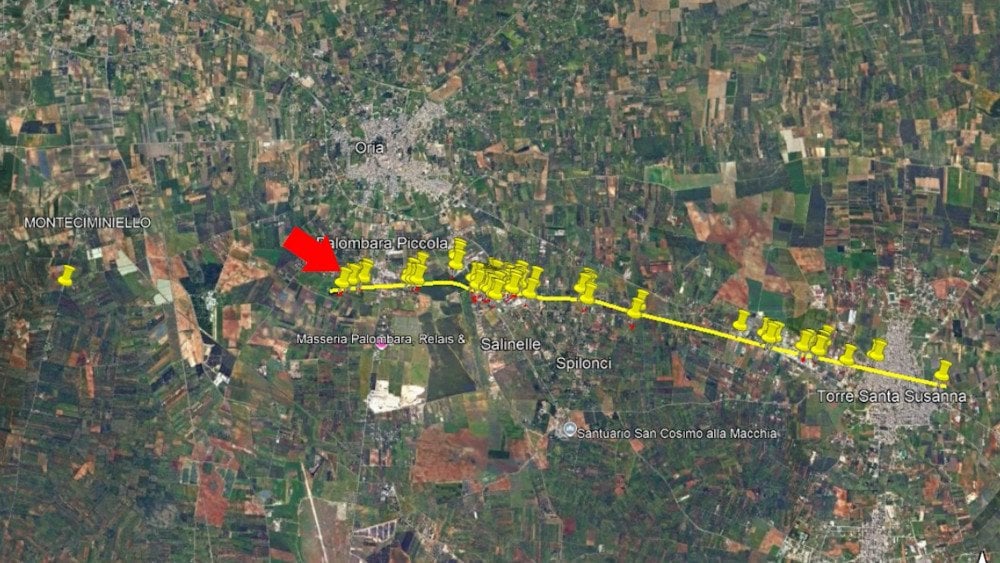
Tornado track in Italy on Google Earth: yellow marks indicate areas affected by the disaster
The tornado uprooted trees, tore roofs off buildings, and damaged solar panels.
The fact that the incident occurred at night likely helped prevent any casualties.
The second, shorter-lived tornado was recorded near the city of Aversa in the Campania region.
Experts note that such powerful vortices at this time of year are extremely rare, but this time atmospheric conditions were particularly favorable for their formation.
Paraguay
Since mid-February, anomalous heat has set in across central South America.
In Paraguay, the perceived temperature reached +50 °C (+122 °F). To cool down, people massively turned on air conditioners, fans, and other electrical devices, which in turn overloaded the power system.
In the city of Fuerte Olimpo, Alto Paraguay Department, five power outages occurred on February 17 alone, and voltage surges damaged household appliances.
On February 18, during the day, a large-scale blackout occurred: power lines coming from the Itaipu Hydroelectric Power Plant failed, leaving most of the country without electricity. Hospitals and medical facilities used generators to keep emergency departments running.

Medical staff in a hospital in Paraguay continue working during the emergency power outage using portable lighting
Businesses suffered losses due to damage to food and medicines. The shutdown of pumps caused disruptions in water supply.
In the city of Mariano Roque Alonso — a suburb of Asunción, the country’s capital — several transformers exploded, and telephone line problems also occurred.
In Asunción itself, as well as in the cities of Ciudad del Este and Encarnación, the shutdown of traffic lights led to transport collapse.
By the evening of the same day, electricity supply was restored, but the incident once again raised the question of the national grid’s ability to withstand peak loads under extreme weather conditions.
Argentina
On the evening of February 18, after exhausting heat, a powerful convective storm struck central Argentina.
In the city of Córdoba, the capital of the province of the same name, the perceived temperature before the storm reached +38.5 °C (101.3 °F).
The most severe impact hit the southern and central parts of Córdoba Province. In the city of Isla Verde, heavy rain with large hail and strong wind gusts damaged roofs and vehicles.
In the city of Serrano, the squall not only broke trees but also destroyed the infrastructure of a sports and cultural center, toppling four lighting towers.
In the city of Jovita, up to 90 mm (3.5 inches) of precipitation fell within a few minutes — as a result, water flooded vast areas and entered homes.
In the cities of Almafuerte and Embalse, giant hail the size of a tennis ball was reported.
The rampage of the storm led to a critical situation on highways.
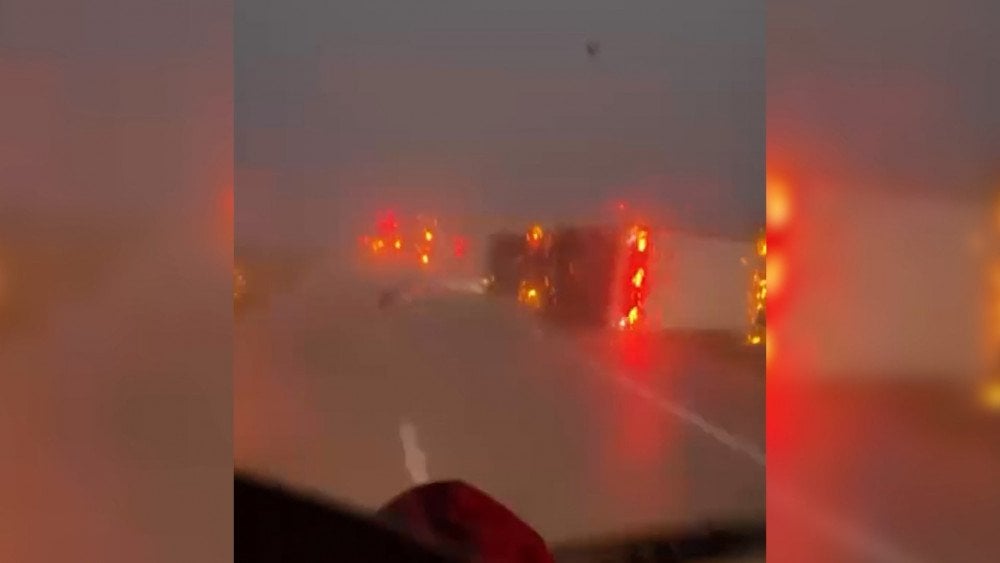
A powerful storm caused a large number of trucks to overturn on the Córdoba–Rosario highway in Argentina
On the Córdoba–Rosario highway, between the settlements of Tortugas and Cañada de Gómez, at least six trucks overturned due to squally winds, and several people were injured.
Snow Avalanches
On February 19, in the Republic of Karachay-Cherkessia, the settlement of Arkhyz, Zelenchuksky District (Russia), a spontaneous snow avalanche occurred.
A snow mass of approximately 135,000 m³ (4.8 million ft³) came down outside the official avalanche-prone zone and partially buried the recreation center in the village of Arkhyz.
As a result, four guest houses, one utility building, and two passenger vehicles were damaged. Fortunately, there were no fatalities or injuries. Several people were trapped under the snow, but rescuers quickly pulled them out, and no medical assistance was required.
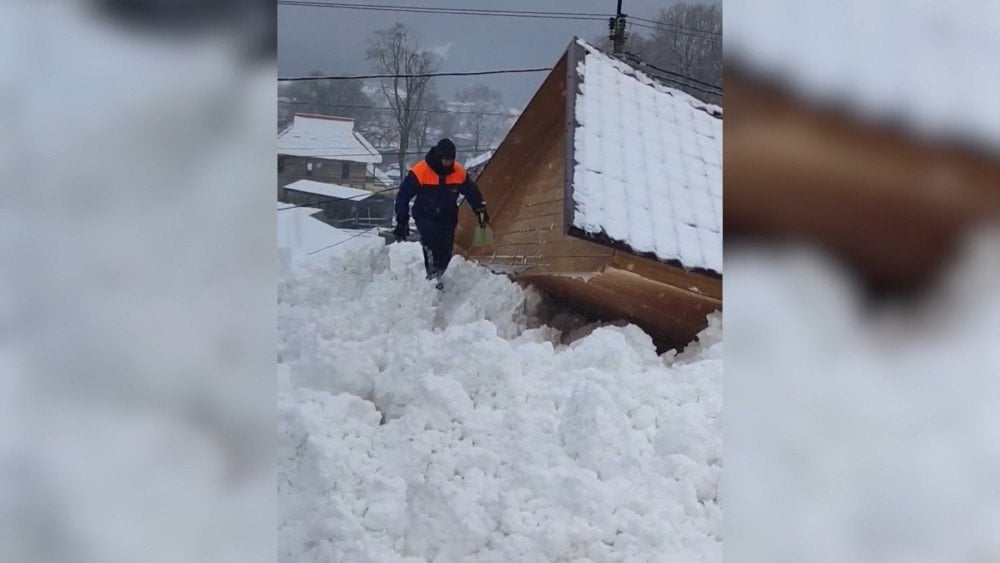
A rescuer makes his way through snow that covered a wooden campsite after the avalanche in Arkhyz, Karachay-Cherkessia, Russia
On February 17, in California, a group of four mountain guides and eleven tourists was returning from a three-day ski tour in the Sierra Nevada mountains. In the morning, near Castle Peak, they were struck by a snow slide approximately 100 meters (328 ft) long.
Unfortunately, nine people were killed instantly.
Six survivors were able to send a distress signal. Heavy snowfall, gusty winds, and near-zero visibility complicated the rescue operation, which involved Black Hawk helicopters, ground teams, and search dogs.
As a result, help arrived only after several hours. Two tourists were hospitalized with injuries.
The Castle Peak avalanche became the deadliest in California’s history and the second deadliest in the United States since 1950.
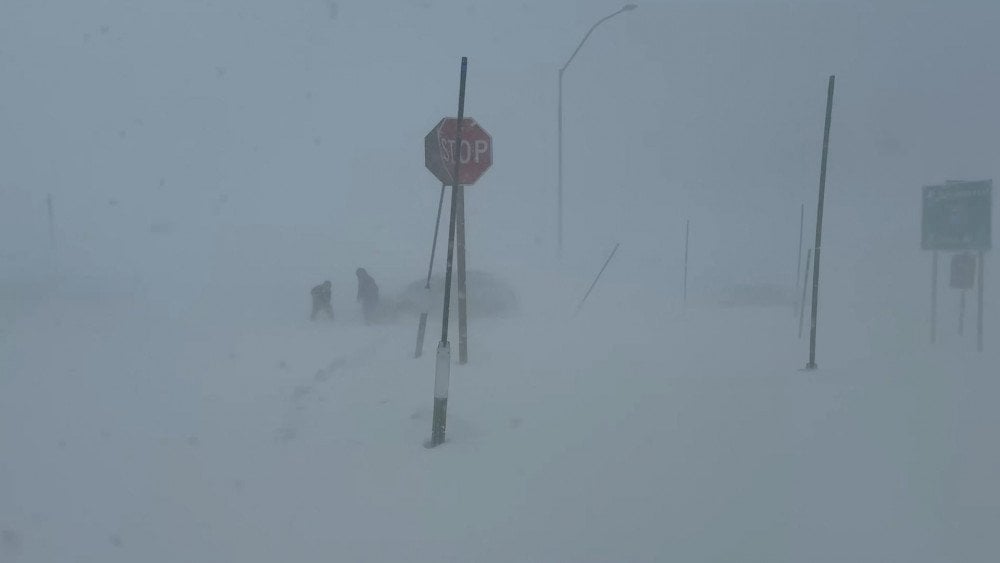
Strong winds and snowfall complicate rescue efforts at the avalanche site, California, USA
In February, two weeks of heavy snowfall in the Alps left up to 3 meters (9.8 ft) of fresh snow in some areas. This, combined with strong winds and an unstable snowpack, led to dozens of avalanches. Rescue teams were working under extreme pressure—hundreds of search operations were carried out, involving medical aircraft, K-9 units, and mountain rescue teams.
In Switzerland, the avalanche danger situation was extremely tense: for seven consecutive days, at least one region of the country was under a level 4 avalanche risk warning, and in some areas of the canton of Valais, warnings reached the maximum level 5. According to specialists, “such a prolonged period of high avalanche risk is rare.”
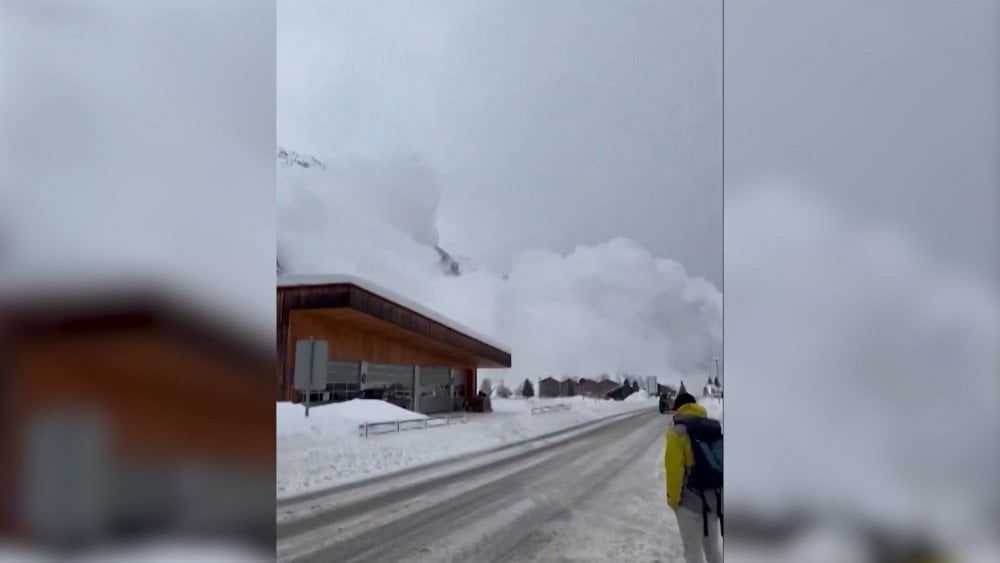
Snow avalanche at the Zermatt ski resort in Switzerland
In the canton of Valais, on the morning of February 17, near the mountain village of Zermatt, between the communes of Täsch and Randa, a snow mass covered a passing train of the Matterhorn Gotthard Bahn company.
None of the passengers were injured, but they were shocked and described the experience as surreal.
The day before, near the village of Goppenstein, another avalanche on the Frutigen–Brig line caused a BLS AG train to derail, injuring five people.
Due to major avalanches, several valleys in the cantons of Bern, Glarus, and Valais were temporarily cut off from the outside world.
In the canton of Graubünden, a tragedy occurred: on February 17, a man died in an avalanche while skiing with his son.
Earlier, on February 15, at the Parsenn ski resort, a snowboarder was also buried under snow and could not be saved.
On February 17, in the French commune of La Grave, Hautes-Alpes department, a deadly avalanche struck a group of five skiers riding outside prepared slopes. Two people died, and one injured person was taken to the hospital.
At the Valloire ski resort in the Savoie department, one person died and two others were seriously injured due to a sudden avalanche.
Since the beginning of winter, 28 people have died in avalanches in France — more than twice the average for this time of year over the past 20 years.
On February 15, a powerful avalanche descended in the Italian Alps onto the Val Veny valley, near the town of Courmayeur (Autonomous Region of Aosta Valley). Snow buried a group of skiers riding off-piste on one of the most popular freeride routes at the foot of Mont Blanc.
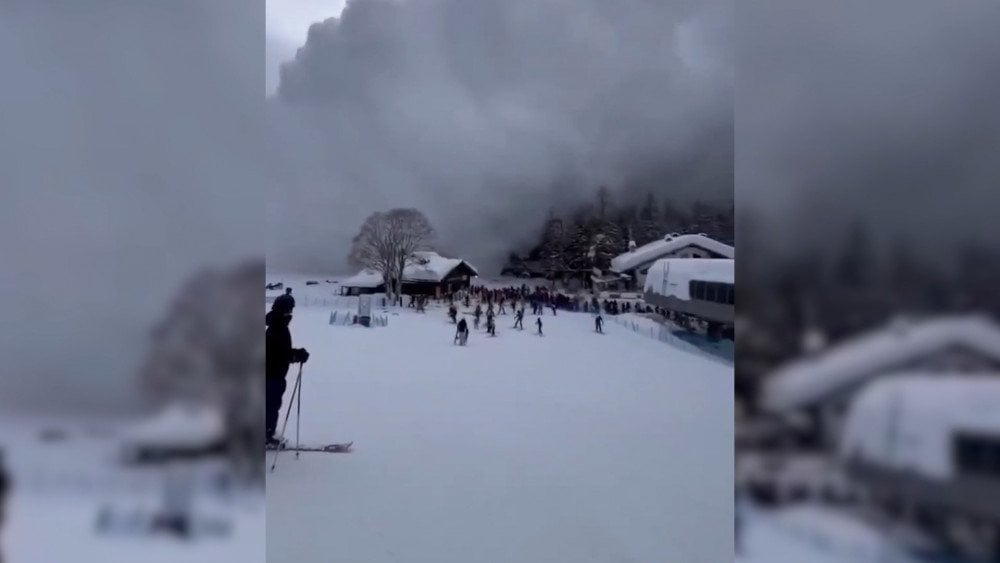
A massive avalanche descends onto a ski resort in the Alps, Italy
The search operation involved 15 rescuers, three canine units, and two helicopters. Unfortunately, three people could not be saved.
In the Austrian federal state of Tyrol, on February 20, more than 32 avalanche incidents were recorded, half of them involving people. The most tragic events unfolded in the commune of Sankt Anton am Arlberg. In the afternoon, an extremely large avalanche about 450 m (1,476 ft) wide and nearly 1 km (0.62 miles) long descended, which, according to police, may have been triggered by a group of five skiers riding outside prepared slopes. Three people were recovered dead from under the snow, and two others were injured.
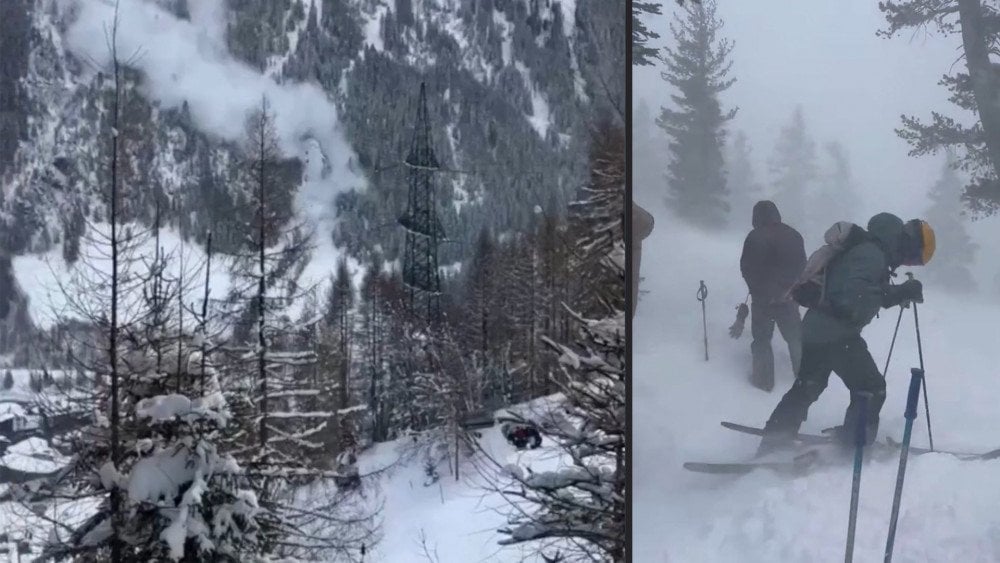
Aftermath of a powerful avalanche in the Austrian Alps: massive snow debris and difficult access to the slopes
On the same day, in the commune of Nauders, a 42-year-old skier and his 16-year-old son were crossing a slope off-piste. Suddenly, an avalanche descended, carrying both 200–300 m (656–984 ft) down the mountain. The teenager remained on the surface and, despite his injuries, managed to call for help, but his father was buried under the snow and died at the scene. The boy was airlifted to a hospital.
In total, over two days, from February 20 to 21, seven people died in avalanches in Austria.
The disaster affected not only ski routes. On the morning of February 20, an avalanche descended onto the Lechtalstraße road near the town of Stockach (Baden-Württemberg), pushing a bus off the roadway. There were 12 people inside, including the driver — fortunately, none were injured.
The tragic cases in Europe discussed today share a common factor: all the victims were skiing outside prepared slopes, and they did so knowingly. They were likely fairly experienced and confident skiers, since they weren’t afraid to venture onto a difficult slope. But it is precisely that confidence that can prove to be a fatal mistake.
Today, a new factor has been added to the familiar risks: the climate is changing faster than we can keep up with, and we are now seeing conditions that simply did not exist at this time of year or in these places before. Reality has already changed, yet we continue to live by the old standards.
Rules are often written based on someone’s bitter experience. But while risks used to be at least somewhat understandable and predictable, today everything has changed dramatically.
Recall the story of the father and son skiing in Austria. It is an example of how a few minutes of adrenaline can cost an entire life. A regular slope seems boring, and you want a “real thrill.” But is that run really worth it if it means a teenager will forever remember the day his father died right before his eyes?
No adrenaline is worth a human life. Take care of yourself and those around you.
Watch the video version of this article here:
Leave a comment