Summary of climate disasters on the planet, October 29–November 4, 2025
Two million people affected in India; 90% of damaged homes in Brazil; 8 million lightning strikes in Australia.
Nature has stopped taking pauses, delivering blows one after another.
In today’s summary, you will see what tragic events the residents of all continents faced during the week from October 29 to November 4, 2025.
Paraguay
A powerful hailstorm struck the San Pedro Department on November 1. The disaster especially affected the districts of Itacurubí del Rosario and San Estanislao, where golf-ball-sized hailstones broke through house roofs, shattered windows, and damaged vehicles.

Severe hail fell over San Pedro Department, Paraguay
The streets and fields in the affected areas were covered with an ice layer up to 25 cm (about 10 inches) thick. As a result of the severe weather, cassava and corn crops were completely destroyed, and a mass death of domestic poultry was recorded. According to preliminary estimates, the disaster caused significant economic damage. Local residents note that a weather event of such intensity is being observed in the region for the first time.
Brazil
From November 1, this same storm system brought chaos to Brazil. The states of Paraná and São Paulo were the most affected by the disaster.
In the state of Paraná, in the municipality of Santo Antônio da Platina, wind speeds reached 91 km/h (57 mph), and in Cornélio Procópio — 95 km/h (59 mph), causing roof damage and fallen trees. More than 3,200 homes were affected. Tens of thousands of people experienced power outages.
The city of Santa Helena saw almost a month’s worth of rainfall — 138.6 mm (5.46 inches) (the average November norm is 150 mm (5.9 inches)). Large hail was recorded in seven municipalities.
In Jandaia do Sul, hailstones were the size of an orange and weighed more than 100 g (3.5 oz).

Large hail fell in Brazil
In the municipality of Pitangueiras, ice blocks damaged about 90% of residential buildings, leaving dozens of people without shelter. Streets were flooded and covered with debris. While rescue teams continued their work, another downpour with hail struck the city, lasting about 10 minutes. It intensified the destruction and significantly complicated rescue operations.
In the municipality of Campo Mourão, two families were left homeless: one house was flooded by mudflows, and a tree fell on another. Strong winds also damaged the city hall building.
At Santa Casa Hospital, several departments, including the maternity ward, were flooded. At the Muffato hypermarket, part of the ceiling collapsed following heavy rainfall and the clogging of drainage systems.
In the municipality of Mandaguaçu, the mobile ambulance base and the emergency care unit were flooded.
On November 2, the disaster struck São Paulo State. The most serious incident occurred in the city of Regente Feijó. Storm winds with gusts over 100 km/h (62 mph) brought down part of a stage and the roof of a large tent during a student party. One person was killed, and dozens were injured.
Afghanistan
On the night of November 3, at 00:59 LT, a powerful earthquake with a magnitude of 6.3 struck Afghanistan in the Tashkurgan Gorge area (Samangan Province). The hypocenter lay at a depth of 28 km (17.4 miles).
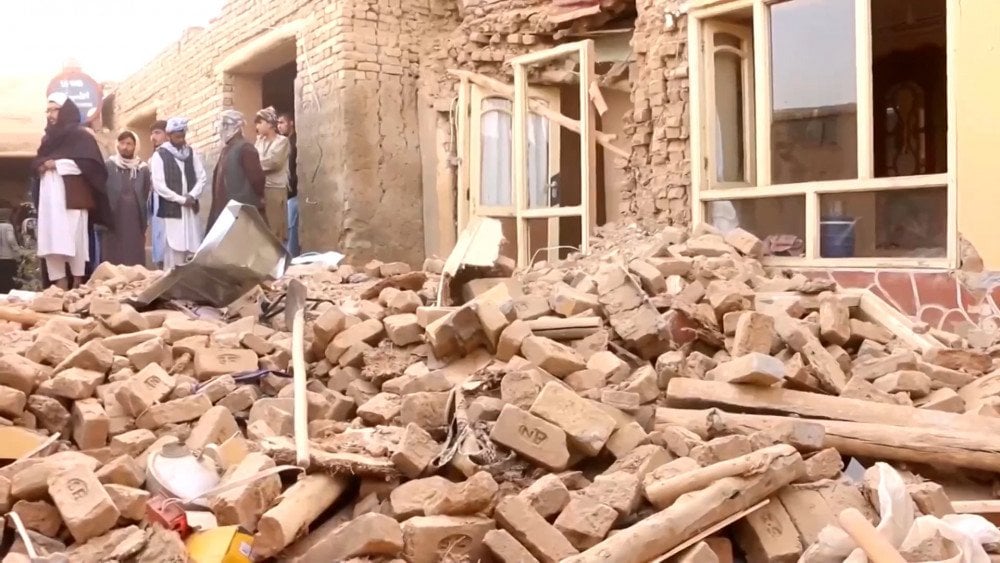
Aftermath of the M6.3 earthquake in Afghanistan
The tremors were felt in the north of the country: in the provinces of Balkh, Samangan, Sar-e Pul, Kunduz, Jowzjan, Badakhshan, Faryab, including in the capital, Kabul.
Unfortunately, many buildings in the region are not designed to withstand seismic loads, which is why the destruction was extensive. In just one village of the Shahr-e Bozorg district in Badakhshan Province, about 800 homes were damaged or completely destroyed.
In the city of Mazar-i-Sharif, the famous Blue Mosque was affected — one of Afghanistan’s most important Islamic shrines and a pilgrimage center associated with the name of Imam Ali.
The modern Blue Mosque and mausoleum in Mazar-i-Sharif — a city with a population of about 523,000 people — date back to the 15th century and are revered by Muslims as a sacred place. The original mausoleum was built here in the 12th century, as it was believed that the remains of Ali ibn Abi Talib, the son-in-law of the Prophet Muhammad ﷺ, were buried at this site.

The Blue Mosque in Afghanistan was damaged by the earthquake
The tremors caused power outages due to damage to power lines from Uzbekistan and Tajikistan, the country's main energy suppliers.
The earthquake also triggered a landslide that blocked the main mountain highway through the Tashkurgan Gorge, which connects the northern provinces of the country with the capital.
According to the National Disaster Management Authority, as of November 4, 24 people had died as a result of the disaster. More than 800 were injured, 25 of whom were in critical condition. The exact number of dead and injured was difficult to determine due to the lack of internet access in remote areas.
Kenya
On November 1, in Elgeyo-Marakwet County in western Kenya, heavy rains triggered a major landslide.
Mudflows destroyed more than 1,000 homes, blocked roads, and completely isolated the affected area from the outside world.

A powerful landslide in Kenya destroyed more than a thousand homes
Twenty-five people with serious injuries were taken to the hospital.
Military forces and four aircraft were deployed for search-and-rescue operations, but the efforts were repeatedly suspended due to sudden flooding.
As of November 3, the landslide had killed 26 people, and another 25 remained missing.
USA
On October 30, a strong storm with gusty winds and heavy rainfall struck the northeastern United States. The states of New York, New Jersey, Connecticut, and Pennsylvania were affected.
The city of New York was hit especially hard. The rain came suddenly; in some districts, up to 25 mm (1 inch) of rainfall fell within an hour. And in Central Park, 46.5 mm (1.83 inches) fell in 24 hours, setting a record for this date over the past 100 years.
The city’s drainage system was unable to cope with the volume of water. Fallen leaves worsened the situation. Municipal crews worked to clear storm drains, but runoff carried debris that repeatedly clogged the drainage channels.
Emergency services received more than 800 flood-related calls within just a few hours.

A powerful downpour turned the streets of New York City into rivers and disrupted transportation, USA
In Brooklyn and Manhattan, two people died in flooded basements.
Transportation was paralyzed. The subway was partially shut down. Three major airports in the New York region sustained serious impacts, leading to the cancellation of more than 1,200 flights. About 15,000 homes were left without electricity.
In northern New Jersey, local rainfall amounts reached nearly 70 mm (2.75 inches); strong winds tore two barges from their moorings and washed them ashore.
The city of Philadelphia, Pennsylvania, was also affected: during the storm, a tree fell on a car, killing the driver.
Australia
From November 1, a series of powerful thunderstorms swept across eastern Australia.
The state of Queensland and the northern areas of New South Wales were the most affected.
In the town of Esk, during a school fair, a hailstorm suddenly began — 9 people were injured by hail impacts. A woman sustained head and neck injuries and was hospitalized. Several more people were hurt by glass shards. Giant hailstones severely damaged solar panels on building roofs.

Hail damaged solar panels in Australia
Residents of the affected areas said that they had never seen destruction like this before.
Hail measuring up to 9 cm (3.5 inches) in the town of Pratten smashed windows, vehicles, and house roofs.
According to the Australian Bureau of Meteorology, wind speeds during the storm reached 104 km/h (65 mph). In some locations, 250,000 lightning strikes were recorded.
It is worth noting that between October 27 and November 2, according to the DTN’s Total Lightning Network, there was high thunderstorm activity over Australia — about 8 million lightning strikes, more than 4 million of which were in Queensland.
Russia
On the evening of November 1, a strong storm with wind gusts up to 25 m/s (56 mph) struck Novosibirsk. Several neighborhoods in the city and cottage settlements were affected by the power outage. In the Plyushchikhinsky residential area, the squall tore off balcony glazing, and it crashed to the ground. Fortunately, no one was nearby at that moment.
In Akademgorodok, the wind knocked down a huge pine tree onto the road, blocking access for an ambulance. And in the Leninsky District of the city, a fallen spruce injured an elderly couple who were passing by — they were hospitalized.
The disaster then moved on to Kuzbass. During the night of November 2, winds with gusts up to 22 m/s (49 mph) tore off roofs and toppled trees, leaving more than 22,000 people in 54 settlements without power. In the city of Anzhero-Sudzhensk, roofs of several buildings, including a school, partially collapsed, and in Kemerovo, squalls destroyed scaffolding at a construction site. The storm also caused fires: in the Guryevsky district, the fire broke out due to damaged power lines, and in other areas, the wind made it difficult to extinguish the burning dry grass.
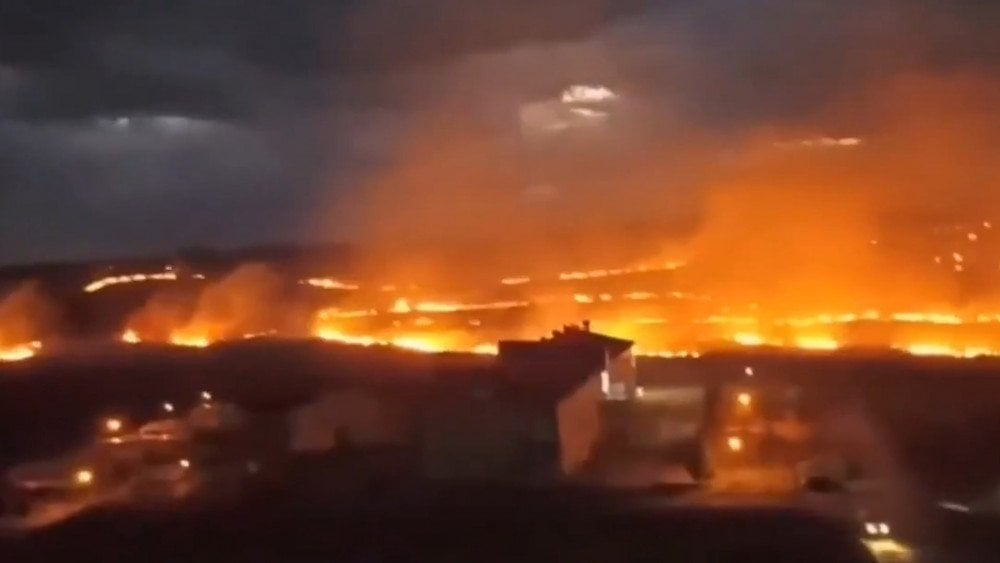
Fire in Guryevsky District, Kemerovo Region, ignited after a severe storm, Russia
On November 1, the Yuzhno-Kurilsky District of the Sakhalin Region was also hit by the disaster.
A fierce wind with gusts up to 50 m/s (112 mph) tore off roofs and damaged the facades of apartment buildings. In some of them, according to eyewitnesses, leaks began on the upper floors. Dozens of buildings were left without electricity.
India
On October 28, Tropical Cyclone Montha, with wind gusts up to 110 km/h (68 mph) and torrential rains, struck the eastern coast of India. The states of Andhra Pradesh, Telangana, and Odisha were the most affected.
Thanks to the preventive evacuation of people from coastal areas, mass casualties were avoided, but the damage was enormous.
In Andhra Pradesh — the state that suffered the main impact of the disaster — three people were killed. The cyclone affected nearly 2 million residents. Authorities set up a network of temporary camps, where 136,000 people took shelter.
In East Godavari District, powerful waves destroyed entire fishing villages, leaving people homeless.
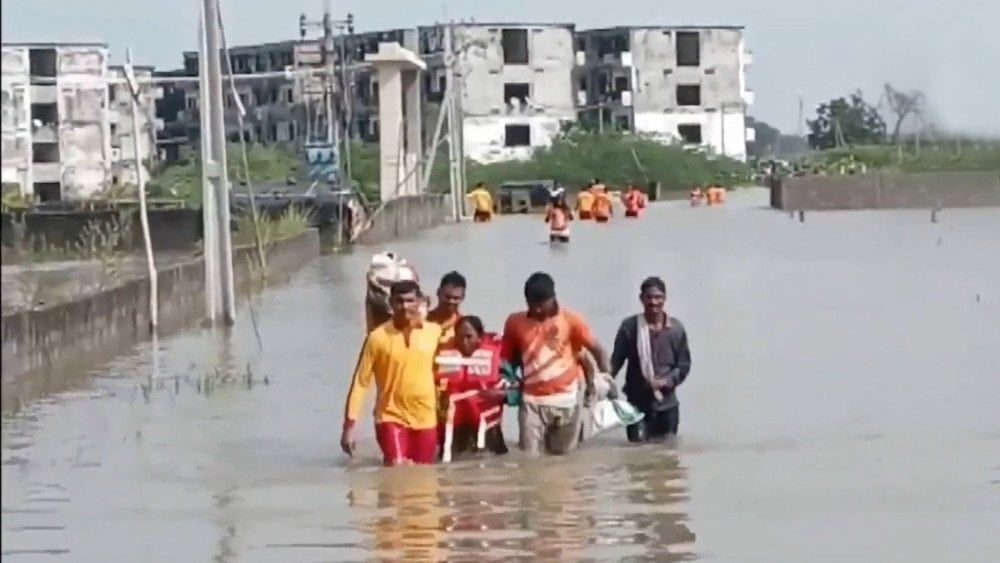
Tropical Cyclone Montha brought torrential rains to India
A total of 174,000 farmers suffered severe losses: poultry, livestock, and fish farms were flooded. More than 2,200 livestock perished.
The disaster completely destroyed about 38,000 ha (93,900 acres) of agricultural land, and more than 138,000 ha (341,000 acres) of crops were flooded, including rice, corn, bananas, cotton, and other crops.
More than 4,800 km (2,980 miles) of roads, and over 300 bridges and culverts were damaged.
Flights were canceled at three international airports in the state, and the South Central Railway suspended at least 120 trains.

Flooded railway tracks in India after Cyclone Montha
In Prakasam District, after a canal breach, nearly 9 km (5.6 miles) of irrigation tunnels were flooded with about 250 workers inside. Fortunately, all of them were rescued.
The energy system was hit especially hard — winds knocked down more than 3,000 power line poles, and more than 26,000 transformers were damaged.
In the mountainous regions of Odisha, landslides and fallen trees blocked roads, cutting off access to remote villages.
In Koraput District, more than 300 homes were destroyed. The state’s agriculture also suffered serious damage. Cotton and vegetable fields were flooded, threatening the future harvest and the incomes of thousands of families.
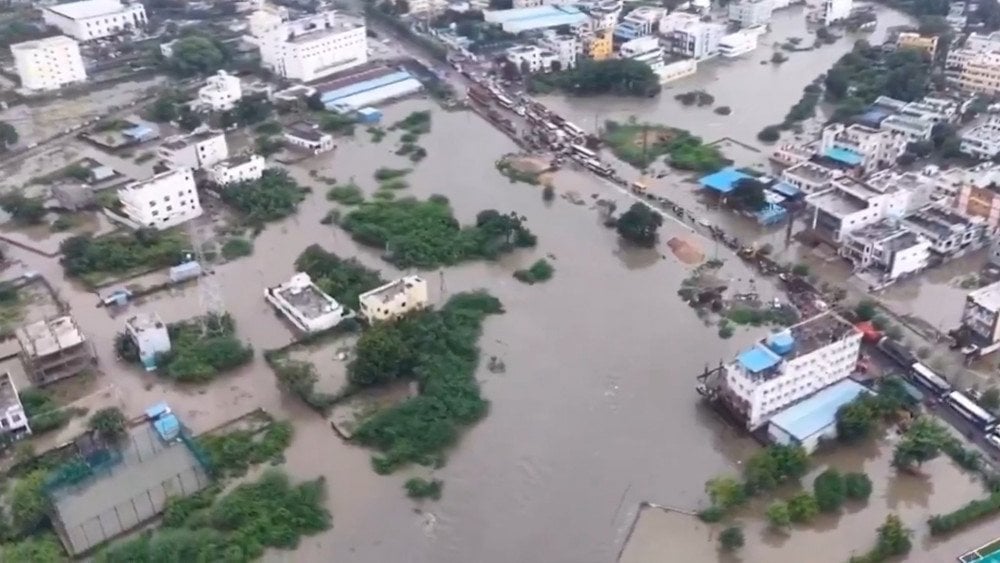
Flooding in India after the impact of Cyclone Montha
Moving deeper inland, Cyclone Montha caused abnormal downpours and flooding in Telangana, destroying roads and isolating entire districts.
The cities of Warangal and Hanumakonda saw more than 300 mm (11.8 inches) of rainfall in 24 hours, and the village of Kalleda — 367 mm (14.45 inches).
At least six people were killed in the state. Among them was a woman swept away while trying to cross a flooded bridge. In Warangal, a bedridden man drowned when water from the street surged into his home.
Countries are already suffering incredible losses from natural disasters: budgets spend billions on rebuilding infrastructure, compensations, and aid to affected regions, while some countries are no longer able to cope with the enormous losses and are forced to request international aid.
However, as the synchronization of natural disasters increases across different regions, the financial safety cushion will be exhausted — and every country will have to fight for its own survival.
The economies of states are complex and inert systems. They do not collapse instantly, even under the blows of climate disasters. Today, the aftermath of natural disasters falls primarily on ordinary people — those who lose their homes, their property, and their loved ones. But the world is in no hurry to respond. And the climate agenda will become a priority only when large corporations begin to lose lots of money. Sadly, in our society, material values are placed above human lives.
If we change nothing, escalating natural disasters will destroy the economies of even the most stable countries — and once again, ordinary people will suffer.
Therefore, we cannot wait for “those at the top” to start taking action. It is we, the people, who are primarily interested in our future, which means that our task is to make the climate agenda the main topic of the day.
What will happen to the world if we don't address this issue now? The question remains open, but one thing is clear: without large-scale and timely action, the consequences will be devastating for all of humanity.
Watch the video version of this article here:
Leave a comment