Summary of climate disasters on the planet, November 26–December 2, 2025
Natural disasters swept across several continents at once – Asia, Europe, Africa, and the Americas. In just a few days, the elements shattered the lives of millions.
Read about these tragic events in the weekly climate news summary for the period from November 26 to December 2, 2025.
Indonesia
Prolonged rains that began on November 25 turned into one of the most devastating disasters of recent decades for the island of Sumatra. In the provinces of Aceh, North Sumatra, and West Sumatra, more than 3 million people were affected, 570,000 of which were forced to leave their homes.
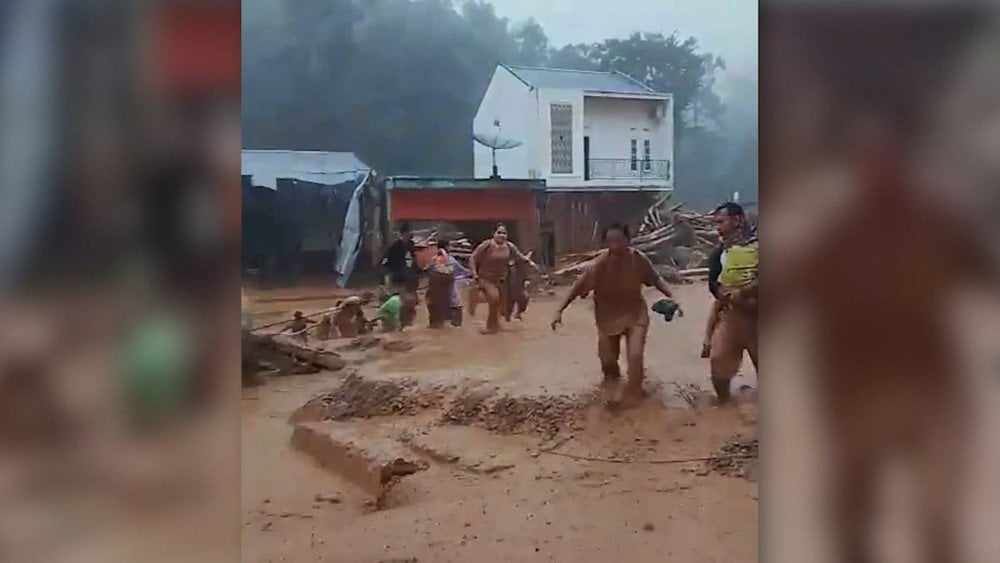
Powerful flooding on Indonesia’s island of Sumatra: people escape the disaster zone through torrents of mud
In just one day, some areas received about one and a half months’ worth of rainfall. In Bireuen Regency, Aceh Province, 411 mm (about 16.2 in) of rain fell.
Extreme downpours led to river overflows, debris flows, and landslides that blocked roads and destroyed bridges.
A total of 3,500 homes suffered severe damage, 4,100 sustained moderate damage, and 20,500 were lightly damaged.
Numerous schools and infrastructure facilities were also damaged; agricultural land and farms were destroyed.
Hundreds of settlements were buried under thick layers of mud, with many completely cut off from the outside world.
Humanitarian aid was delivered to the affected areas by aircraft and naval vessels. Many residents faced the threat of hunger; in desperation, some resorted to looting food warehouses and shops.
Local residents reported that the disaster struck suddenly: within seconds, a massive wave of water burst into homes. This had never happened here before.
As of December 2, the death toll had reached 708 people, 504 were reported missing, and more than 2,600 were injured.
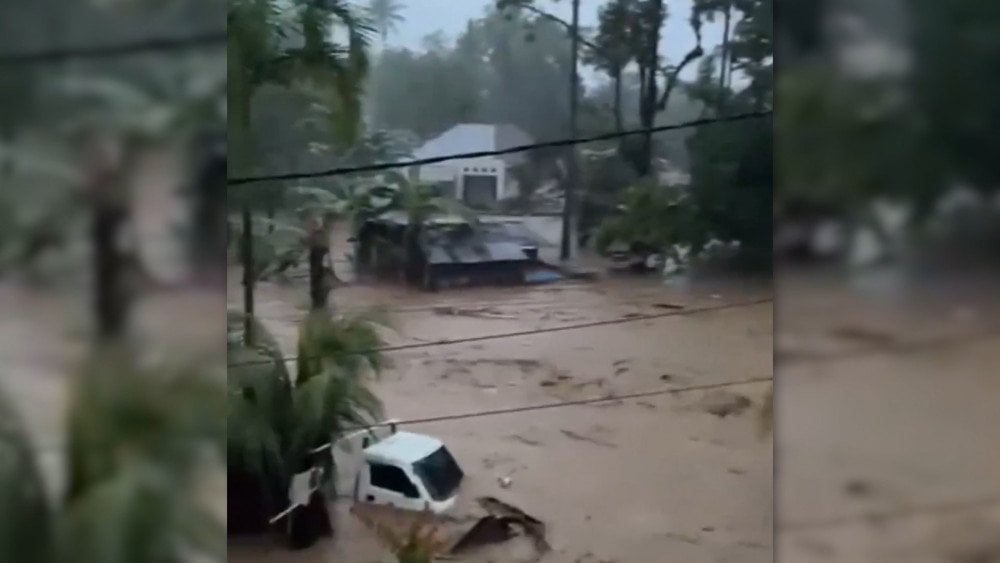
Extreme rainfall triggered catastrophic flooding on the island of Sumatra: homes and vehicles were buried under water and mud, Indonesia
The cause of this disaster was Tropical Cyclone Senjar — a phenomenon considered almost impossible for Sumatra.
The island lies near the equator, where cyclones do not normally form: the influence of Earth’s rotation is too weak there, preventing storms from “spinning up.”
Until recently, only one similar case was known — Cyclone Vamei in 2001, which was believed to be an event that could recur only once every several hundred years. This is why Tropical Cyclone Senjar came as a complete shock to both specialists and local residents.
Greece
Since November 26, Greece had been under the impact of Storm Adele for four consecutive days.
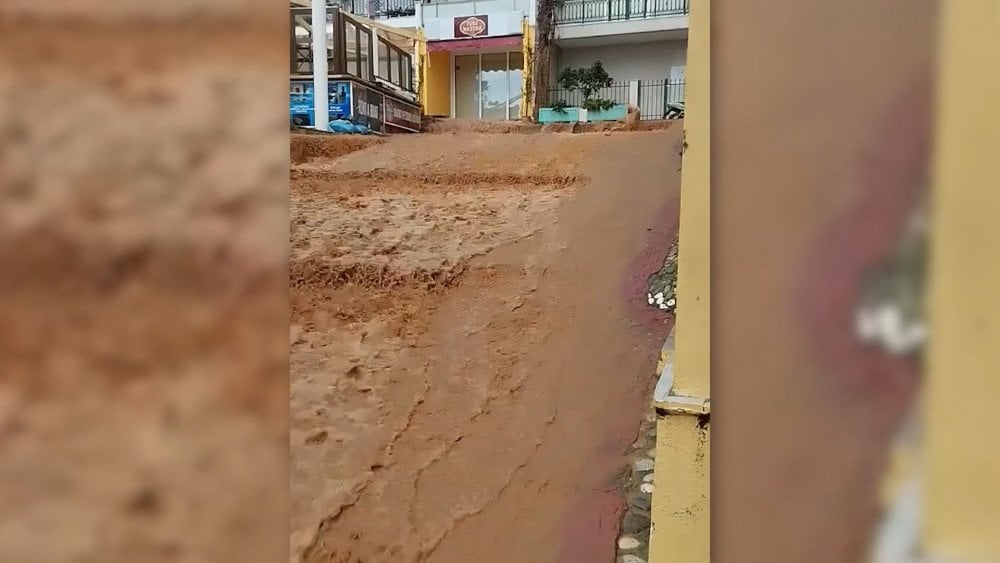
After torrential rains caused by Storm Adele, torrents of water and mud rushed through the streets, Greece
The epicenter of the severe weather was the mountainous Tzoumerka region, where nearly two-thirds of the annual rainfall norm fell in November alone. According to Evangelos Nikolaou, Doctor of Hydrogeology and Head of the Epirus Regional Unit of H.S.G.M.E., 1,000 mm (about 39.4 in) worth of rain fell in November, with an annual average of 1,500 mm (about 59.1 in). The storm, adding more than 200 mm (about 7.9 in) in just four days, sharply worsened the situation in the region.
At least six major landslides occurred in Tzoumerka. The village of Agnanta in Epirus was especially affected, where several houses were left literally hanging in midair. In the village of Dodoni, after 10 consecutive days of extreme rainfall, a large-scale ground subsidence occurred on a road, completely blocking traffic.
The Three Rivers Bridge in the Thessaly region fractured under the force of the water, and its fragments were swept away by the fast-flowing river.
On November 27, a powerful tornado struck the coastal village of Foinikounta on the Peloponnese Peninsula. It lasted only a few minutes, but managed to damage shops, hotel complexes, and residential buildings. Fallen trees and power transmission poles caused a complete power outage in the village. The storm also inflicted significant damage on olive groves and citrus crops.
On November 28, heavy hail fell in the city of Mytilene on the island of Lesbos, clogging drainage systems and flooding streets and shops.
Storm Adele also caused serious problems on the island of Thassos, where the villages of Panagia and Potamia were particularly affected.
Raging torrents triggered landslides, damaged roads, and flooded the ground floors of buildings in Potamia. The island’s mayor described the damage as “extensive and severe,” emphasizing that the volume of water was “unprecedented.”
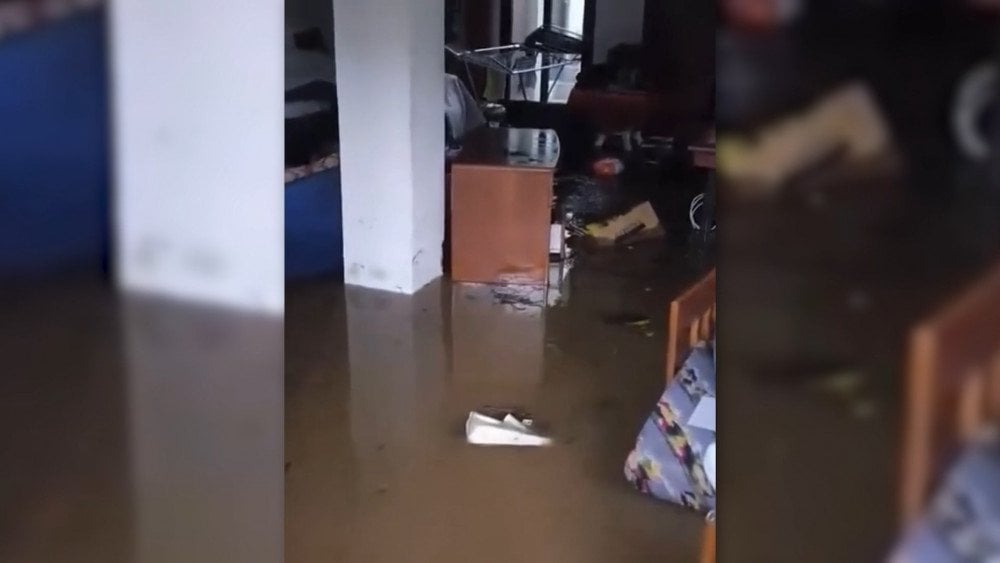
Aftermath of Storm Adele on the Greek island of Thasos: the ground floor of a residential building flooded
In Athens, the Kifisos River overflowed its banks. Traffic in the city was severely disrupted, and people had to use special vehicles to cross streets.
These downpours, although they caused flooding, did not save the region from drought: reservoirs remain at record-low levels. The reason is that dried-out soil absorbs almost no rain – the water quickly runs off into rivers and the sea without replenishing reserves.
Serbia
On November 28, in the city of Kragujevac, 36 meters (about 118 ft) of a retaining wall and a section of a new access road that had not yet been put into operation collapsed at a construction site. At the moment of the collapse, no one was present, which helped avoid casualties.
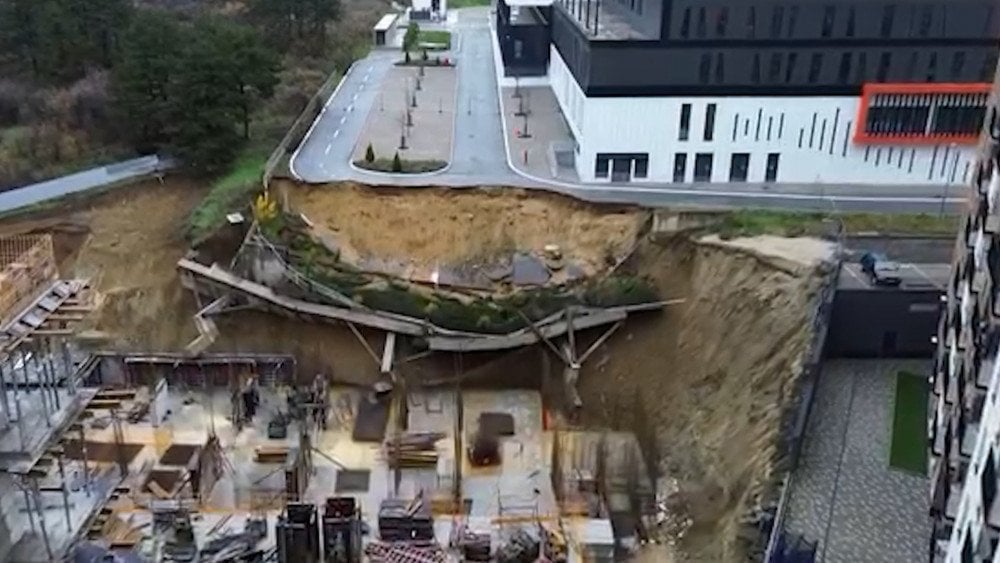
A landslide destroyed a retaining wall and an access road at a construction site in the city of Kragujevac, Serbia
In the following days, the situation did not stabilize: further ground movement and destruction of the asphalt surface continued for several more days. The landslide advanced to within a very short distance of the walls of the Center of Excellence, one of Serbia’s most important scientific facilities.
Authorities directly linked the incident to prolonged rainfall, which increased soil moisture and reduced its stability.
USA
On November 29, as most Americans were returning from Thanksgiving celebrations, a powerful winter storm struck the central United States. A massive cloud band stretched from the Gulf of Mexico to Canada.
More than 25 million people received warnings about the approaching severe weather: heavy snowfall hit the Midwest, while thunderstorms raged in the South.
In Des Moines, Iowa, about 21 cm of snow (8.3 in) fell in a single day – a record for November. An incident occurred at the airport: a Delta Air Lines aircraft slid off the runway during a turn due to icy conditions. The airport had to be closed for several hours, and passengers were forced to remain on board the aircraft the entire time.
In Indiana, on Interstate I-70, nearly 45 vehicles collided almost simultaneously, leading to a complete traffic shutdown.
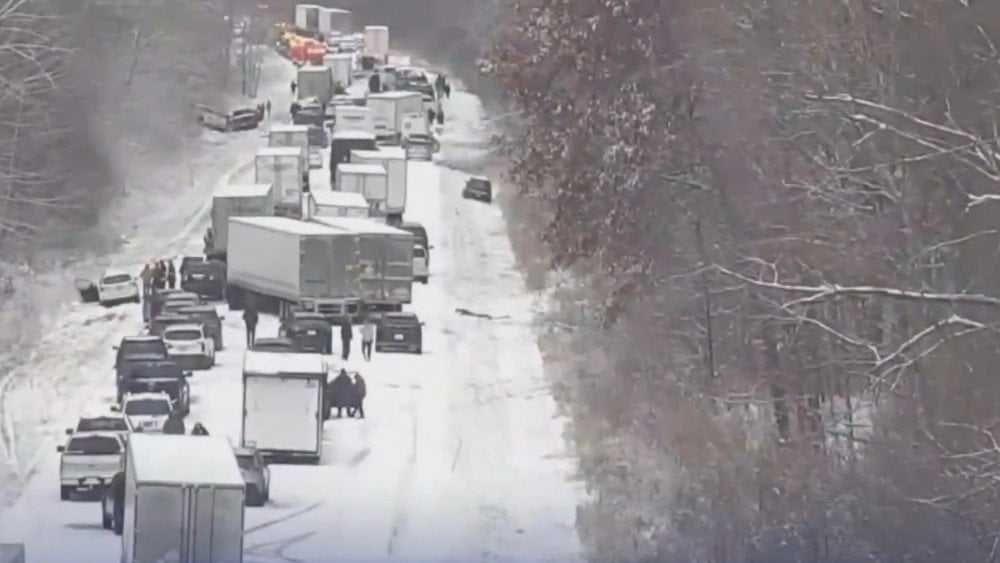
A snowstorm in the USA paralyzed traffic: due to mass accidents, cars and trucks were stuck in multi-kilometer traffic jams
In Illinois, a school bus skidded off the road and crashed into a power line pole – one child was hospitalized.
By the morning of November 30, snowfall set new records in several states: Iowa, Fort Dodge – 38 cm (15 in) of snow; Wisconsin, Lancaster – 33 cm (13 in); central Illinois – about 30 cm (11.8 in).
The storm paralyzed air travel across the country: more than 2,700 flights were canceled. At Chicago’s O’Hare and Midway airports, about 1,300 flight cancellations and delays occurred after the storm unleashed a sudden snow squall, reducing visibility to near zero within minutes.
Algeria
At the end of November, northern provinces of Algeria faced anomalous snowfall, observed from the early morning of November 27, especially in regions at elevations above 1,000 m (3,280 ft).
The hardest hit were six provinces, which experienced a serious transport collapse: Jijel, Sétif, Mila, Bouira, Bordj Bou Arréridj, and Tizi Ouzou.
More than 16 national and provincial highways in mountainous areas were partially closed. In Bordj Bou Arréridj Province, in the Djaâfra and Mansoura districts, roads were covered with a snow layer of up to 20 cm (7.9 in), making traffic virtually impossible.
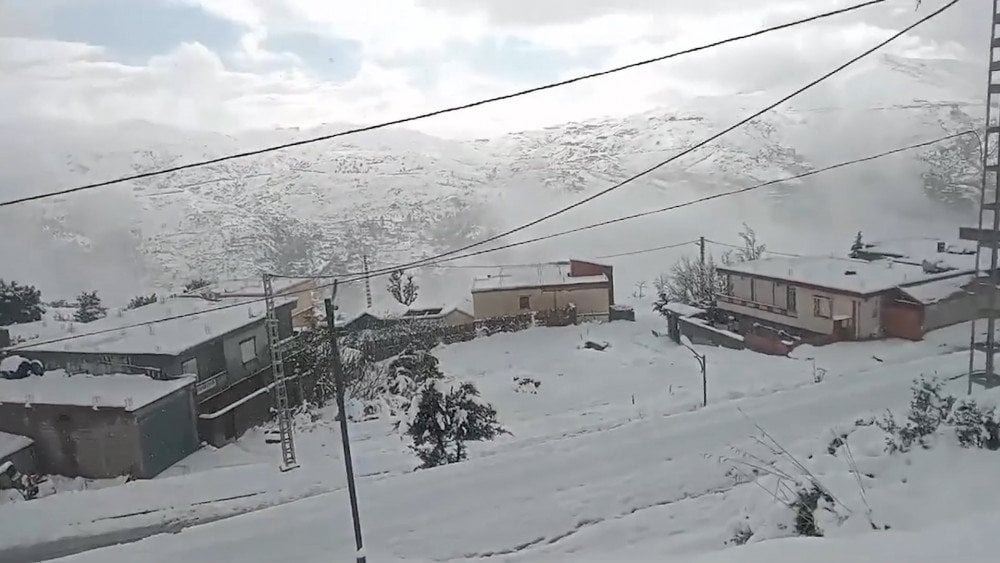
Snowfall in November: an anomalous phenomenon for Algeria
This is despite the fact that, on average, snow falls here only once every five years.
In Djaâfra, 13 people trapped by snow were rescued. In the Medjana district, six cars and one truck were pulled out of snowdrifts, with 10 people inside.
Road-clearing operations involved not only municipal services but also civil defense units and the national gendarmerie. The work was carried out amid ongoing snowfall and poor visibility.
Analysis of climate data shows that such a snow depth at the end of November is an unprecedented phenomenon for this region.
Tahiti Island
In the early morning of November 26, after a week of torrential rain, a major landslide struck the village of Afaʻahiti on the island of Tahiti. A mass of soil about 30 m (98 ft) high collapsed from the slope, completely destroying one residential house and seriously damaging another.
Several hours after the start of the search-and-rescue operation, it had to be suspended due to a secondary slope failure at the same location.
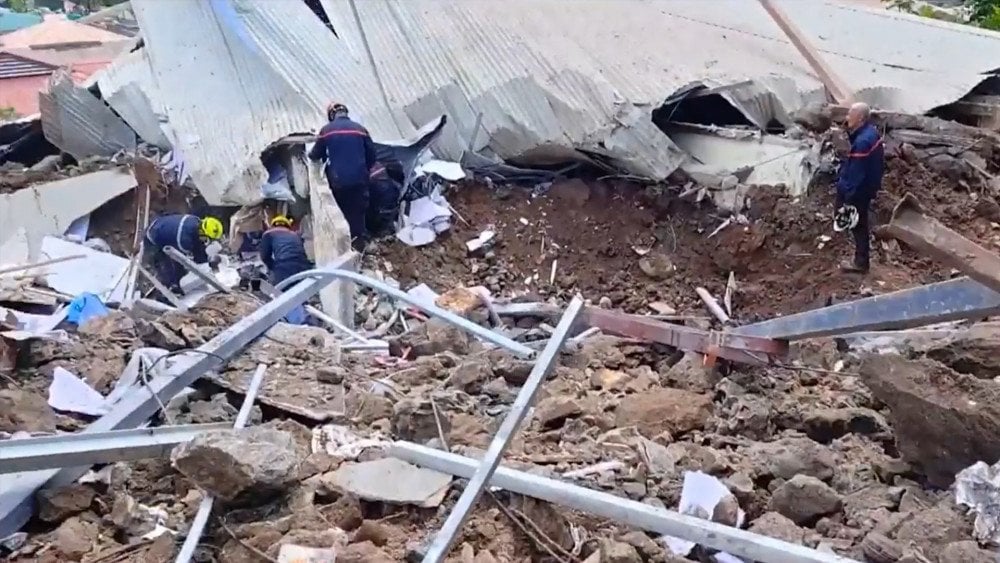
Search-and-rescue operations at the site of a deadly landslide in the village of Afaʻahiti on the island of Tahiti
As a result of the disaster, 8 people were killed, including a three-year-old girl. Residents of dozens of nearby homes were evacuated.
On November 28, new ground movements were recorded, confirming the continued instability of the slope.
Sri Lanka
On November 28, Tropical Cyclone Ditwah struck the eastern coast of Sri Lanka, bringing torrential rains and destructive winds. The event affected the entire country: 22 of the 25 districts suffered severe damage.
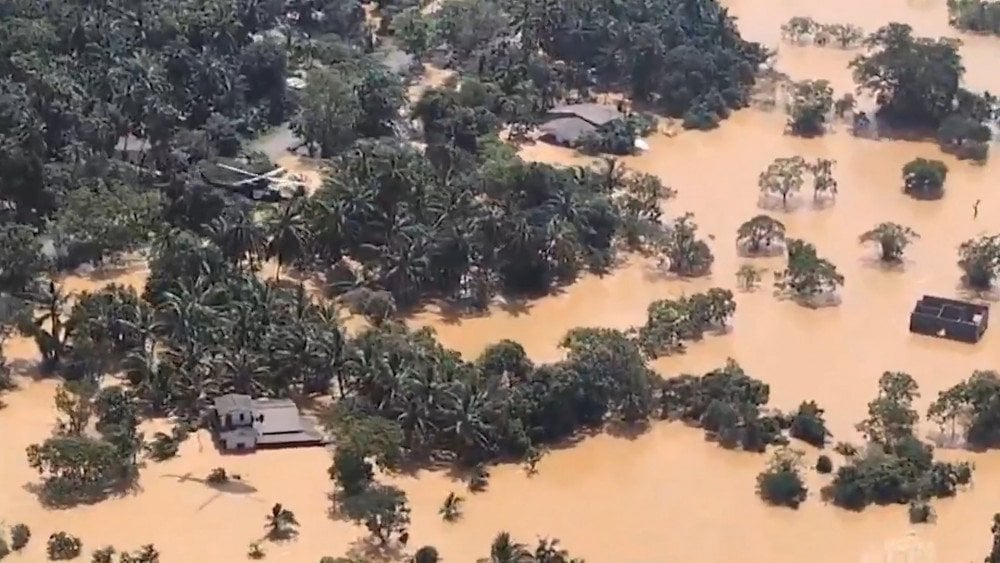
Large-scale flooding in Sri Lanka caused by Tropical Cyclone Ditwah
The Central, North Western, and Uva Provinces were hit the hardest.
Rivers and reservoirs overflowed, flooding cities, villages, and agricultural land. Due to landslides and floods, highways across the country were closed, train services were suspended, and government institutions and schools were shut down. After power lines collapsed and water treatment facilities were inundated, one third of the population was left without electricity, Internet access, and water supply.
The President called this natural disaster “the most serious” catastrophe in the history of the island nation.
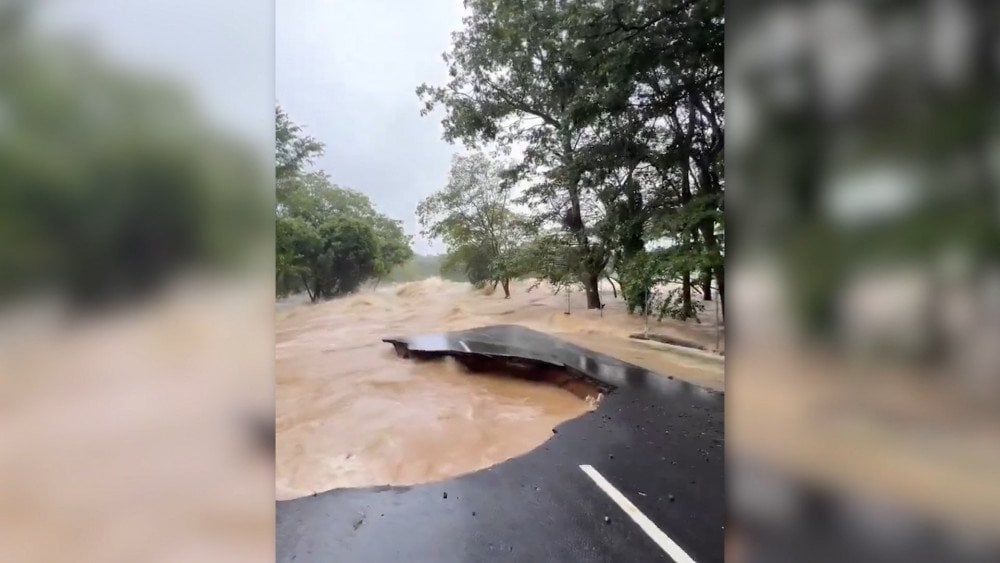
Heavy rains led to flooding and destruction of roads in Sri Lanka
More than 24,000 police officers, soldiers, and military personnel were involved in rescue operations.
The city of Colombo, Sri Lanka’s commercial capital, was also affected. The speed at which the water rose shocked local residents accustomed to seasonal flooding. According to them, this time the flooding was far more rapid and extensive than usual: everything seemed calm during the night, but by morning the water had engulfed homes, forcing people to seek refuge on upper floors and rooftops.
A resident of the central part of the country reported that about 15 houses in her area were buried under boulders and mud, and none of the residents survived.
On November 29, in the city of Kurunegala, a nursing home was flooded — 11 elderly people were killed.
The scale of the disaster is staggering: nearly 800 homes were completely destroyed, and more than 31,000 were damaged. Ten bridges were destroyed, and over 200 roads remain impassable.
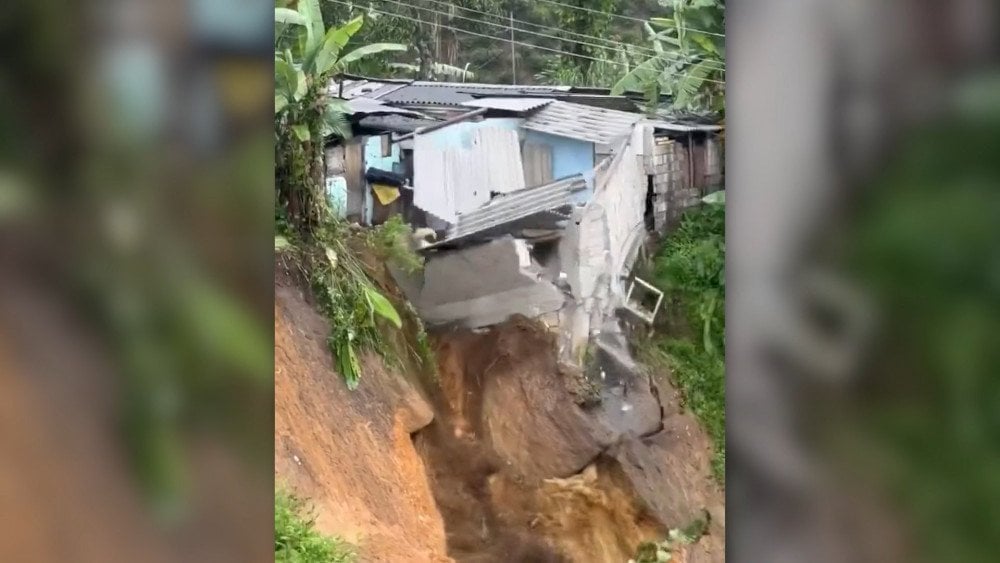
The moment a house was destroyed by a landslide triggered by torrential rains in Sri Lanka
More than 1.5 million people across the island were affected. Over 230,000 were forced to leave their homes and relocate to temporary shelters.
As of December 2, the death toll had reached 465 people, with 366 still reported missing.
The number of victims may rise significantly, as access to many affected areas remains impossible.
Peru
In the early morning of December 1, a deadly landslide occurred in the Peruvian Amazon, in the remote river port of Iparia, Ucayali Region.
As a result of riverbank erosion, a massive volume of soil collapsed onto two moored vessels. One of them was empty and sank immediately. The second vessel, carrying around 100 passengers, sustained severe damage. According to eyewitnesses, the tragedy happened at the moment when many people were already disembarking, which further worsened the consequences.
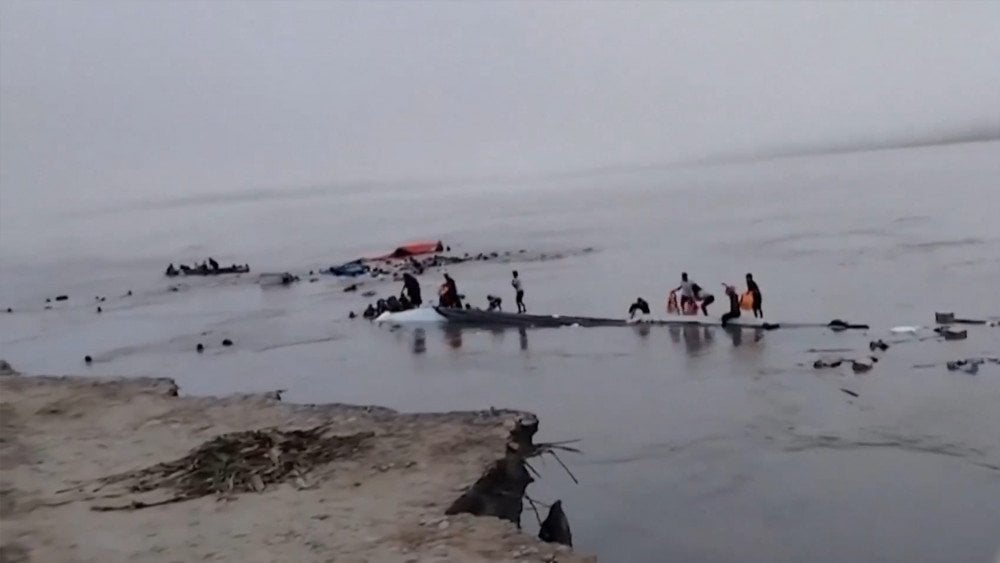
Deadly landslide in Peru: people try to escape from a sinking vessel
The Navy and police conducted searches for survivors from vessels and from the air. At the time of the incident, there was morning fog. The fast river current, whirlpools, and floating debris further complicated the rescue operation.
Sadly, as of December 2, at least 13 people, including four children, were confirmed dead. 57 people are still reported missing.
All these events – in different countries, on different continents – may at first glance seem like separate tragedies. But if we look deeper, there is a common link between them. Water, oversaturated soil, and loss of ground stability are increasingly triggering the same destructive mechanism – landslides.
This phenomenon does not receive as much media attention as earthquakes or hurricanes. Yet landslides are increasingly becoming the final link in chains of weather-related disasters. They strike without warning. Entire roads, buildings, and settlements are buried under massive layers of earth. And the most terrifying part is that under tons of soil, hundreds – and sometimes thousands – of people remain forever.
In recent years, statistics have become especially alarming. Already by the end of August 2025, the number of fatal landslides has significantly exceeded long-term average values and approached the record-breaking year of 2024: back then, 766 ground collapses were recorded, claiming the lives of nearly 5,000 people.
Today, landslides less frequently look like a rare natural anomaly and more often like a logical outcome: the primary natural triggers of ground collapses – anomalous precipitation and earthquakes – are increasing exponentially. Consequently, the growth in the number of landslides will soon take on an avalanche-like character, and their geography will expand significantly.
The paradox is that most specialists understand and observe this, yet they simply keep statistics. In order to save the vast number of lives that rapidly intensifying natural disasters can take, the problem must be addressed comprehensively.
More and more people realize this and are starting to act: they ask questions to scientists, appeal to authorities, participate in organizing aid for victims of cataclysms, and pay attention to how prepared emergency services are for situations. When authorities see that people are actively interested in the problem and demand the protection of their lives, they stop being idle and start looking for a solution.
The point is simple – the active position of every person truly changes the situation.
Watch the video version of this article here:
Leave a comment