Summary of Climate Disasters on the Planet, December 3–9, 2025
Why are people rapidly losing their health, while natural disasters become increasingly anomalous? Researchers identified a common cause behind these alarming changes. What exactly did they discover? Read about it in the weekly climate events report covering December 3–9, 2025.
Vietnam
On the night of December 3, powerful downpours hit Vietnam’s Lam Dong Province. By the morning of the following day, water levels in rivers and reservoirs began to rise rapidly.
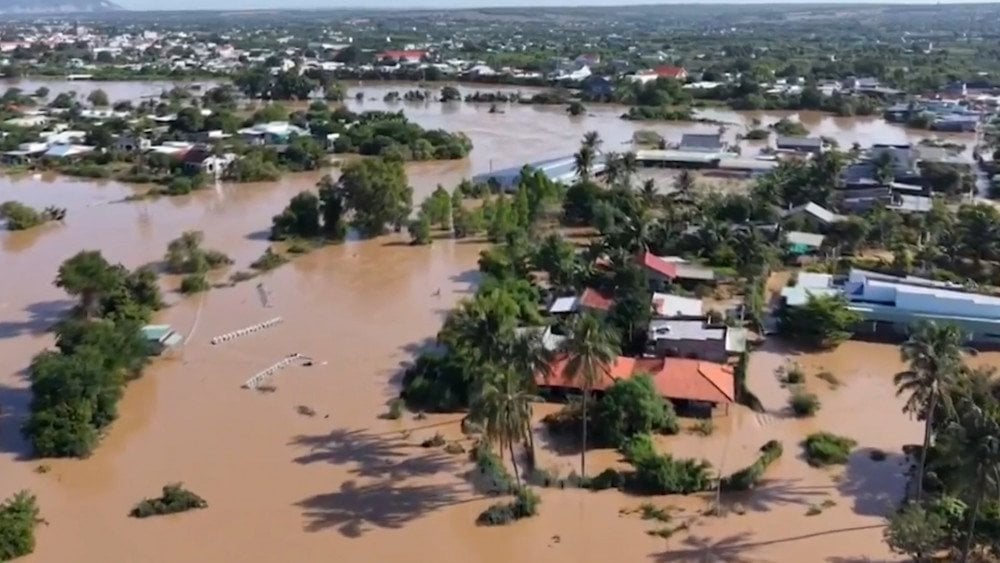
Torrential rains caused large-scale flooding in Lam Dong Province, Vietnam
On December 4, on the Cam Ly River near the Thanh Binh hydrological station, the water level reached 2,737 feet (834,36 meters) above sea level, exceeding the historic maximum of 2019 — 2,736 feet (834 meters).
For safety reasons, reservoir gates were urgently opened. At Long Song, the volume of discharged water reached a record 42,400 ft³/s (1,200 m³/s). The combination of sudden releases and torrential rainfall created a powerful hydraulic surge, catching residents of eastern Lam Dong by surprise.
More than 1,000 families were urgently evacuated. Police rescued six surveyors who had been carrying out project work at the Ka Pet Reservoir. They were led through raging water using safety ropes.
Within just a few hours, fast-moving flows flooded more than 6,200 homes, turning streets into muddy rivers. In some areas, water levels rose to 8.2 feet (2.5 meters).
The region experienced 16 landslides, and traffic on many sections of the national highway was temporarily suspended. Along the coast, water tore more than 250 boats and fishing vessels from their anchors and carried them out to sea.
Severe damage was inflicted on agricultural lands and fish-farming ponds: more than 9,800 acres (4,000 hectares) of farmland were flooded, and 3,300 ft² (300 m²) of ponds were damaged. About 4,000 head of livestock and poultry perished.
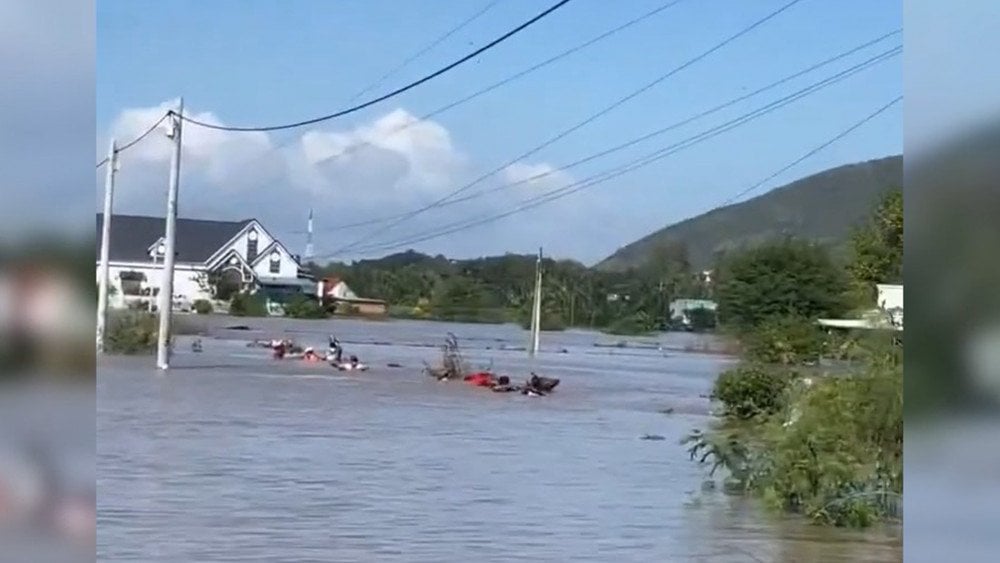
A sudden flood forced residents of Lam Dong Province to urgently leave their homes in Vietnam
Tragically, the disaster claimed the lives of two people.
Meanwhile, in neighboring Khanh Hoa Province, on December 4, severe weather flooded the Nha Trang district. Hundreds of families were forced to leave their homes for the fourth time within a month, escaping yet another flood.
Türkiye
On December 7, powerful downpours accompanied by hail hit Türkiye’s Antalya Province. In the Demre district, torrents of water flooded greenhouses, and two people trapped in a car were evacuated by rescuers.
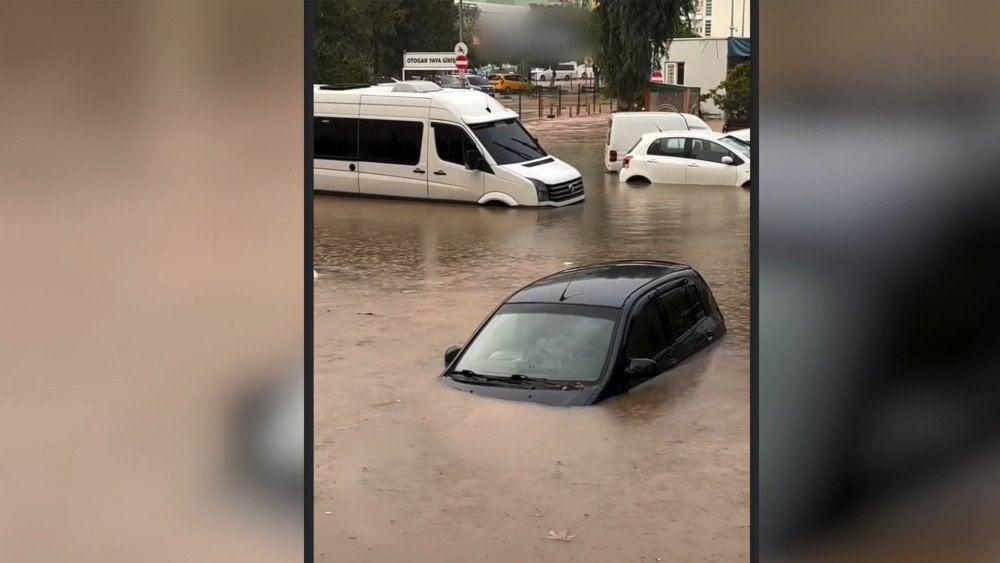
Aftermath of heavy rainfall in Türkiye: flooded streets and vehicles in Antalya Province
In the Alanya area, about a monthly rainfall norm — 5.9 inches (150 mm) — fell within a short period of time.
Due to intense rain, cars became stuck on roads, some shops and offices were flooded, and in one location a retaining wall collapsed. Fortunately, no one was injured.
Firefighters rescued eight people from a vehicle trapped in a flooded underpass.
At Galip Dere Beach, the sea washed ashore a huge amount of garbage and waste.
In the Incekum area, an overflowing stream rushed into the sea and nearly destroyed a café belonging to a five-star hotel, scattering furniture and equipment along the shore.
Istanbul was also affected by heavy rainfall. Traffic on the megacity’s streets and avenues was severely disrupted. Due to a roof leak at Bosphorus University — one of the country’s most prestigious colleges, water passed through all five floors and flooded basement premises.
From December 8, torrential rains in some areas turned into snowfall.
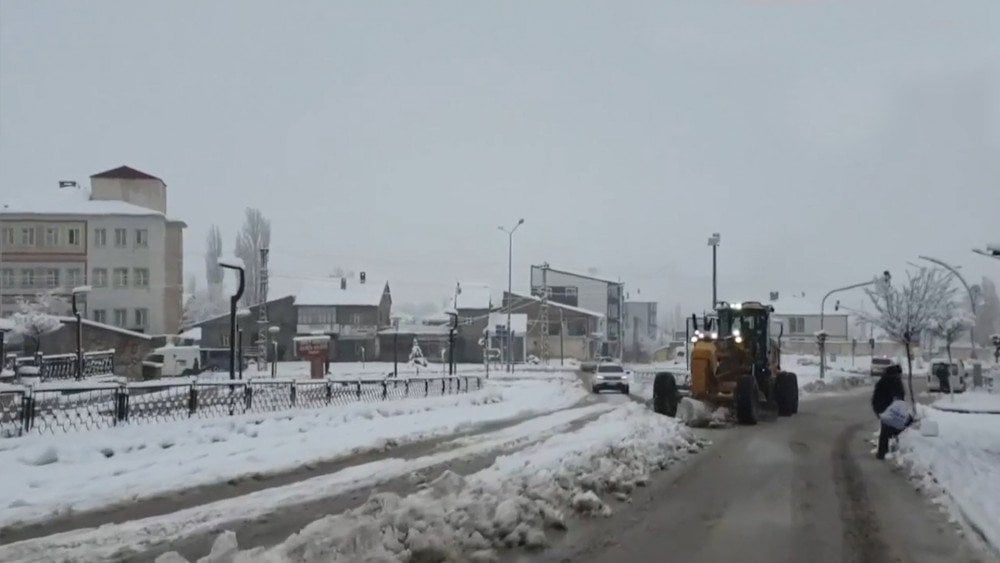
In Türkiye, rains gave way to snowstorms. Road services are clearing streets
In three provinces of the Eastern Anatolia region — Van, Hakkari, and Muş — 62 roads were closed due to heavy snowfall.
Russia
On December 3, a powerful cyclone arriving from the Sea of Okhotsk struck Kamchatka and paralyzed the region for several days.
Strong wind gusts — locally reaching 103 mph (46 m/s) — ripped siding and roofs off buildings. In the village of Lesnaya, apartment buildings, educational and administrative facilities, as well as a diesel power plant, were damaged. In the village of Ivashka, the storm knocked down a power transmission line tower, leaving residents without electricity and heating.
Along the eastern coast of the peninsula, wave heights reached 30 feet (9 meters). In the village of Korf, storm surge flooding inundated the runway and airport infrastructure.
On the Petropavlovsk-Kamchatsky — Milkovo highway, traffic was halted due to severe weather and zero visibility.
Schools were closed for several days.
The main anomaly was the December “flood”: due to above-freezing temperatures, snow melted rapidly and, combined with rain, turned streets of the regional capital into vast bodies of water.
Building entrances were flooded so badly that people could only exit wearing rubber boots. On roads, dozens of cars drowned in newly formed lakes.
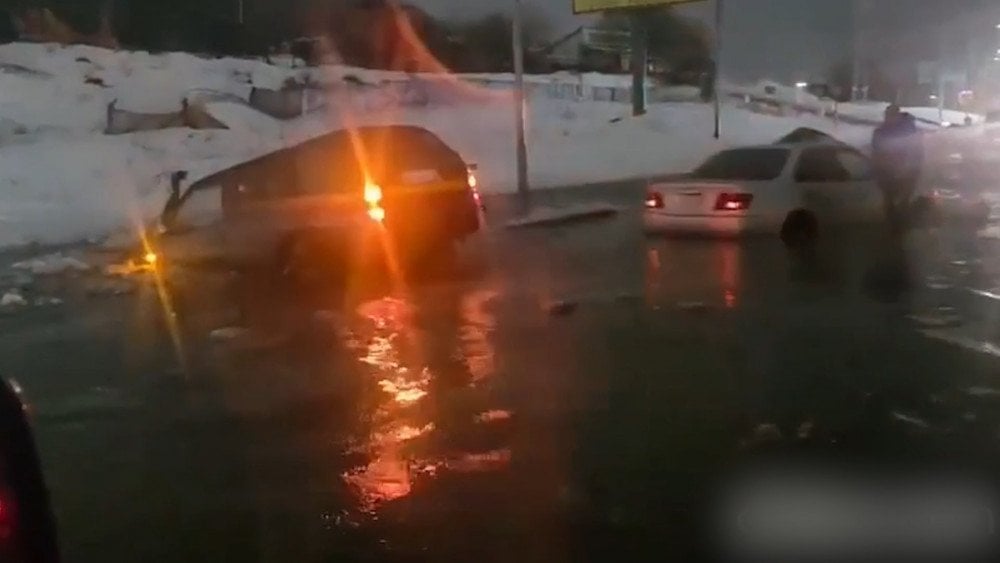
Aftermath of anomalous weather in Kamchatka: due to thawing, streets of Petropavlovsk-Kamchatsky were submerged
Then, on December 9, residents of Petropavlovsk-Kamchatsky witnessed yet another natural anomaly — a thundersnow event.
Seismic Activity
On December 6, at 11:41 LT, a powerful magnitude 7.0 earthquake occurred beneath the Hubbard Glacier in Canada. The epicenter was approximately 56 miles (90 km) northeast of Yakutat, Alaska, USA, and 155 miles (250 km) west of Whitehorse, Yukon Territory, Canada. The hypocenter lay at a depth of just 6.2 miles (10 km).
Tremors were felt hundreds of kilometers from the epicenter: in cities of southeastern Alaska, including Juneau and Anchorage, as well as in Canada’s Yukon. Despite the power of the quake, no tsunami warning was issued, and there were no reports of severe damage or casualties.
Immediately after the earthquake, an intense aftershock sequence began. Over the course of four days, at least 230 events of magnitude 3.0 and higher were recorded, including five strong aftershocks with magnitudes of up to 5.8.
Another powerful seismic event, magnitude 7.6, occurred on the evening of December 8, at 23:15 LT, approximately 50 miles (80 km) off the eastern coast of Aomori Prefecture, Japan. The hotbed was at a depth of 31 miles (50 km). The most powerful shaking was recorded in the city of Hachinohe.
The earthquake triggered a tsunami. In Kuji Port, Iwate Prefecture, waves of up to 30 inches (70 cm) were observed, while in the city of Urakawa, Hokkaido Prefecture, waves reached 20 inches (50 cm). In Aomori Prefecture, the aftermath was significant. In Hachinohe Port, soil liquefaction was recorded: fountains of sand and water burst from cracks in the ground on a parking lot.

In Japan, after a powerful earthquake, soil liquefaction occurred: sand and water erupted from cracks in the parking lot in Hachinohe Port
At a city hospital, three floors were flooded due to activation of the fire suppression system. Hundreds of households in the cities of Shichinohe and Mutsu were left without water supply and electricity.
45 schools were damaged, and classes were suspended in 318 educational institutions.
Overall, 50 people were injured in Aomori, Iwate, and Hokkaido Prefectures. Most sustained injuries from falls and being struck by objects.
The region’s transport network was paralyzed: service on the Tohoku-Shinkansen high-speed line between Fukushima and Shin-Aomori was halted, with three trains stranded on the tracks. Traffic was suspended on some subway lines, including in Sapporo. Expressways in Hokkaido were temporarily closed, as was ferry service across the Tsugaru Strait.
About 200 passengers were forced to spend the night in the terminal of Chitose Airport, the largest airport in Hokkaido Prefecture.
Critical infrastructure facilities were also at risk: at the Tomato-Atsuma Thermal Power Plant in Hokkaido Prefecture, one power unit shut down automatically.
In the village of Rokkasho, Aomori Prefecture, at a nuclear waste processing plant, about 170 gallons (650 liters) of water containing radioactive materials spilled from a spent nuclear fuel storage pool. The leak was contained.
In the next two days following the main magnitude 7.6 shock, at least seven major aftershocks with magnitudes of up to 6.6 were recorded.
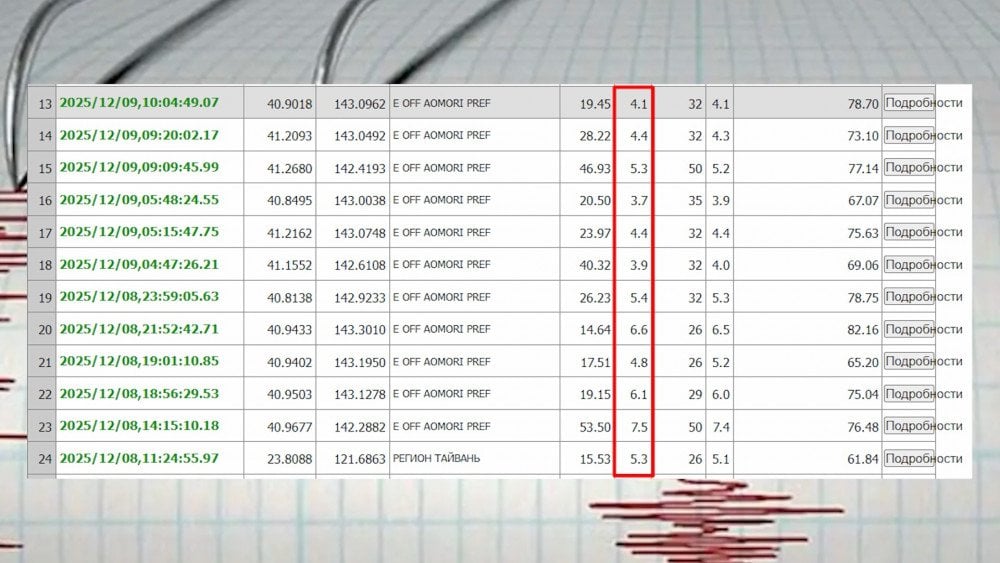
After the powerful earthquake in Japan, numerous aftershocks were recorded
Italy
From December 3, southern Italy came under the impact of heavy rainfall.
An orange weather alert was declared in the regions of Apulia, Basilicata, and Calabria.
The greatest damage was recorded in the port city of Crotone in Calabria: within just two hours, 4 inches (100 mm) of rain fell, exceeding the monthly rainfall norm. This led to catastrophic flooding. Firefighters and emergency services evacuated people from flooded vehicles throughout the night.
In the capital of Apulia region, the city of Bari, heavy rain and strong winds destroyed an architectural installation that replicated the shape of an ancient basilica which once stood in this area and preserved the memory of the city’s earliest settlements.
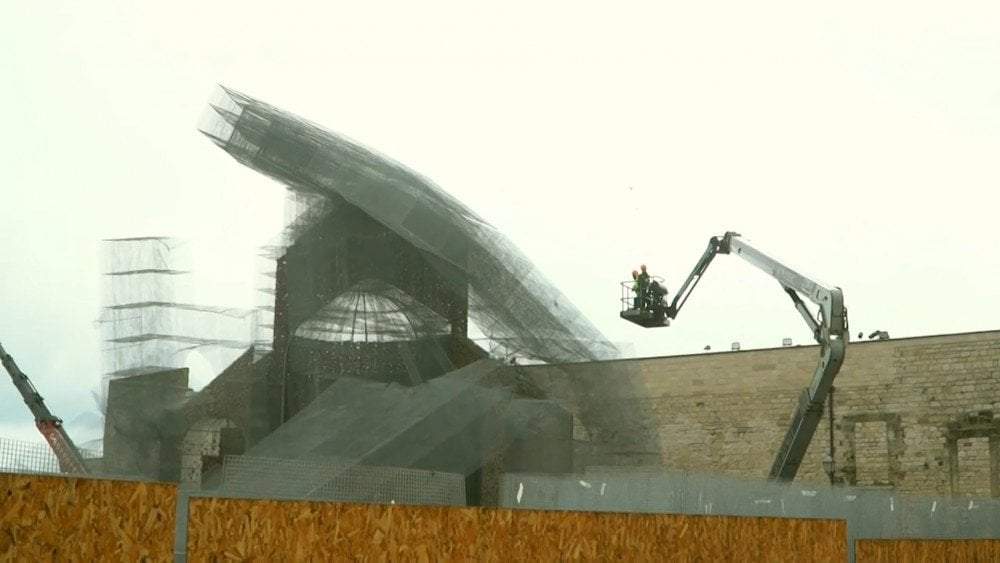
In Bari, Italy, the storm destroyed an architectural installation that replicated the shape of an ancient basilica
The installation was still in the assembly stage, and incompletely connected structural elements could not withstand the force of the storm. Fortunately, no one was injured when it collapsed.
Iraq
In early December, northern Iraq found itself at the epicenter of an extremely powerful storm.
On the night of December 9, torrential rains hit the Chamchamal area and surrounding territories in Sulaymaniyah Province.
Within 24 hours, an astonishing 3.2 inches (81.2 mm) of rainfall fell in the area, overloading local drainage infrastructure. Houses and shops were flooded, streets turned into raging streams, and the main road connecting the city of Sulaymaniyah with Chamchamal became impassable.
Dozens of vehicles were swept away by floodwaters. Electricity and Internet services were temporarily cut off, while emergency responders worked around the clock to assist those affected.

Aftermath of torrential rains in Iraq’s Sulaymaniyah Province: a car swept away on a flooded street
The disaster claimed the lives of two people, and several others were injured.
Authorities declared a state of emergency and opened temporary shelters to accommodate evacuated residents.
This storm became one of the most destructive in the region in recent years.
Saudi Arabia
On December 8–9, the western part of Saudi Arabia was also struck by a destructive storm. It brought severe thunderstorms, gusty winds, and sudden flooding.
The Mecca and Medina districts were seriously affected.
In Jeddah City, a record amount of rainfall — up to 5.3 inches (135 mm) — fell within 5 hours, exceeding the average December level by more than 11 times (the average monthly rainfall in December is 0.47 inches (12 mm)) and amounting to almost two annual norms (the average annual norm is 2.8 inches (71 mm)).
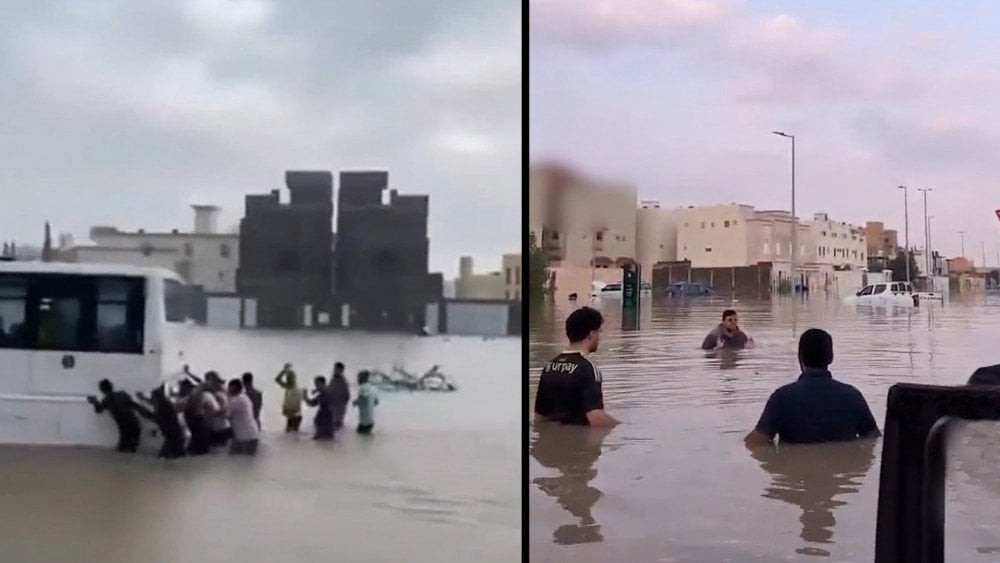
Flooding after anomalous rainfall in Jeddah, Mecca District, Saudi Arabia
Due to deteriorating weather conditions, school classes were suspended.
Flooding also occurred in Medina: infrastructure was damaged, road traffic was disrupted, and important events were halted.
Civil defense teams rescued five people after a vehicle was swept away by floodwaters.
These extreme weather conditions were caused by a collision of cold air masses with hot desert air — a combination that until recently was considered extremely rare, but is now becoming a new and frightening norm.
Anomalous volumes of precipitation, giant hail, powerful and out-of-season thunderstorms — these and other climate anomalies are driven by causes that have taken on a threatening character in our time. Moreover, one of them was created by us, even though we didn’t realize the scale of its consequences.
We are talking about micro- and nanoplastics — tiny particles far thinner than a human hair and often invisible to the naked eye. They are already present everywhere: in the atmosphere, the oceans, the soil, and, most importantly, in the human body.
To understand the risks we face today, it’s essential to comprehend how microplastics behave, from molecular interactions to their impact on entire ecosystems.
As is well known, in recent decades the ocean has been warming rapidly, resulting in intensified evaporation and disrupted atmospheric circulation. Atmospheric temperature and humidity are increasing. At the same time, electrostatically charged nanoplastic particles act as highly effective condensation nuclei. This means that water droplets can freeze at lower altitudes and at higher temperatures — 7–18 °F (4–10 °C) above normal. Such a shift accelerates cloud formation and creates conditions for extreme events: large hail, powerful downpours, anomalous lightning, and disruption of the hydrological cycle.
Today, we have reached a critical point where it’s impossible to solve the climate crisis without simultaneously addressing the problem of plastic pollution. These two processes are interconnected and amplify each other. Moreover, microplastics affect not only the atmosphere. New data indicate that they exacerbate the geodynamic crisis, disrupting the natural mechanism by which heat is released from Earth’s interior.
Science has clearly and unequivocally shown how destructive micro- and nanoplastics are. Their impact destroys cells, organs and systems, affecting not only the climate, but also human health. We have one planet — unfortunately, a plastic-contaminated one — and nowhere to escape.
Therefore, delaying action is no longer possible because it’s all about our survival.
This is no longer a scientific problem: science has already shown everything it had to show.
We can conduct endless studies, and the scientific community is doing everything it can, but until a broader public hears this alarm, nothing will change.
Only by acting together can we overcome this challenge and preserve the most valuable thing we have — life itself.
Watch the video version of this article here:
Leave a comment