Summary of Climate Disasters on the Planet, December 10–16, 2025
Within just a few days, phenomena were recorded in various regions of the Earth that until recently were considered rare and anomalous.
They are united not only by their scale, but also by their timing: everything is almost happening simultaneously.
Ash over Colombia, light pillars above the tropics, tornadoes and storms in South America, flooding in the United States, and extreme weather in Russia.
However, the most shocking news of the week from December 10th to 16th, 2025, went largely unnoticed by the global media.
We consider it essential to bring this news to the wider public, and soon you will understand why it concerns every single one of us.
United States
From December 8th to 12th, a powerful atmospheric river struck the state of Washington. Over three days, parts of the Cascade Range and the Olympic Mountains received more than 18 inches (450 mm) of precipitation, causing dozens of rivers to overflow simultaneously and triggering one of the most severe floods in recent decades.
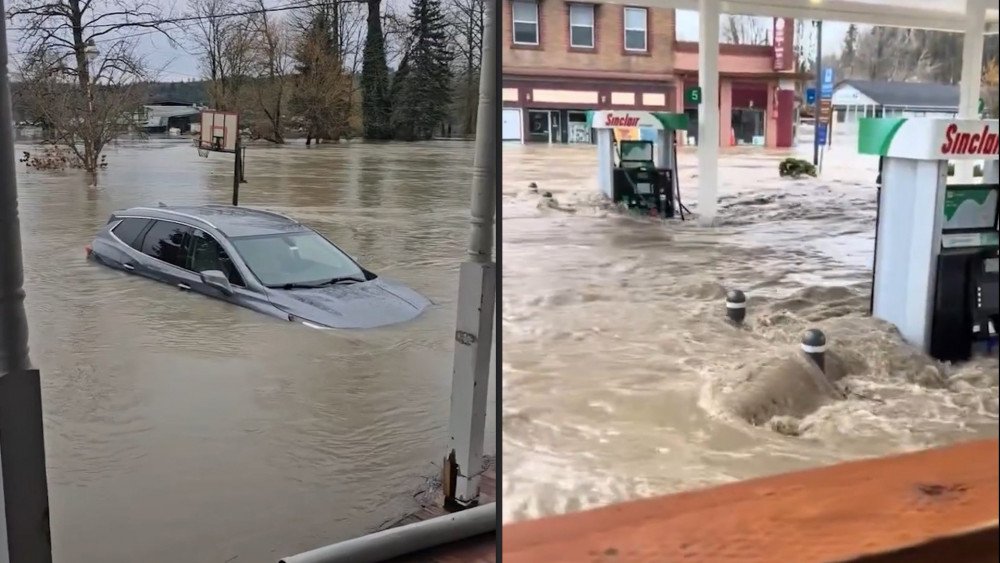
Washington State underwater after the strike of a powerful atmospheric river in the USA
In several counties in the western part of the state, water levels rose to heights that, according to meteorologists, may occur no more than once in a century. The hardest hit were Skagit, Whatcom, King, and Snohomish counties.
A state of emergency was declared across the entire state.
Nearly 100,000 people living along rivers were under threat. Residents were urged to evacuate to higher grounds where temporary shelters were opened for them.
The disaster dealt a heavy blow to areas that are still recovering from the devastating 2021 flood.
In the city of Sumas, the water level rose to 14.8 feet (4.5 m). Rescue teams operated inflatable boats, evacuating people from flooded buildings, and several families had to be airlifted from rooftops by helicopter.
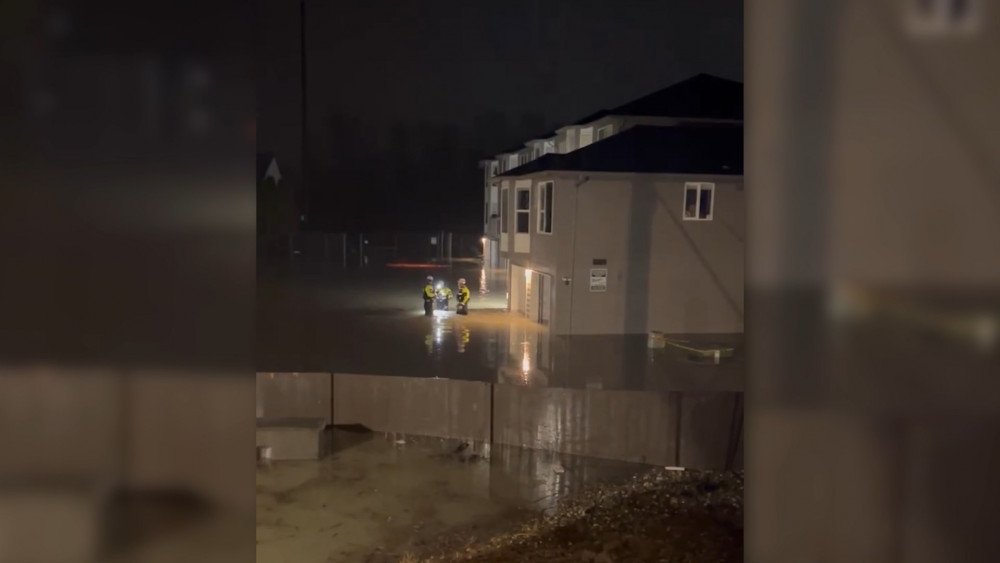
Severe flooding in Washington State: rescuers evacuate residents from flooded homes, United States
Record rainfall in King County led to a breach of two dams along the Green River, in the cities of Tukwila and Pacific.
Numerous landslides and rockfalls blocked mountain passes and roads, including sections of Interstate 90. Powerful winds with gusts exceeding 106 mph (170 km/h) toppled trees and power lines, damaging buildings and blocking roadways.
The National Guard was deployed to assist in rescue operations: hundreds of service members went door to door in the most dangerous areas, helping evacuate residents.
According to official data, one fatality has been confirmed: a man drowned while attempting to drive through a flooded roadway.
The atmospheric river also affected neighboring states. In Idaho, about 6.5 inches (165 mm) of rain fell within 24 hours, triggering flash flood and rescue operations.
In northwestern Montana, raging floodwaters destroyed at least four bridges and inundated roads and homes around the city of Libby. The state governor declared a state of emergency in the area.

Devastating flood in Washington State: water filled a building, USA
The cause of such large-scale flooding wasn’t only the enormous amount of rainfall, but also the warm air typically accompanying atmospheric rivers, which melted the mountain snowpack, increasing water flow into already swollen rivers and streams.
Argentina
On December 11th, two tornadoes struck the central part of Santa Fe Province. In the municipalities of Carcarañá and Cañada de Gómez, roofs were torn off houses, trees were uprooted, and thousands of residents were left without electricity. Severe weather was accompanied by torrential rain and hail, further worsening the aftermath.
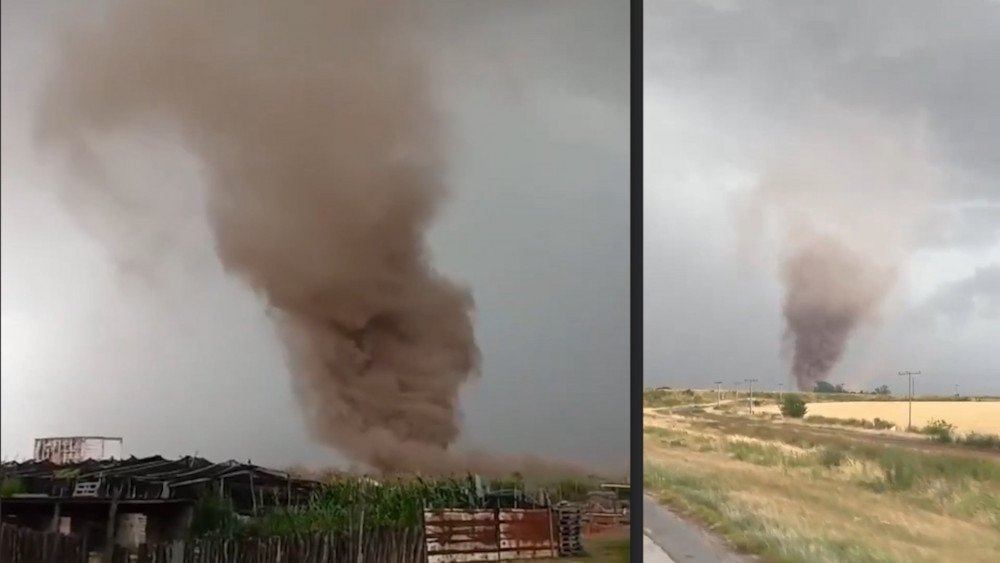
Powerful tornadoes in Santa Fe Province, Argentina
On December 14th, a powerful storm swept through Catamarca Province. Strong winds accompanied by heavy rain caused widespread destruction in the area where the annual Christmas fair “Feria del Patio” was being held.
Feria del Patio is a Christmas fair, a major annual event in Catamarca Province, held at Predio Ferial Catamarca (the exhibition complex of the city of San Fernando del Valle de Catamarca) with the participation of local artisans, producers, designers, performers, and tourism municipalities.
Wind gusts tore off tarpaulins, overturned structures and tents. The stage, shopping pavilions, and food trucks were damaged. Equipment and goods were affected by water, and part of the venue was flooded.
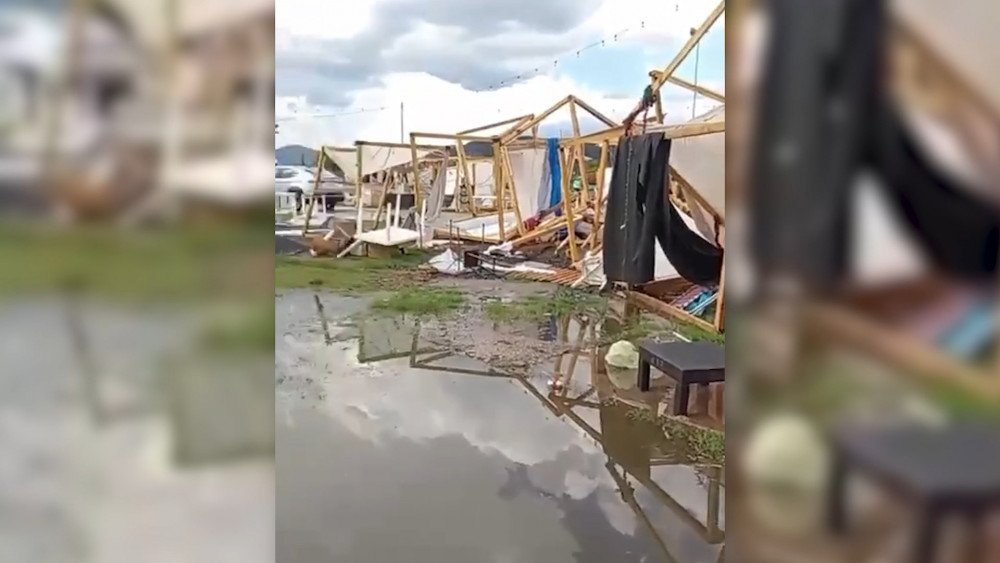
Aftermath of the storm at the Christmas fair in Catamarca Province, Argentina
Colombia
On December 13th, Puracé Volcano in southwestern Colombia emitted a dense column of ash, marking another episode of sustained activity that has been ongoing for several weeks.
Puracé Volcano is located 17 miles (27 km) from the city of Popayán, the capital of the Cauca Department. Its height is 15,223 ft (4,640 m) above sea level. The volcano is part of the Los Coconucos volcanic chain that consists of 15 cones aligned in a row.
Regular ash eruptions are being recorded at the volcano — from four to nine per day, accompanied by intense degassing and seismicity associated with the movement of fluids within the volcanic edifice.
Ash columns rose to heights of 2,297–3,281 feet (700–1,000 m) above the crater.
A volcanic edifice is a large geological structure formed as a result of volcanic activity, primarily from eruptive materials (lava, pyroclastic flows, ash, etc.) around magma conduits reaching the surface. Such a structure usually includes the volcanic cone itself and associated accumulations of lava and fragmented material, forming the above-ground part of the volcano or its complex.
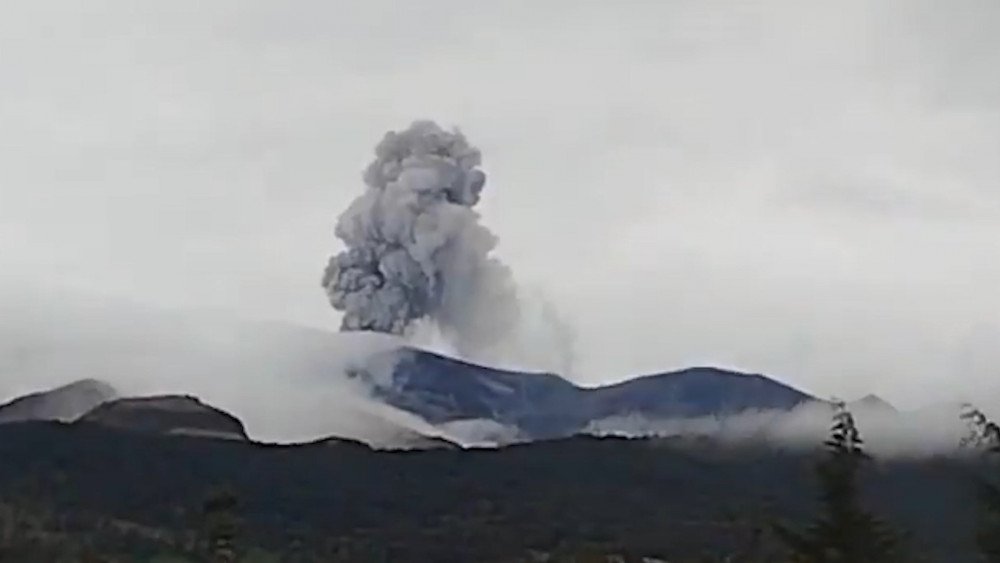
Puracé Volcano emitted a dense ash column in Colombia
Sulfur dioxide emissions remain at high levels and are being detected by satellites. The gas plume spread at distances of 93–186 miles (150–300 km) from the volcano on different days. Residents of Chapio village and other settlements reported a strong smell of sulfur. At the same time, an increase in temperature was observed in the crater area, which is associated with the release of hot gases.
Against the backdrop of increasing activity, on November 29th, the Colombian Geological Service raised the hazard level for Puracé from yellow to orange. The area near the volcano is predominantly inhabited by farming communities. Following the alert, preparations began for the evacuation of about 400 local residents; however, the process hasn’t been easy. Many families are reluctant to leave their homes, fearing for their livestock, poultry, and crops — the basis of their livelihood.
It is worth noting that at least 51 eruptions have been documented at Puracé Volcano since the year 1400. The most recent significant eruption occurred in March 1977, and since 2021 specialists have recorded a gradual but steady increase in activity, especially this year.
Brazil
Since December 8th, a powerful extratropical cyclone has been raging in Brazil. Due to its slow and unpredictable movement, hazardous weather persisted for several days. In the evening, in the state of Rio Grande do Sul, a tornado passed through the rural area of Travessão Alfredo Chaves (municipality of Flores da Cunha), with wind speeds estimated by meteorologists to have reached the lower threshold of the F2 category.
Thousands of people were left without electricity.
Roofs of about 60 homes were completely or partially destroyed. A local church, school, medical center, and several wineries sustained severe damage. The wind was so strong that it overturned large metal wine storage tanks.
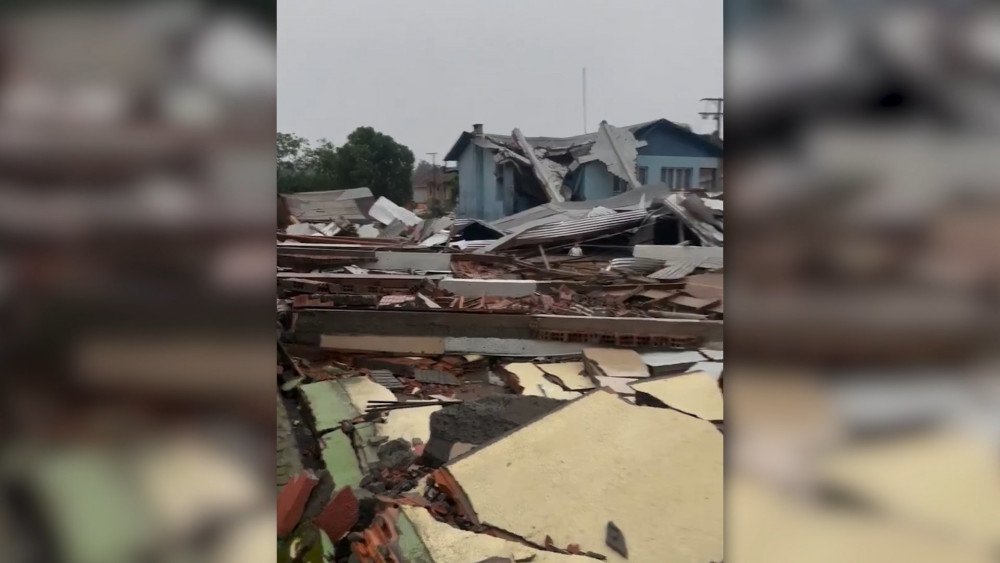
Consequences of the tornado in Rio Grande do Sul State, Brazil
On the following day, the cyclone triggered intense rainfall. In some cities of the state, two to three monthly precipitation norms fell within 36 hours: in the municipality of Amaral Ferrador, 12.5 inches (317 mm) of rain was recorded.
The coastal city of Osório experienced one of the worst floods in its history. Water rose with extraordinary speed, reaching neighborhoods that had never previously been inundated.
In Santa Catarina State, more than 6 inches (150 mm) of rain fell in some areas within 24 hours: in the city of Santo Amaro da Imperatriz, Greater Florianópolis region, 6.14 inches (156 mm) of precipitation was recorded in one day.
In São Sebastião district of the municipality of Palhoça, a sudden flash flood swept away a vehicle. Inside the car were a married couple and their one-year-old child. Tragically, all three died.
Torrential rains paralyzed transportation: on major state highways, multi-kilometer traffic jams formed due to water accumulation.

Flooded urban streets after torrential rains in Brazil
On December 10th, the cyclone shifted toward the Atlantic coast and unleashed squally winds across the southern and southeastern states of the country. In five of them, wind gusts exceeded 62 mph (100 km/h): Paraná State (Marumbi Park, Serra do Mar mountains) — 82 mph (131.8 km/h); São Paulo State (city of Osasco) — 69 mph (111 km/h); Santa Catarina State (city of Urupema) — 67 mph (108 km/h); Rio de Janeiro State (Pico do Couto mountain) — 65 mph (105 km/h); Rio Grande do Sul State (city of Rolante) — 65 mph (105 km/h).
In the state capital, São Paulo, the wind toppled about 500 trees. Four people were injured as a result of these incidents. More than 6 million consumers in Greater São Paulo were left without electricity, which in turn led to disruptions in the water supply system. Weather-related chaos at Congonhas and Guarulhos airports resulted in cancellation of hundreds of flights.
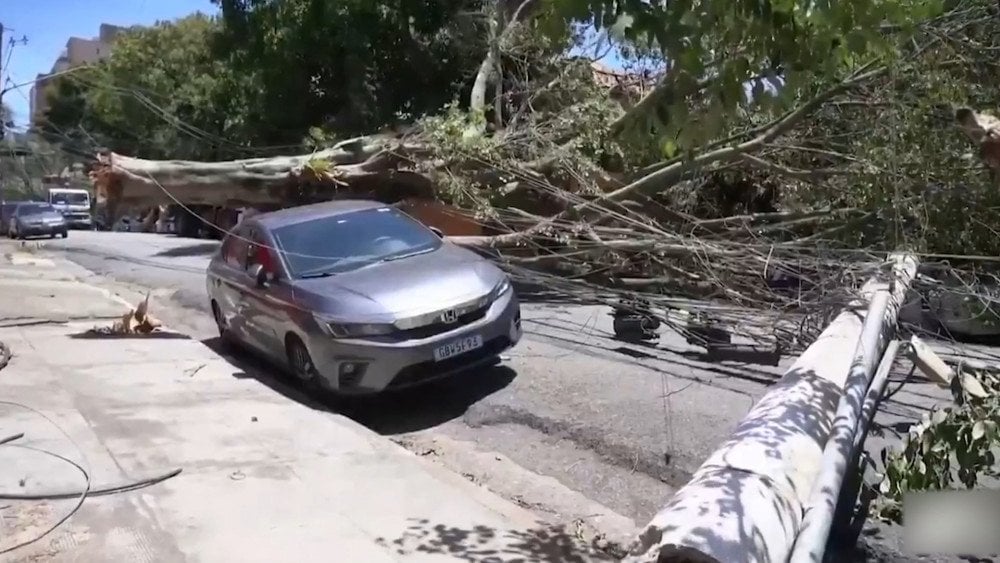
Strong winds toppled trees and downed power lines in Brazil
Meteorologists note that this was an unusual phenomenon for the capital of São Paulo State, which is accustomed to brief intense winds during storms, but not to prolonged strong gusts lasting several hours. Across the country, six people lost their lives during the outbreak of severe weather due to heavy rains, wind, and landslides.
Neither specialists nor local residents expected such a powerful cyclone in December when it is summer in the southern hemisphere. Moreover, such systems typically intensify over the ocean and weaken over land.
In this case, the opposite occurred: the cyclone reached peak intensity over the continent. In the city of Porto Alegre, one of the lowest atmospheric pressure readings in recent decades was recorded — only 992 hPa (29.29 inHg).
The affected regions had not yet recovered from the aftermath of the extratropical cyclone when, on December 12th, a new wave of severe weather with strong winds and torrential rains struck them.
The climax came on December 15th when a cold front collided with intensely heated air (in the city of Bom Princípio, Rio Grande do Sul State, the temperature rose to +97.3 °F (+36.3 °C)) and generated violent squalls with speeds of up to 81 mph (130 km/h).
The severe weather affected more than 54 municipalities, and thousands of residents were once again left without electricity and water.
In the city of Porto Alegre, falling branches injured people, while in Cruz Alta, the wind tore off roofs and uprooted trees.
In the city of Guaíba, a 79-feet (24-meter) statue imitating the U.S. Statue of Liberty collapsed.
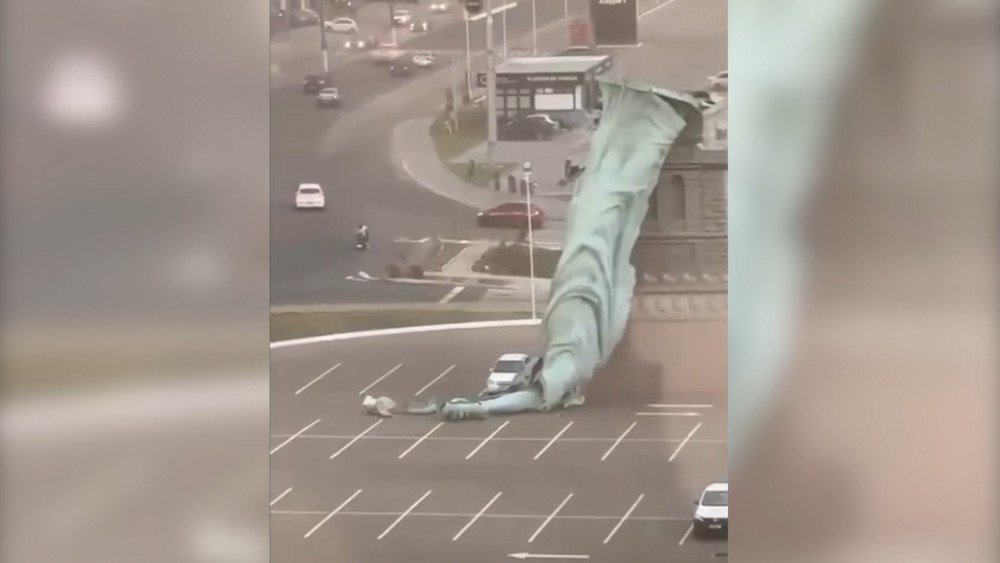
In Brazil, squally winds brought down a large statue imitating the Statue of Liberty
Thailand
On the evening of December 12th, at approximately 20:15, residents of Thalang District in Phuket Province, Thailand, witnessed an atmospheric phenomenon extremely rare for tropical latitudes — light pillars.
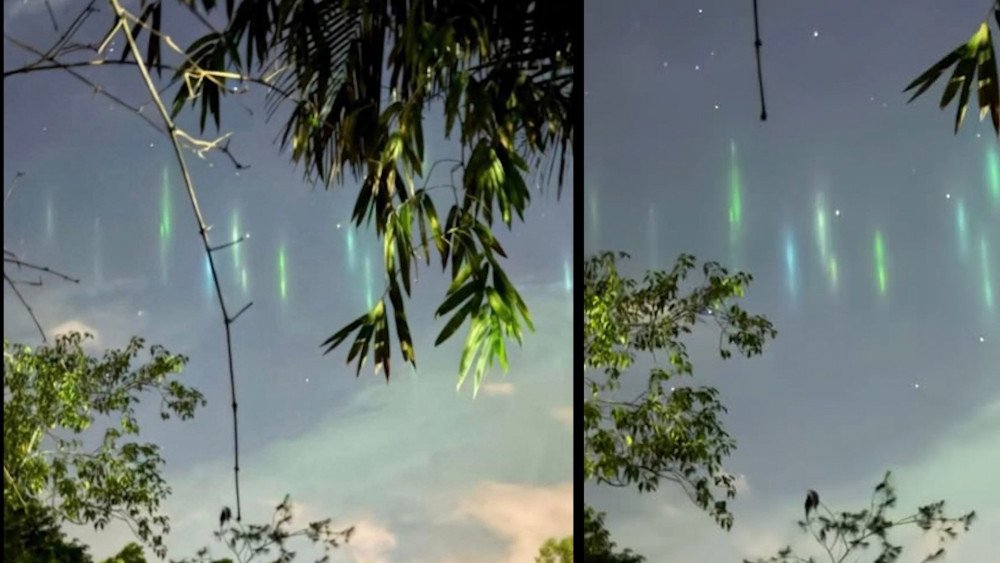
A rare phenomenon for tropical latitudes: light pillars in the sky over Phuket Province, Thailand
Vertical beams of light appeared in the sky, as if frozen in the air and extending high upward. A similar phenomenon had already been observed over the province in April.
A light (or sun) pillar is a visual atmospheric phenomenon, an optical effect in the form of a vertical band of light that occurs due to the reflection of sunlight, moonlight, or artificial light from flat ice crystals in the atmosphere.
It is noteworthy that light pillars are typically characteristic of regions with cold climates, where ice crystals form in the near-surface air layers and, by reflecting light, create this optical effect.
Therefore, their appearance in tropical countries is considered an unprecedented phenomenon.
Experts from the ALLATRA Global Research Center warned more than two years ago about this seemingly beautiful but extremely alarming phenomenon.
Unlike typical light pillars, we now observe a result of emerging atypical magnetic anomalies that are said to trigger formation of groups of bright light pillars along the force lines of Earth’s magnetic field, indicating its catastrophic weakening.
Morocco
On December 13th, Storm Emilia struck Morocco, bringing snow, strong winds, thunderstorms, and torrential rains. In the city of Tétouan, wind gusts reached 37–47 mph (60–75 km/h).
The situation was aggravated by a 7-year drought that left the ground virtually unable to absorb moisture, causing rainwater to rapidly run off the surface and sweep everything in its path.

Aftermath of the destructive flood following torrential rains in Safi Province, Morocco
The most tragic events unfolded on December 14th in the coastal province of Safi. Just one hour of intense rainfall was enough to flood residential neighborhoods, the old city, shops, and industrial sites in the provincial capital. In the historic Bab Chaaba district, through which a river flows, 1.46 inches (37 mm) of precipitation fell, causing numerous casualties among traders and workers.
As a result of the disaster, dozens of buildings and infrastructure facilities were damaged. Some residents were trapped in their homes and required urgent assistance.
As of December 17th, dozens of people had been affected by the storm, many suffering from hypothermia. Tragically, 41 people lost their lives.
Russia
Since December 13th, Saratov Region in Russia has been gripped by an intense winter storm. According to the Russian Hydrometeorological Center, maximum wind gusts reaching 95 ft/s (29 m/s) were recorded in Yershovsky District.
Forecasters note that such a violent manifestation of natural disasters is uncharacteristic for the region.
A total of 205 settlements were left without electricity; power lines and gas infrastructure were damaged. In several districts, people remained without electricity, water, and heating for several days.
In the city of Saratov, winds of 79 ft/s (24 m/s) tore off roofs, snapped more than 130 trees, and knocked down billboards. Buildings of the Opera and Ballet Theater and a museum were damaged. On Teatralnaya Square, squally winds toppled the main New Year tree and scattered festive installations.
In the city of Engels, the wind ripped off part of the roof of a municipal hospital.
The storm triggered a transport collapse. Due to blizzard conditions, traffic accidents, and snowdrifts, movement was restricted on six federal highways.
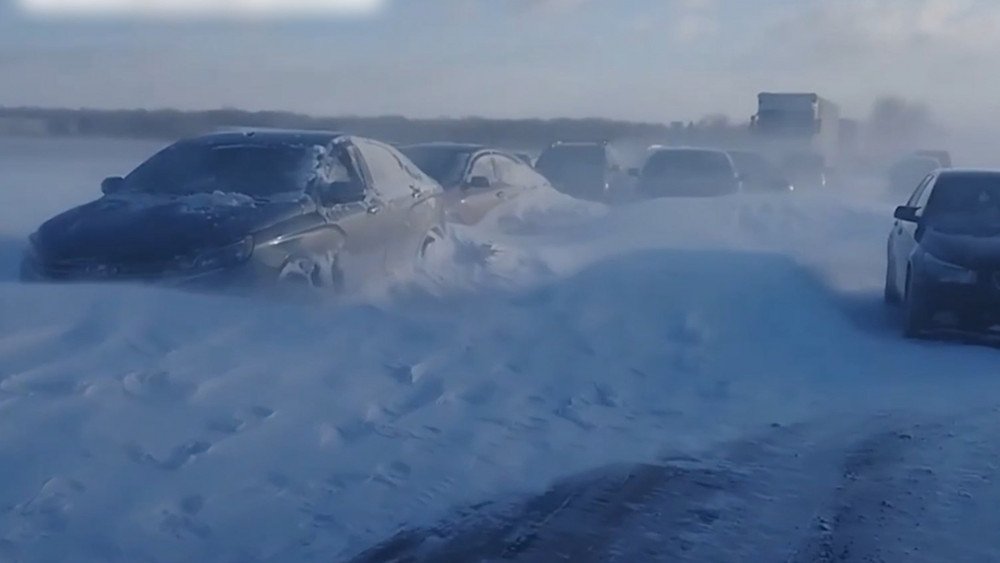
Severe blizzard paralyzed traffic on highways in Saratov Region: hundreds of vehicles became stuck in snowdrifts in Russia
Hundreds of vehicles were blocked by snow. Some cars were buried almost to their roofs. People were evacuated on foot in near-zero visibility conditions. Rescue teams evacuated more than 200 people including children.
In the village of Alexandrov Gai, the storm claimed a life: a man died in a car onto which a utility pole had fallen.
Viewers who closely follow climate change on the planet couldn’t help but notice that in 2025, cataclysms seem to have reached a new level: they have become more powerful, more widespread, and almost continuous. People are forced to evacuate three to four times a month, as natural disasters repeatedly destroy homes and property, leaving no time for recovery or even for understanding what’s happening.
The most striking indicator of this new level of cataclysms has been the sharp intensification of seismic activity — the Earth has entered a new phase. This year has brought a series of geodynamic records and anomalies: a powerful magnitude 7.7 earthquake in Myanmar caused destruction and fatalities 620 miles (1,000 km) from the epicenter.
A mega-earthquake of magnitude 8.8 in Kamchatka, Russia, accompanied by a series of anomalous aftershocks that have not subsided to this day.
Recent earthquakes of magnitude 7.0 and 7.6 that occurred in Canada and off the coast of Japan less than two days apart aren’t a random coincidence either. Specialists link them to deep geodynamic processes reflecting the pressure of the Siberian plume on Earth’s crust.
After thorough data analysis, ALLATRA researchers stated a troubling conclusion: the possibility of safe degassing of the Siberian plume has been lost.
Such controlled degassing would have reduced pressure on the lithosphere, safely removed excess magma, and cooled the lower layers of Earth’s crust beneath Siberia, giving humanity time and opportunity to focus on other escalating planetary threats.
Unfortunately, this proposed solution was ignored by the global community.
Consequently, the time necessary for preliminary monitoring, detailed exploration, and complex engineering preparation of this process was lost, and this is measured not in days or months, but in years.
The current level of geodynamic activity demonstrates that we no longer have this time, and any attempt to intervene several years later can trigger an explosive catastrophic scenario.
Yet, ALLATRA scientists are not giving up: they still believe they will find THE VERY solution. Because ultimately, what else is worth fighting for, if not life itself?
Watch the video version of this article here:
Leave a comment