Summary of Climate Disasters on the Planet, February 2–8, 2026
Two destructive storms in Europe.
Record-breaking snowfalls in Japan.
Anomalous cold in the Caribbean.
An unseasonal tropical storm in the Philippines.
More details are provided below in this summary of past week’s climate events from February 2 to 8, 2026.
Storm Leonardo
The deadly storm Leonardo, already the sixth this year, raged from February 2 to 7 and became yet another ordeal for the residents of southern Europe.
The storms swept across the Iberian Peninsula with torrential rains classified as “extraordinary.” Portugal and Spain found themselves at the epicenter of the natural disaster.
The Sado River overflowed its banks, turning the streets of the Portuguese town of Alcácer do Sal, located 90 km (56 miles) south of Lisbon, into raging streams. In some places, the water level reached 2 m (6.6 ft).
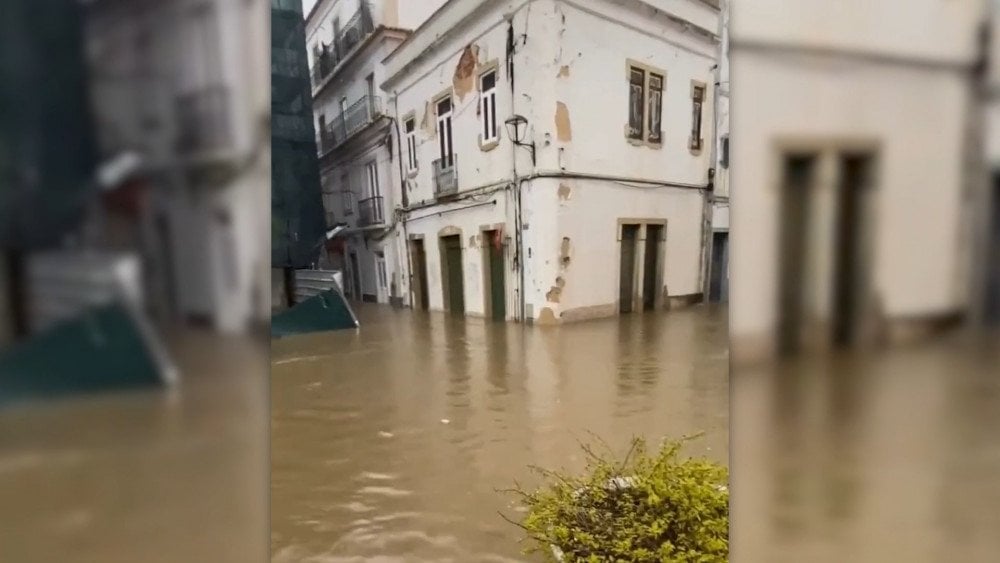
Powerful torrential rains caused by Storm Leonardo flooded the town of Alcácer do Sal in Portugal
People said they had never seen such a powerful flood before. Playgrounds, homes, businesses — everything was flooded. Due to flooding, landslides, and fallen trees, more than 200 people left their homes.
In Portugal, a state of emergency was declared in 69 districts of the country.
Crossing the Pyrenees, the storm struck Spanish Andalusia where more than 7,000 people were forced to evacuate. School classes were canceled across almost the entire region, seaports were closed, railway traffic on strategically important routes was nearly halted, and about 50 highways were closed.
At the major Málaga–Costa del Sol Airport, a passenger plane was unable to land due to extremely strong winds, and many flights were redirected to other regions of the country.
In the mountain town of Grazalema, more than 400 mm (15.7 in) of precipitation fell in just 16 hours, which is nearly the average annual norm (425.4 mm / 16.75 in).
Water seeped through building walls and rushed down steep cobblestone streets, turning the tourist town into a disaster zone. Local residents hammered holes in the external walls of their homes to release the water — there was simply no other way. Many were forced to urgently leave their homes. They were accommodated in temporary shelters in the neighboring city of Ronda.

Aftermath of Storm Leonardo in Spain: a resident of the town of Grazalema breaks a hole in the wall of his house with a hammer to release the water
On February 5 in Germany, Berlin Airport was paralyzed by snowfall and freezing rain. All flights were suspended in the morning because aircraft could not be cleared of ice: the de-icing fluid froze before a second protective layer could be applied.
Storm Leonardo also struck North Africa. In Morocco, heavy rains caused rivers and reservoirs to overflow their banks. Flash floods and landslides forced 108,000 people to evacuate urgently. In the province of Larache, three women died when their home was destroyed by a landslide.
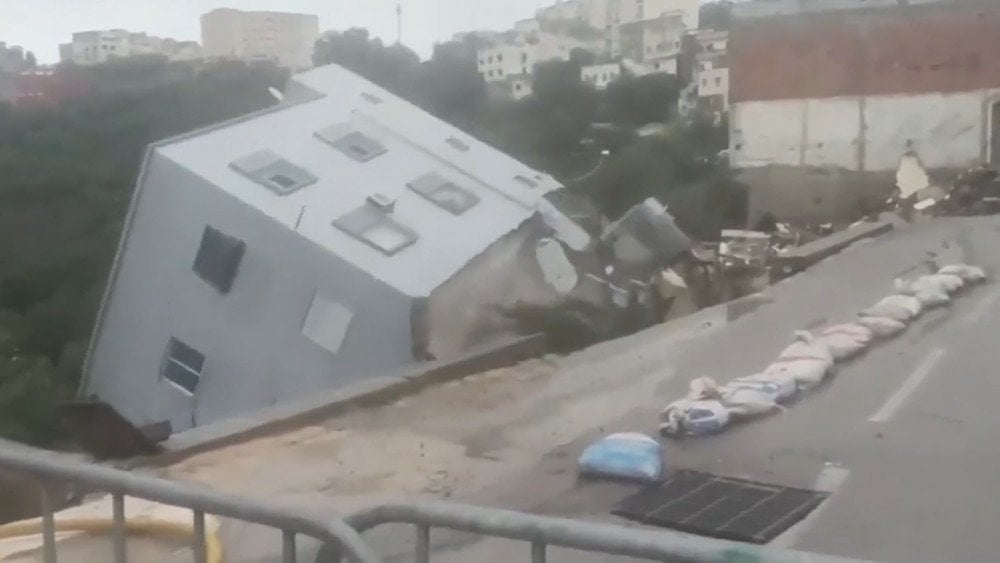
Heavy rains caused a landslide that destroyed a residential house in Larache Province, Morocco
The storm claimed two more lives — in Portugal and Spain.
Storm Marta
On February 7, just a few days later, another storm, named Marta, struck Spain and Portugal. It hit already water-saturated ground, which intensified the flooding.
On mainland Portugal, south of Lisbon, the storm brought heavy rains and wind gusts exceeding 70 km/h (43 mph). The elements left more than 100,000 people without electricity. Due to the severe weather, three municipalities postponed the presidential elections scheduled for February 8. Two people died in the country as a result of the storm.
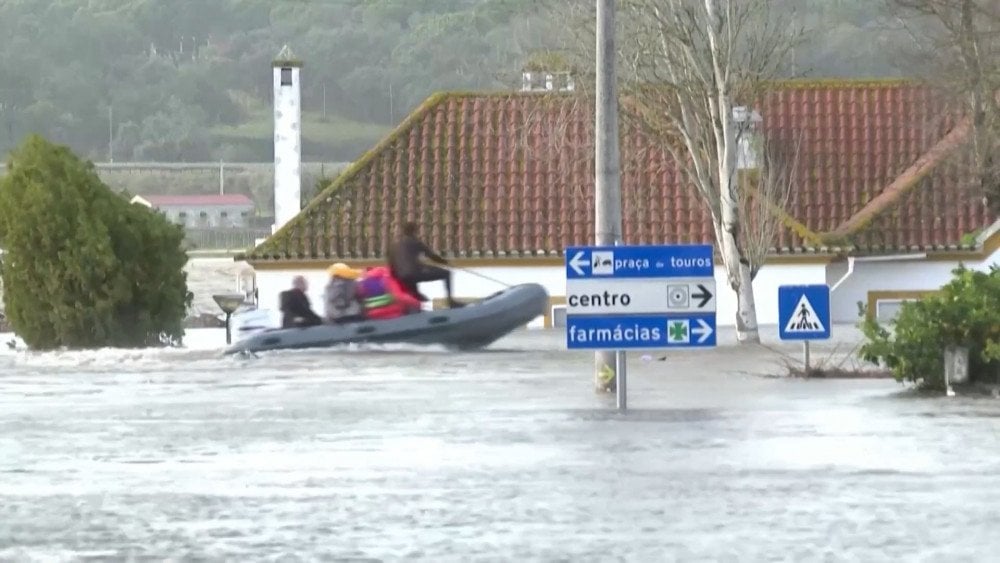
Catastrophic flooding in Portugal after the passage of Storm Marta
In southern and western Spain, rain poured without stopping. Farmers reported “catastrophic” crop damage: broccoli, carrots, and cauliflower were flooded across thousands of hectares.
In low-lying areas, water inundated citrus plantations, orchards, and pastures. In Almería Province, strong winds destroyed greenhouses, wiping out vegetable crops. Rural roads and access roads to farms were also damaged.
Anomalous Cold
At the beginning of February, almost the entire Central Federal District of Russia fell under the grip of anomalously cold weather. In many regions, temperatures reached extremely low values — the kind usually seen in Siberia rather than in the European part of the country.
In the Penza, Belgorod, Voronezh, and Kursk regions, on February 3 thermometers dropped to −30 °C (−22 °F) and below, while the average daily temperature dropped 19–23 °C (34–41 °F) below the climatic norm. At the Bogoroditskoye-Fenino meteorological station in Belgorod Region, −27.5 °C (−17.5 °F) was recorded; in the industrial town of Anna in Voronezh Region −29.5 °C (−21.1 °F); in the town of Oboyan in Kursk Region −29.7 °C (−21.5 °F); in the industrial town of Zemetchino in Penza Region −33.7 °C (−28.7 °F).
The strongest frost, −41.7 °C (−43.1 °F), was recorded on February 2 in the Komi Republic, in the village of Ust-Shchuger.
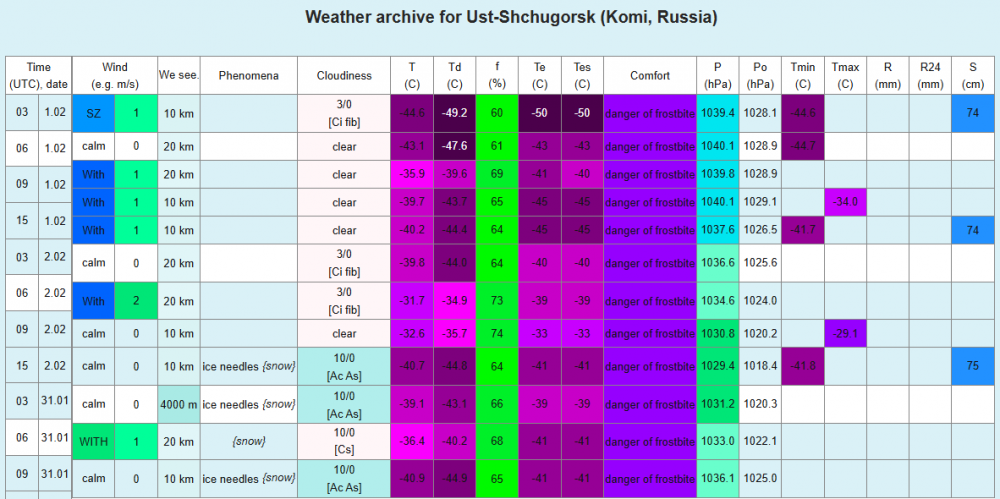
Anomalously low temperatures in the village of Ust-Shchuger, Komi Republic, Russia
Moreover, such extreme cold was not short-lived but persisted for an extended period. This looked especially striking against the backdrop of the warm and mild winters of recent years.
In Moscow, temperatures also dropped significantly below the February climatic norm. On February 3, −21.6 °C (−6.9 °F) was recorded in the city, while the average monthly minimum here is −8.8 °C (16.2 °F).
Lithuania was hit by severe frosts, intense snowfalls, and gusty winds. On February 2 in the city of Šeduva, Radviliškis District, Šiauliai County, the thermometer dropped to −34.3 °C (−29.7 °F).
Such frost had not occurred in the country for 30 years, since February 8, 1996 (when in the town of Tauragnai, Utena District, eastern Lithuania, the temperature reached −35.0 °C / −31 °F).
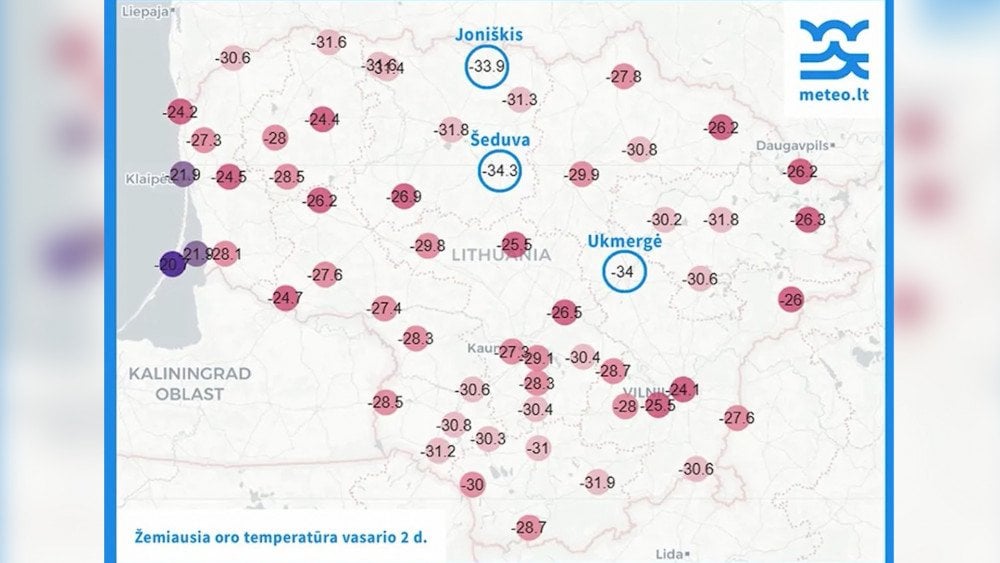
Extremely low temperatures in Lithuania
Extreme conditions led to serious disruptions in public transport operations, and some schools were forced to switch to distance learning.
Because of the extremely low temperatures, wires on overhead power lines tightened and snapped. As a result, about 10,000 people were left without electricity.
To stay warm, residents kept their stoves burning 24 hours a day. At least 30 people suffered from hypothermia and frostbite of the hands or feet, in some cases with the risk of amputation.
As of February 3, three people had died in the country due to the severe cold.
Ukraine was also affected by the severe frosts. In the first days of February, temperatures in the northern and western regions dropped to −30 °C (−22 °F): on February 2, −29 °C (−20.2 °F) was recorded in the Zhytomyr Region. A red level of danger was declared.
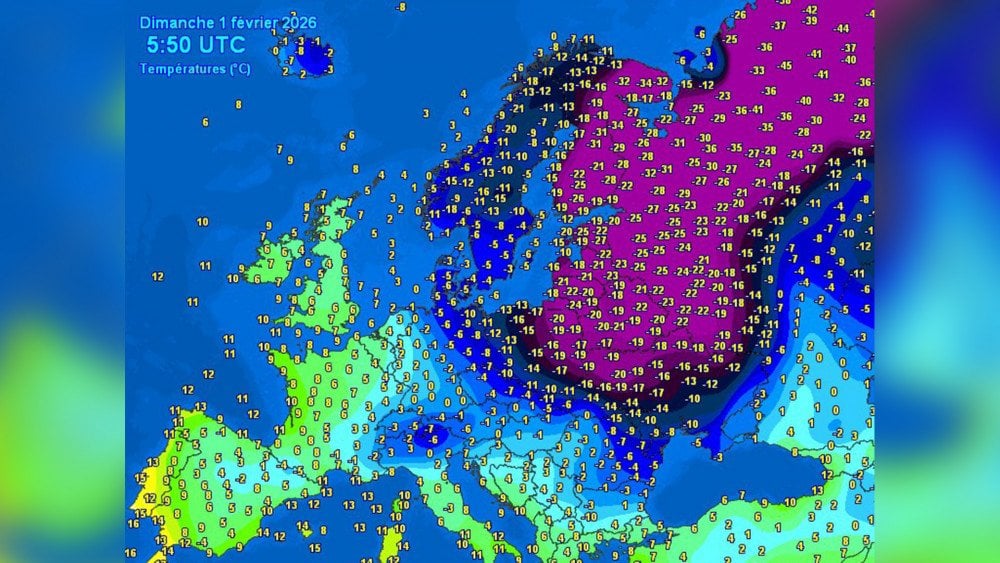
Severe frosts swept across Ukraine
Due to worsening weather conditions and a sharp drop in temperature, the Kyiv-Pechersk Lavra in Kyiv was temporarily closed to visitors.
In Zaporizhzhia Region, an unusual natural phenomenon was recorded — the waters of the Sea of Azov were covered with a solid layer of ice extending more than 200 meters from the shoreline. According to local residents, this is the first such case in at least the past 15 years.
In Kirovohrad Region, on February 3, with an air temperature of −22 °C (−7.6 °F), the soil beneath the winter crops at the Agricultural Institute’s experimental field froze to a depth of 50 cm (19.7 in) and the upper layer was covered with an icy crust.
According to specialists, such conditions pose a serious threat to the survival of winter crops — rapeseed, barley, and wheat.

Branches covered with a thick layer of ice, Ukraine
On February 3 in Cuba, at the Indio Hatuey meteorological station in the municipality of Perico, Matanzas Province, a temperature of 0 °C was recorded for the first time in the history of observations (the previous record, +0.6 °C / 33.1 °F, was recorded on February 18, 1996). Vegetation near the meteorological station was covered with frost.
A cold air mass spread across most of the country. At 32 meteorological stations, temperatures of +10 °C (50 °F) and below were recorded, which is extremely atypical for the region located in the tropics.
It was also anomalously cold in the Bahamas. In the city of Freeport on February 1, thermometers dropped to +10.8 °C (51.4 °F), which became the lowest value ever recorded in the country.
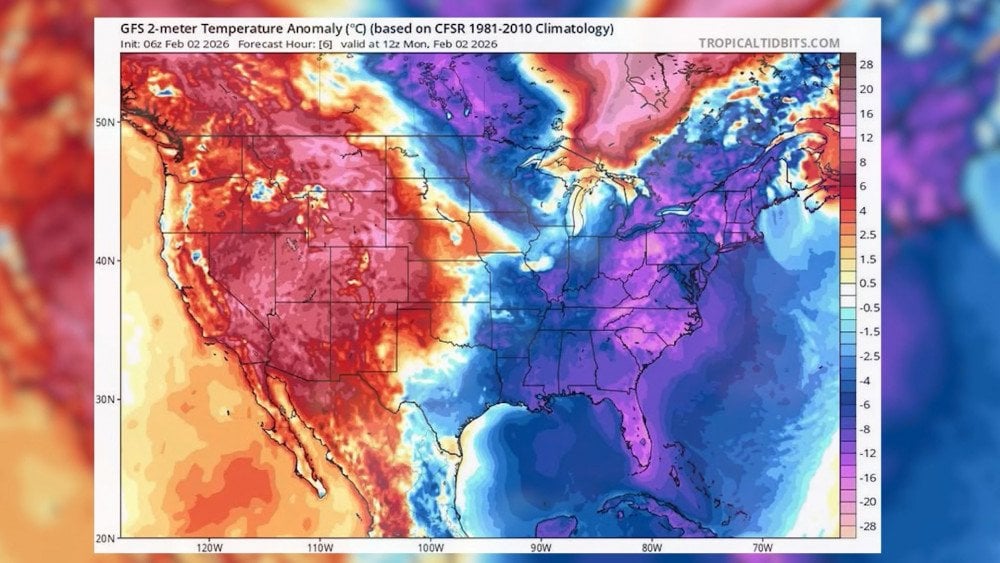
Anomalously low temperature established in the Caribbean region
A national cold record was also recorded in Guatemala. In the cities of Flores and Tikal on February 3, the minimum temperature was +9 °C (48.2 °F).
Japan
Since January 20, the strongest snow collapse in decades has affected 15 prefectures of Japan, causing significant damage to infrastructure and claiming dozens of lives. The regions along the coast of the Sea of Japan were the most affected. In Aomori Prefecture, on February 1 the snow depth reached 183 cm (72 in), which is 2.7 times higher than the climatic norm and the 4th highest value recorded in the entire history of observations.
The city of Aomori was paralyzed: schools closed due to snow blockages, and power outages occurred. For the first time since 2005, authorities were forced to request assistance from the country’s Self-Defense Forces to clear roofs and help elderly people living alone.
By the morning of February 3, in several prefectures the situation crossed a critical threshold: snow depth in some places reached 146 cm (57.5 in), setting an absolute record for the entire observation period. In the town of Noheji, Aomori Prefecture, 116 cm (45.7 in) of snow was recorded; in the city of Kitaakita, Takanosu District, Akita Prefecture — 145 cm (57.1 in); in the city of Kazuno, Akita Prefecture — 146 cm (57.5 in).
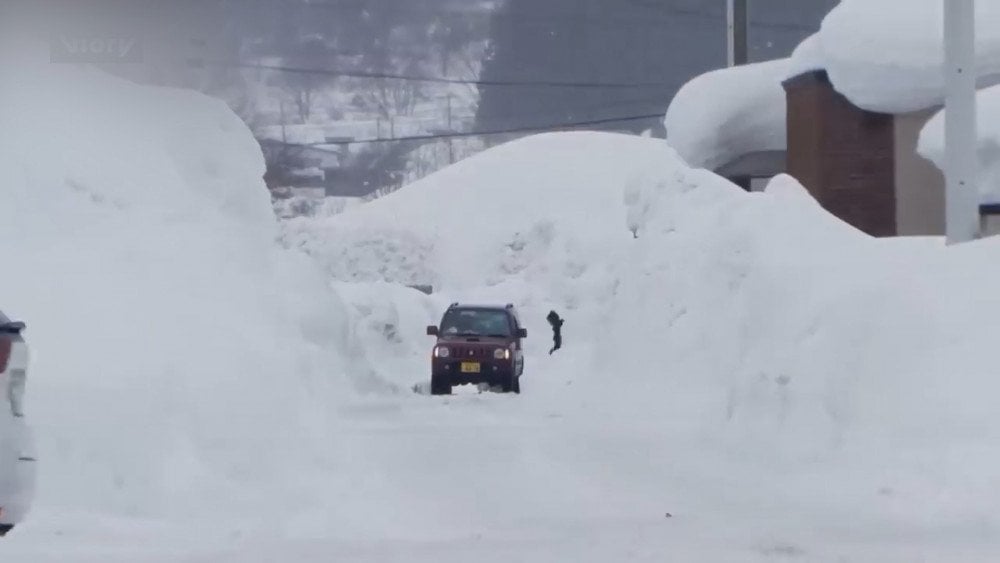
Snow collapse in Japan — the strongest in recent decades
From February 6, powerful blizzards also struck Hokkaido Prefecture: in the city of Wakkanai, wind gusts reached 31 m/s (111.6 km/h / 69.3 mph).
On February 8, the day of the general election, snowfall paralyzed the transport system. More than 270 flights were canceled, including those connecting Haneda and Osaka airports with other regions of the country. Shinkansen high-speed trains on the Tokaido and Sanyo lines operated with delays.
On the same day in Tokyo, where 5 cm (2 in) of snow fell, a mass traffic accident involving seven vehicles occurred on the icy Tsukiji Ohashi Bridge — six people were injured.
Due to the heavy snowfall, Hosei and Chuo universities postponed the start time of entrance examinations.
In the metropolitan region, traffic on the key Utsunomiya railway line was completely halted due to a break in the overhead contact line, causing a large-scale transport collapse.
As of February 6, record-breaking snowfalls across the country had led to the deaths of at least 42 people. Most of them became victims of falls from roofs while clearing snow.
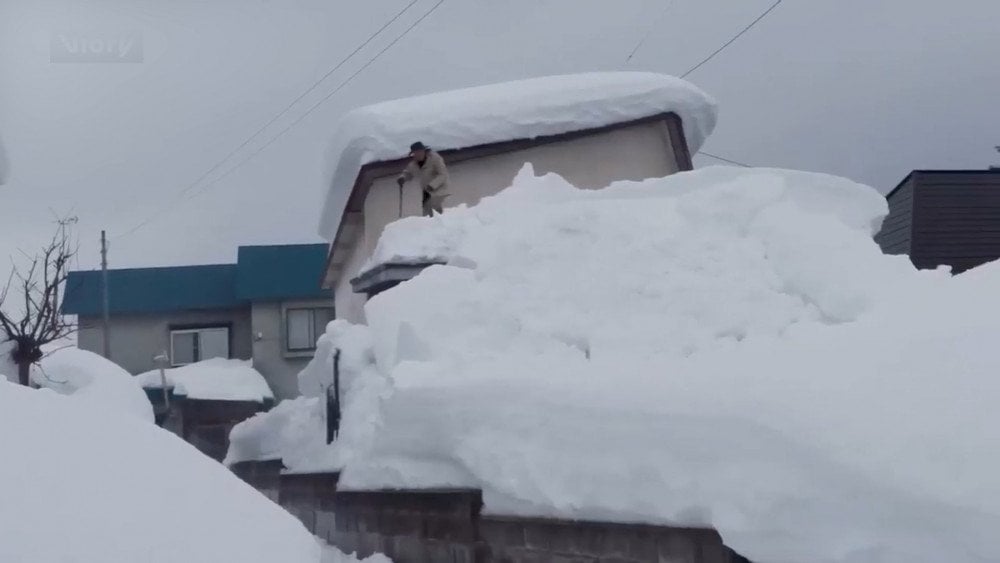
Aftermath of heavy snowfalls in Japan
Kazakhstan
Hurricane-force winds struck the city of Zhanatas in the Zhambyl Region, causing serious damage to infrastructure. The storm began on the evening of February 5, and by the morning of the next day wind gusts had already reached speeds of 36 m/s (129.6 km/h / 80.5 mph).
Roofs and facade cladding were torn off multi-story residential buildings: in three apartment buildings the roofs were completely ripped off, while another seven buildings sustained partial damage. Eight commercial facilities and the Cultural Center were also affected.
The wind damaged about 2 km (1.24 miles) of power lines and uprooted around 30 trees. Transport damage was also recorded. In some areas of the city, electricity supply was temporarily disrupted.

Hurricane-force wind tore the roof off a multi-story residential building in the city of Zhanatas, Zhambyl Region, Kazakhstan
For safety reasons, 15 schools were switched to distance learning.
According to the study “Wind Impact as a Threat to the Sustainable Development of Small Cities of the Zhambyl Region, Republic of Kazakhstan” (https://doi.org/10.3390/su16052144. Data from the Kazhydromet database for 2010–2022 were used), winds exceeding 17.2 m/s (61.9 km/h / 38.5 mph) in Zhanatas are normally recorded on average for no more than 5 hours per year.
However, during this storm the sustained wind speed remained anomalously high for nearly an entire day — in the range of 17–31 m/s (61–112 km/h / 38–70 mph).
Philippines
On February 3, a tropical system rapidly formed over the warm waters of the Philippine Sea, which within just two days intensified into Tropical Storm Penha (known in the Philippines as Basyang).
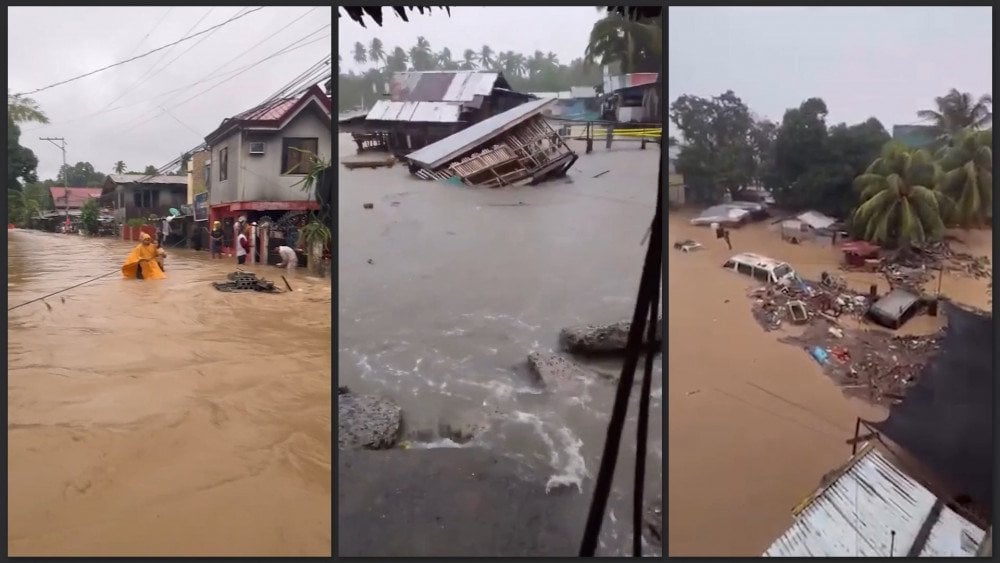
Storm Penha struck the Philippines: raging torrents of water destroy homes and wash away vehicles
On the night of February 5, it struck Surigao del Sur Province on the island of Mindanao. Although the wind was relatively weak — about 60 km/h (37 mph) — the main threat was in a vast precipitation zone up to 660 km (410 miles) wide, which within just a few hours triggered a chain of floods and landslides.
Rivers in the central and southern Philippines overflowed their banks. Torrential rains destroyed roads and partially isolated populated areas. Flooding occurred in the provinces of Agusan del Norte, Surigao del Sur, Lanao del Norte, Misamis Oriental, and others.
The city of Iligan and nearby areas of Misamis Oriental Province were particularly affected. Torrents of water rapidly swept through low-lying neighborhoods, washing away houses along riverbanks and carrying vehicles downstream. People urgently evacuated to higher ground, while some became trapped in their homes.
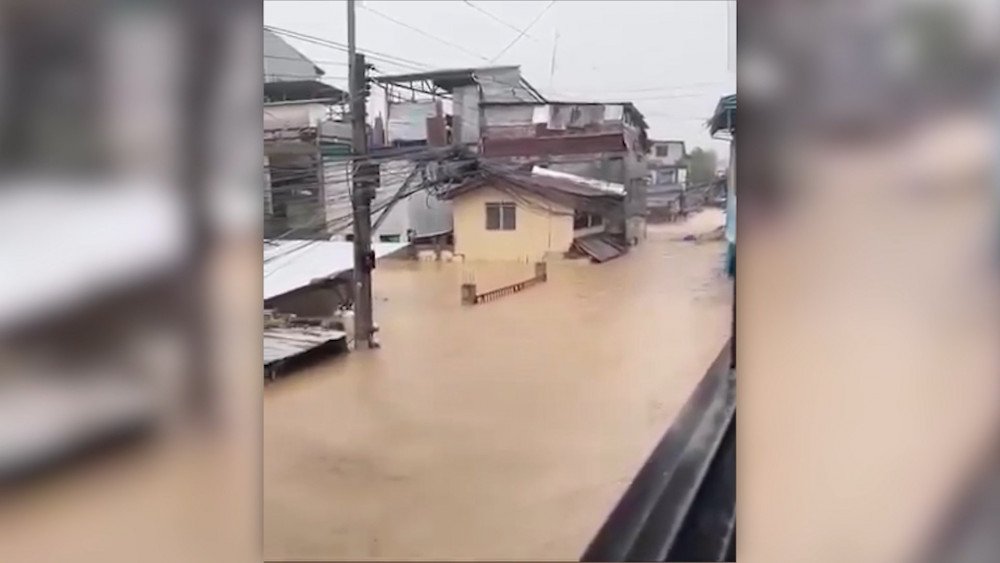
Flooded streets of the city of Iligan, Philippines, after the passage of Tropical Storm Penha
In the city of Cagayan de Oro, heavy rains triggered a landslide that buried a residential house. This led to the death of a family of four.
Nearly 80 seaports across the country were closed, leaving thousands of passengers stranded.
As it moved across the Philippines, the storm affected about 500,000 people, and tens of thousands were forced to evacuate.
The disaster claimed the lives of 12 people.
Particularly alarming is the fact that Tropical Storm Penha, with its enormous amount of precipitation, formed long before the usual typhoon season in the Philippines, which normally begins in May.
The events of this week once again draw attention to one of the most dangerous features of modern climate disasters — their synchronization, when natural disasters no longer occur as isolated incidents but unfold as a wave, an entire cascade of climate events, one triggering another. This interconnection increases progression and accelerates the destruction of our planet.
Back in 2020, the ALLATRA scientists were the first to observe the initial signs of synchronized natural disasters and alerted the global community to this phenomenon. It became clear then that the climate threat had reached a new level: events were occurring simultaneously in different regions, amplifying one another and multiplying the damage.
Even then it was clear: time was limited and urgent action was necessary. However, humanity missed the opportunity to implement scientifically grounded technologies proposed by ALLATRA scientists to stabilize the climate.
The result is what we see today. Synchronization has gained such momentum that residents of some countries do not have time to recover from one cataclysm before the next one strikes — people are literally living in a continuous climate nightmare.
Europe is a vivid example: less than a month and a half has passed since the beginning of 2026, and some countries have already experienced seven storms in a row.
Statistics speak louder than words. Just look at the graph of storm winds in Europe — comments are truly unnecessary.
All of this serves as a reminder of the value of time: we must act immediately, while we still have the scientific infrastructure, laboratories, monitoring centers, and experts capable of finding a solution.
More and more people are realizing that without conscious human intervention, these destructive processes will not stop. That is precisely why hundreds of thousands of people are already talking about this with their friends, acquaintances, and everyone around them, because they understand that it is only through the awareness of the scale of the crisis by everyone on the planet that the search for a solution can be accelerated. They are taking action because they want to live and want their children to live as well.
Watch the video version of this article here:
Leave a comment